


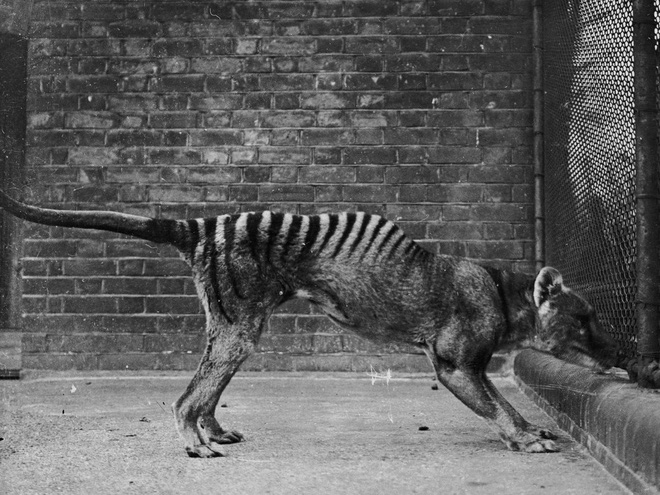
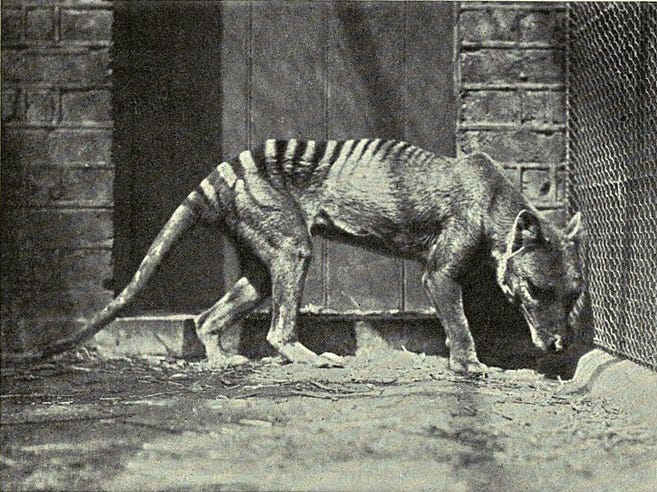
On September 7, 1936, the last known Tasmanian tiger died while in captivity at the Beaumaris Zoo in Hobart, Australia.
However, last month, the Department of Primary Industries, Parks, Water and Environment (DPIPWE) of Tasmania announced some documents revealing that Australian citizens have reported sightings of the Tasmanian tiger. In the past two years, there have been eight reported sightings, with the most recent event occurring in July 2019.
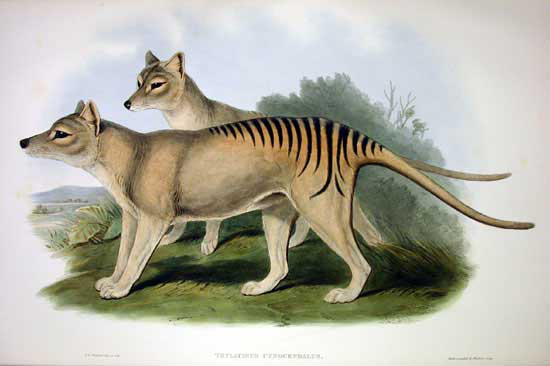
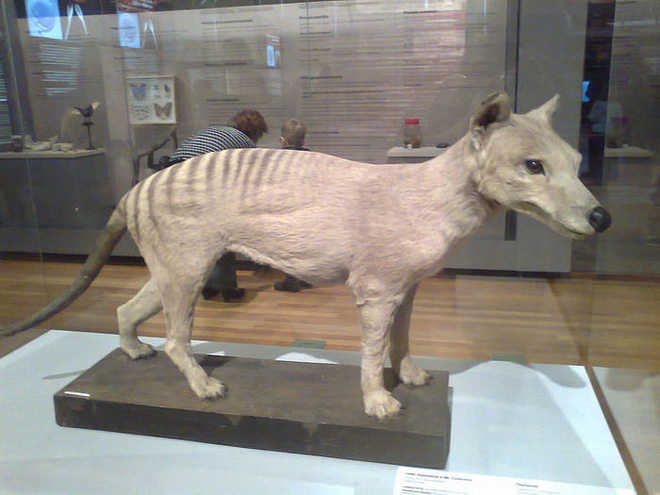
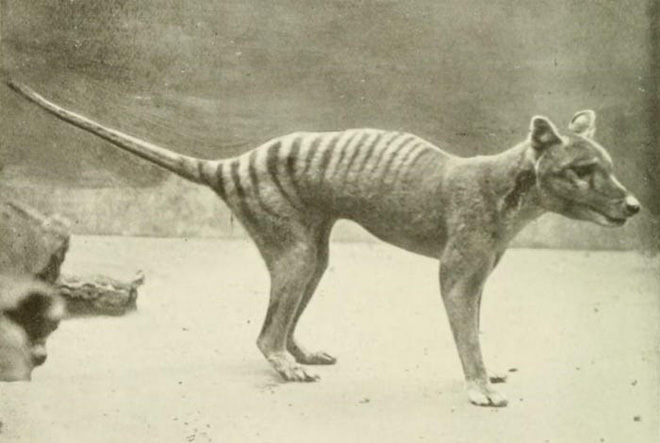
This creature is also known as the Tasmanian wolf due to its dog-like shape, or the Tasmanian tiger because of its brown-yellow fur and a stripe of black running down its back and tail, but in fact, they are a member of the carnivorous family Thylacine.
The prey of the Tasmanian tiger usually includes kangaroos, wombats, and sometimes sheep and livestock, which made them a thorn in the side of the English settlers who arrived in Tasmania in 1803.
And only about 130 years later, the last wild Tasmanian tigers were believed to have been hunted to extinction by humans, and that is all we know about this mysterious animal, but for this reason, some experts as well as hunters still believe that they have not gone extinct, and the Tasmanian tiger may still be lurking out there somewhere.
The most recent report of a Tasmanian tiger sighting was in July: a man stated that he found Tasmanian tiger tracks in the mountains near Hobart, Tasmania.
Two years ago, a couple claimed they saw an animal that they were “100% sure” was a Tasmanian tiger near Corinna, Tasmania.
“The animal had a stiff and thick tail at the base. It had stripes along its back,” the report quoted. “It was the size of an Australian Kelpie sheepdog – a very efficient working breed in livestock herding weighing about 20kg, which is quite useful for Australian farmers.”
Another Tasmanian tiger sighting occurred in February 2018 in western Tasmania, about 120 miles north of Hobart. That report described “a creature that looked like a large feline” with black stripes on its back.
Since the species went extinct in 1936, the Parks and Wildlife Service of Tasmania has investigated over 400 reported sightings. However, none have provided any conclusive evidence, with the Australian government having arrested individuals who submitted anonymous reports.
“All the reports seem to have no value,” said Nick Mooney, a wildlife biologist currently in charge of investigating the existence of the Tasmanian tiger. “Hundreds of times we went to the locations based on reports but could not find anything.”
In September 2017, a group named Booth Richardson Tiger Team made waves by disseminating video clips and images of the snout of a strange creature. This group captured footage on a trail in the Tasmanian wilderness.
“We are 100% confident that it is a thylacine,” tiger expert Adrian Richardson said at a press conference after the video was released.
But Mooney seems to remain skeptical. “The first thing I felt was excitement,” he told Gizmodo, “but not sure if the images captured are of a Tasmanian tiger. But from a more optimistic perspective, one of the three possibilities could be the Tasmanian tiger that has gone extinct.”
Tasmanian tigers resemble a cross between a fox, wolf, and large domestic cats.
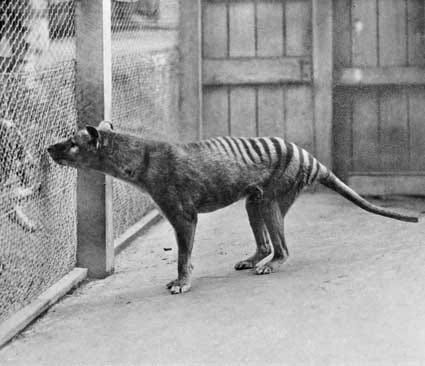
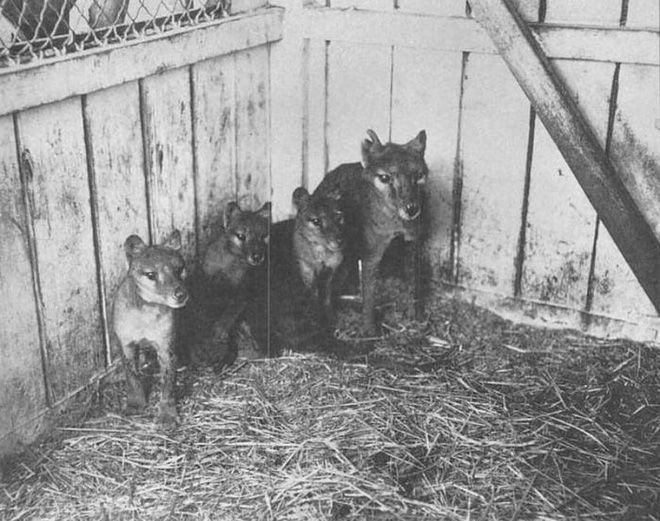
Unlike most other marsupials, both male and female Tasmanian tigers possess pouches; their scientific name is Thylacinus cynocephalus, roughly translated as “dog-headed pouch mammal.”
According to American scientist Richard K. Nelson, “Thylacine is one of the most unique animals on Earth – they resemble a kangaroo but were shaped by nature to look like a wolf.”
Tasmanian tigers have a stiff tail like a kangaroo, short legs, and a jaw with 40 to 50 sharp teeth, and they can live up to 7 years in the wild.
This animal has a solitary hunting habit and is usually nocturnal, communicating with each other through hoarse barks or sounds “similar to a terrier,” according to the Tasmanian government.
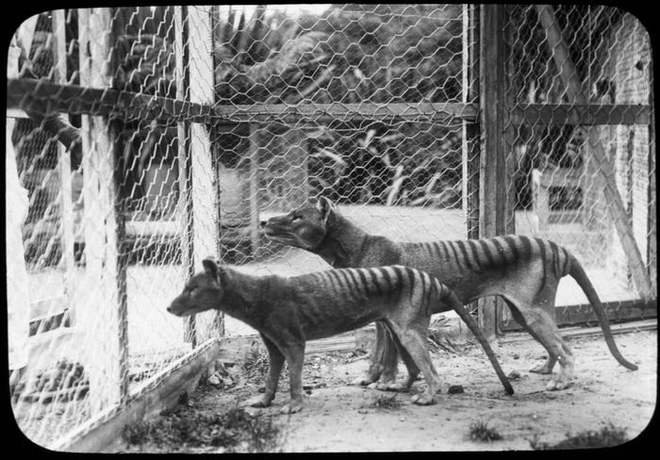
Modern Tasmanian tigers probably appeared around 4 million years ago. The Thylacinidae family is believed to have originated in the early Miocene; since the early 1990s, at least seven fossil species have been discovered at Riversleigh, part of the Lawn Hill National Park in northwestern Queensland.
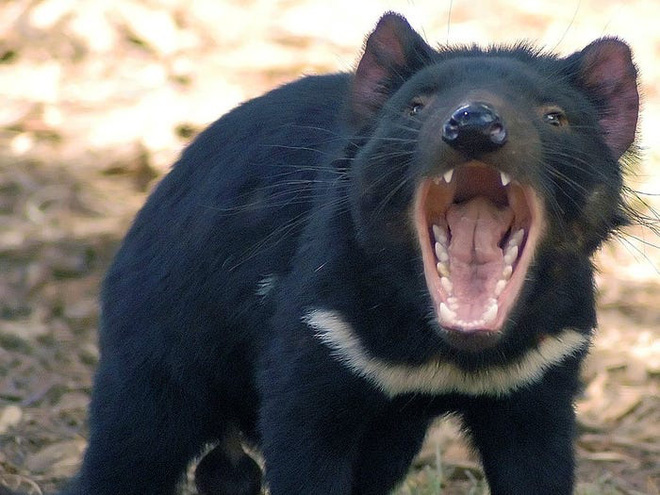
The closest relative of the Tasmanian tiger is the Tasmanian devil, a carnivorous marsupial still living on the island of Tasmania.
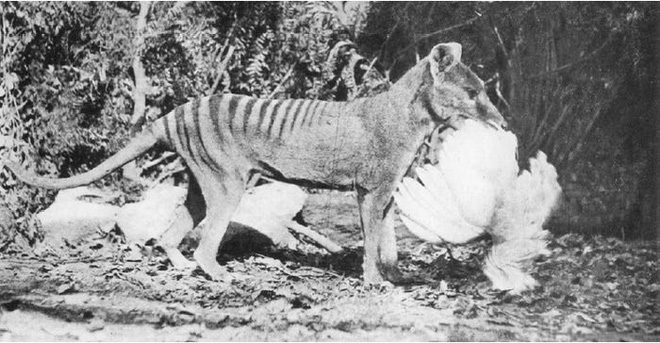
Tasmanian tigers are carnivores: They hunt kangaroos, wallabies, emus, and farm animals like sheep and chickens. Sheep are not actually native to Australia, and perhaps that is why the taste of sheep meat was particularly appealing to Tasmanian tigers, leading them into conflict with the English settlers who arrived in Australia in the early 1800s.
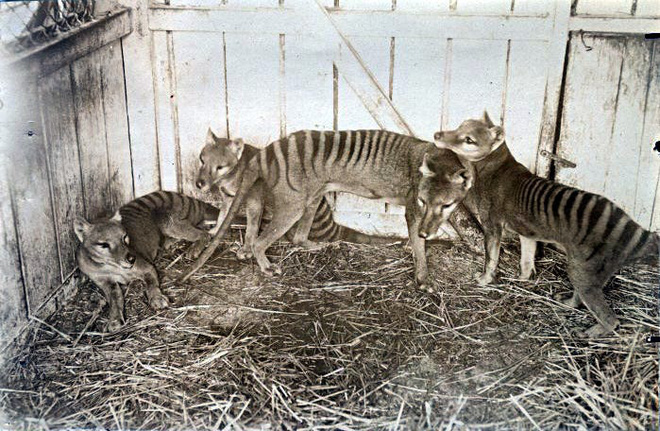
Archaeological evidence shows that this species disappeared from the Australian mainland at least 3,000 years ago, but they thrived and developed strongly on the island of Tasmania.
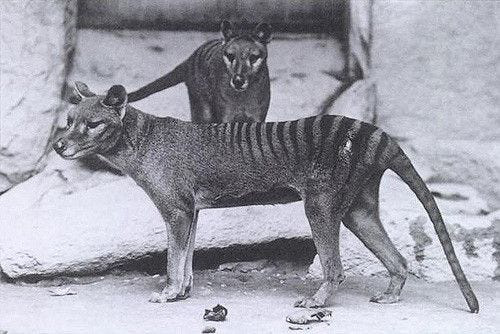
Tasmanian tigers are shy creatures and very easy to catch due to living in isolation and lacking the presence of humans throughout their development, they have not had the chance to develop a fear of humans.
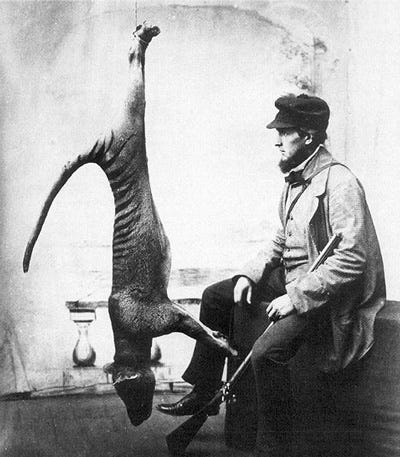
In 1888, the Tasmanian government began paying trappers and hunters to kill this animal. From 1888 to 1909, the government paid bounties for 2,184 Tasmanian tigers. Before it went extinct, the Tasmanian tiger had been around Australia, Tasmania, and New Guinea for 4 million years.
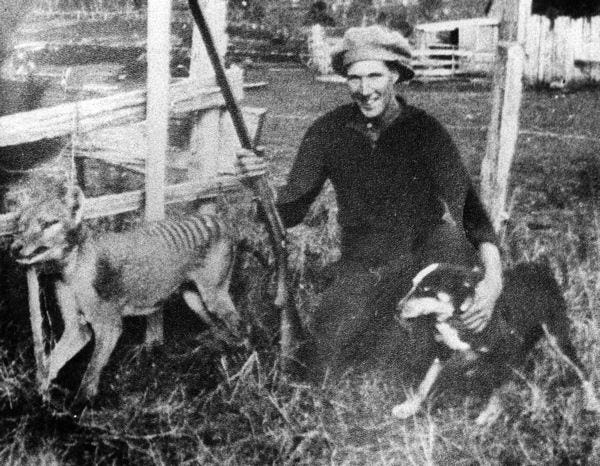
In May 1930, a farmer named Wilf Batty shot the last wild Tasmanian tiger after he discovered it in his chicken coop. Competition from non-native wild dogs and habitat destruction also contributed to the decline of this species.
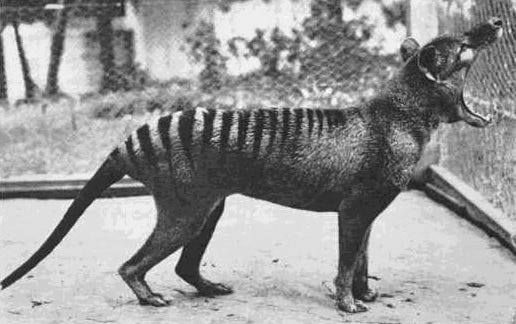
The last known Tasmanian tiger was named Benjamin, he died at the Beaumaris Zoo in Hobart in September 1936. Ironically, the Tasmanian government had just declared it a protected species two months earlier.
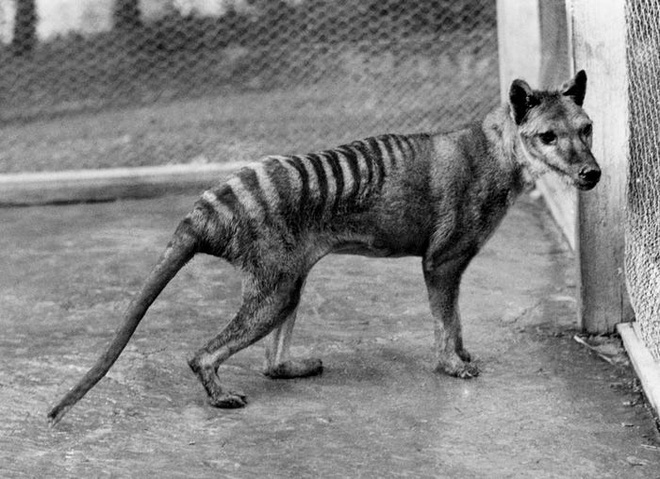
Benjamin died from exposure after zoo keepers accidentally locked him outside overnight. His death marked the extinction of the Tasmanian tiger, but it wasn’t officially declared extinct until 1986.
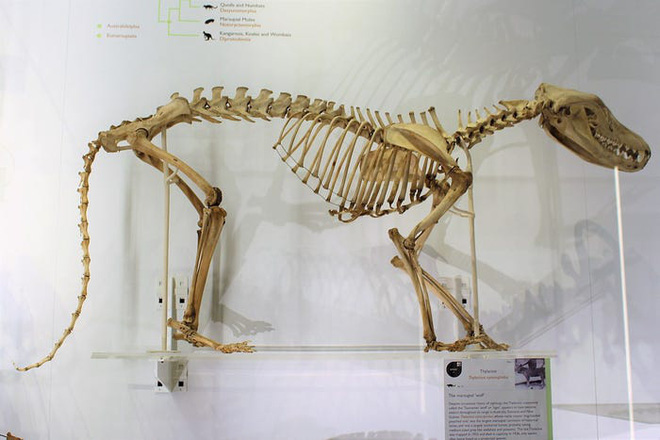
Today, the Tasmanian tiger is still regarded as the “soul” of Tasmanian culture. The search for it is compared to investigations into the Loch Ness monster mystery.
In 2002, scientists at the Australian Museum even recreated the DNA of the Tasmanian tiger, opening the possibility of bringing this creature back through cloning technology.