


Typically, incandescent bulbs have a lifespan of 1,000 to 2,000 hours. Even LED bulbs, which are much more durable than incandescent bulbs, last only between 25,000 and 50,000 hours.
But hanging from the ceiling of the Livermore fire station in California is the world’s longest-lasting bulb, which has been shining for over 120 years. What’s even more remarkable is that this incredible lifespan belongs to an incandescent bulb, rather than some special technology.
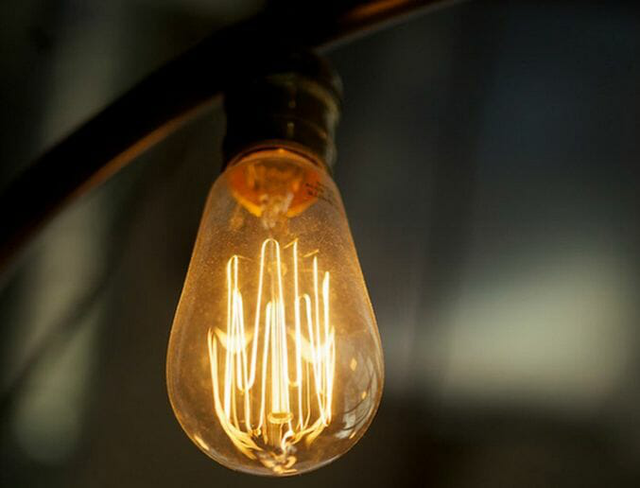
Despite its long existence, its remarkable lifespan only gained attention in 1972 when a fire station employee spoke to a local newspaper about the bulb that had been continuously lit for many years without anyone knowing its origin. Mike Dunstan, a young reporter from the Tri-Valley Herald, began to investigate and was astonished by his discovery.
It turns out that this bulb has been almost continuously illuminating for a century and has only been turned off a few times briefly – when it was moved in 1903, turned off for about a week in 1937, and again in 1976 when it was relocated. In recent years, it has also been turned off a few other times when its dedicated power source encountered brief issues.
Since then, this special bulb has begun to attract public attention. The Guinness World Records organization also recognized this 30w bulb as the “longest burning light bulb in the world“. This bulb has also been mentioned in numerous major newspapers and television programs.
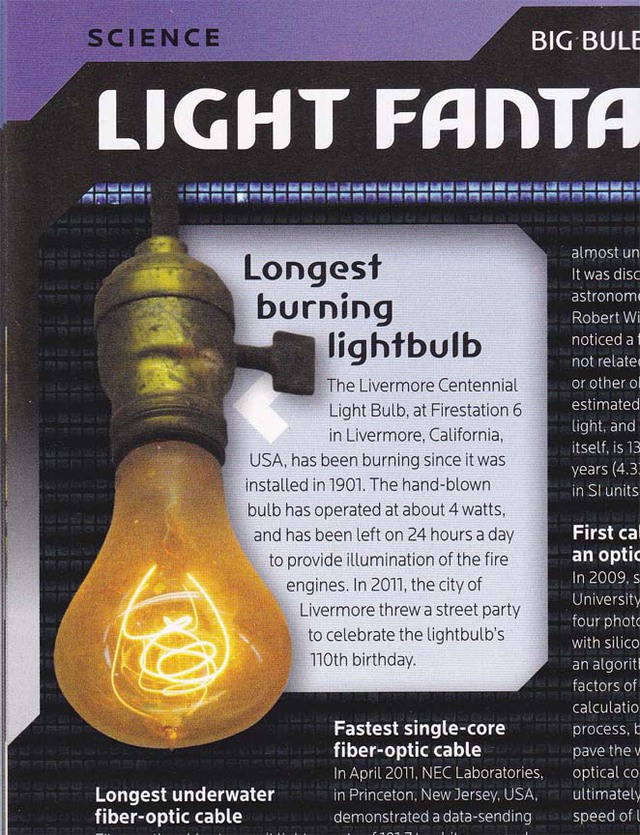
In 1976, when it was moved to its new home at Station 6 of the Livermore Fire Department, a crowd of police and firefighters eagerly awaited to see this bulb light up again. Deputy Fire Chief Tom Brandall recalls: “The city’s utility worker installed the bulb and connected the power. For about 22-23 minutes, the bulb did not light up. The crowd held their breath in worry. Then the utility worker took the switch and shook it: it lit up again.”
Since then, this bulb has been placed under continuous camera surveillance to ensure it remains lit at all times. In fact, in the following years, a live program called “BulbCam” was broadcast so everyone could follow its activity. On Facebook, there are over 9,000 groups related to this bulb.
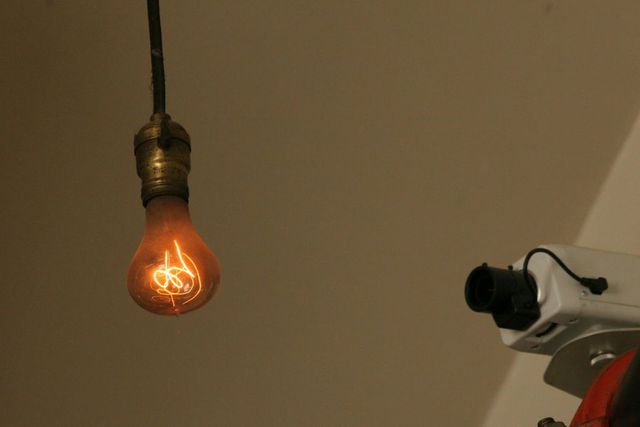
Although it has such a long lifespan, this bulb has never been highly regarded for its brightness – initially, its brightness was equivalent to that of 60W bulbs, but now it only matches that of 4W bulbs. However, this shortcoming is compensated by its design.
Master designer Adolphe A. Chaillet designed this bulb, which was produced by his company, Shelby Electric Company. The unique feature of this bulb is that it uses carbon filaments – which helps the bulb last longer and emit less heat than Edison’s tungsten bulb. But this still doesn’t explain its incredible lifespan.
Many research groups, from the Mythbusters to NPR, have tried to explain the incredible lifespan of this incandescent bulb. Yet, so far, all these efforts have only resulted in one answer – the mystery.
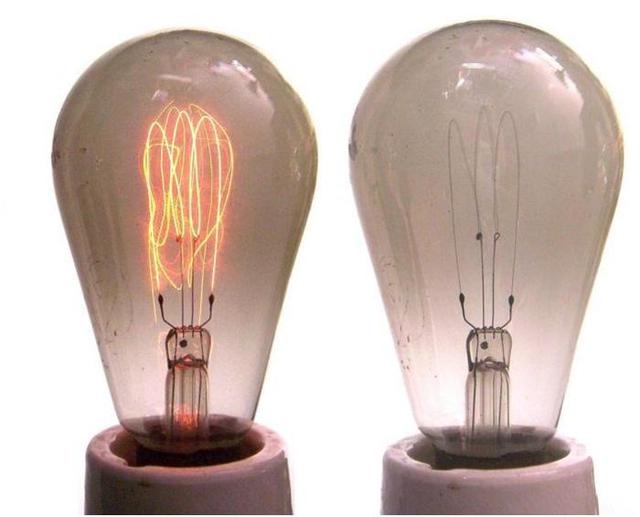
In 2007, physicist Debora M. Katz managed to purchase a round bulb from Shelby, similar to the Century bulb, and discovered that the filament of this type of bulb is eight times thicker than that of modern incandescent bulbs.
“I compared it to the width of the filament in modern bulbs. It turns out the filament in modern bulbs is a coil, with a diameter of about 0.08mm, made from wire with a thickness of 0.01mm. I didn’t know that until I looked through a microscope. The width of the filament in the 100-year-old Shelby bulb is equivalent to the width of the coil in modern bulbs, 0.08mm.”
According to Katz, the thicker filament may be why this bulb has such a long lifespan. Katz also suggests that its incredible lifespan is partly due to it operating continuously instead of being turned on and off every day – a process that causes it to wear out faster (because the filament has to heat up again from scratch).
But in the end, Katz and her students still cannot conclude exactly what contributes to this lifespan. Justin Felgar, a student of Katz, believes that to understand it, it would need to be “broken down” and run through the particle accelerator of the U.S. Naval Academy – a costly process that, as of now, cannot be executed as long as this incandescent bulb continues to shine.
Summary