


In 2008 at the Inonu University Liver Transplant Institute in Malatya, Turkey, a 19-year-old girl lay hopelessly on a hospital bed. She was suffering from a dangerous disease known as hepatic encephalopathy. This occurs when the liver fails to filter toxins from the blood.
As a consequence, the accumulated toxins severely damage the brain. With her condition critically severe, the girl was placed on the priority waiting list for a liver transplant. But all she faced was a desperate wait.
No suitable liver was available for the 19-year-old girl.

Until one day, doctors noticed her survival indicators had dropped to a critical low. Her liver had completely failed, and they urgently needed to save her life. In desperation, the transplant coordination center informed the doctors that they had an available liver, one that all other hospitals in the system had refused.
Indeed, it was a very poor liver. It contained a cyst caused by a parasitic infection and had belonged to a 93-year-old woman who had just passed away. By transplant standards, this liver was not suitable, especially for the body of a 19-year-old girl.
But this was truly the last chance for the girl to live; the doctors decisively proceeded with the transplant, and wonderfully, it was successful. The young girl not only survived but also made an incredible recovery. Six years after the surgery, she gave birth to a healthy baby.
In 2015, on her child’s first birthday, the girl held another special birthday celebration. It was also the day her liver turned 100 years old.
Each of our organs has a different age
This story is irrefutable evidence that in our bodies, some organs can outlive their owners. The liver of a 93-year-old woman could have continued to live had she survived.
Conversely, some organs die before the body does; they age faster, deteriorating more than the liver of the young girl.
In many cases, the age of an organ may be a more important measure than your chronological age. It is similar to a number scientists refer to as “biological age.”

Biological age is defined as age estimated by biological markers in the human body rather than the number of years you have lived. These two numbers are not always the same. The age of each organ based on its biological markers is similar.
A healthy young man in his 20s or 30s may look youthful. However, unhealthy eating habits may have aged his pancreas to that of a 50-year-old middle-aged person. A study even found a 38-year-old with kidneys of someone over 60.
Conversely, there are elderly individuals over 80 who have hearts that seem to have just beat through four decades. They possess a healthy heart, knowing how to exercise and take care of it.
Geneticist Michael Snyder at Stanford University compares the human body to a car. Over time, the overall functioning of a car depreciates and declines. “But among the parts and components, some will wear out faster than others,” he said.
Data collected from organ transplant cases provide intriguing clues about the aging of various organs in the body. Accordingly, some organs can be younger or older than the age of the person carrying them.
The heart and pancreas generally age faster than a person’s actual age after they reach their forties, meaning over 40 years old. However, our lungs tend to be younger if we take good care of them and do not smoke. The cornea is the organ with the highest durability, being least affected by age.
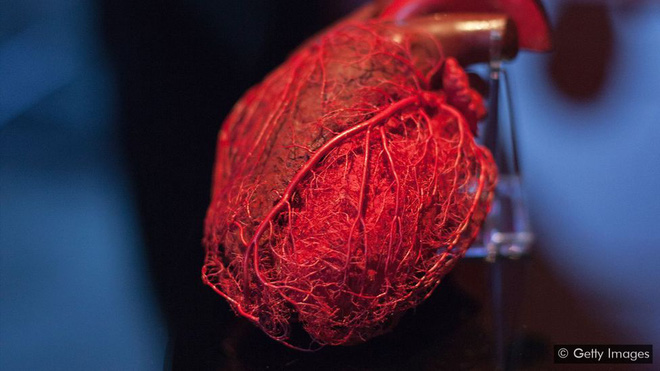
At the cellular level, the concept of an organ’s age is even more nebulous; scientists know little about them. They only know that each cell making up an organ can wear out over time.
An auto-destruct switch in genes makes them die after a while, to be replaced by new cells. This process occurs regularly, meaning the cells and tissues that make up every organ are regenerated.
The only difference is that the rate of regeneration varies significantly across different cell types and organs. A red blood cell circulating in your arteries and veins lives an average of up to four months. Meanwhile, the red blood cells in the small intestine must be replaced after just a few days.
On the other end of the spectrum, most brain cells or neurons live as long as we do. They are not replaced by new cells, so their death causes significant issues for the body.
How to determine the age of each organ?
Researchers at the University of Liverpool, England, believe that the complexity of organ structures, along with their dependence on blood vessels for functioning, is likely the main factor determining their age.
Interestingly, the age of some organs seems to be more sensitive to our lifestyle. A prime example is the lungs, as Richard Siow, director of aging research at King’s College London, notes.
The lungs of smokers have shorter lifespans than those of non-smokers. Research shows that the lungs of people living in cities age faster than those living in rural areas due to the polluted air in cities.
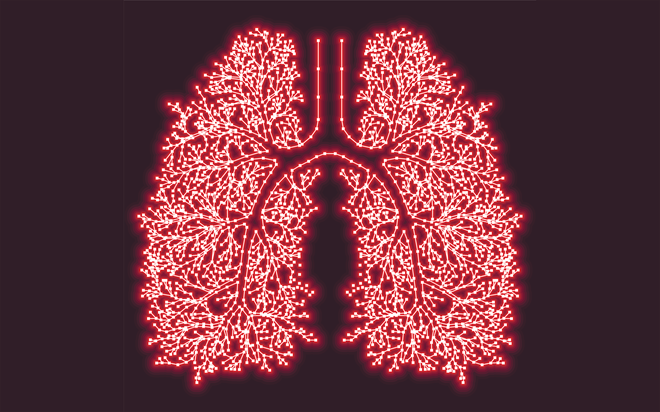
According to Siow, any lifestyle factor can influence our body’s complex aging patterns. What we eat and how we eat it, how we sleep, and our sleep schedules – all of these can impact each of our organs in different ways.
Clearly, not all organs have the same durability over time. And if we want to live longer and healthier, we should be aware of which parts of our body are aging first.
However, accurately estimating the biological age of any organ in the body is not a simple task. Although many websites offer estimates of the biological age of the heart or lungs, most of those results lack scientific backing.
To determine the age of a specific organ, one must thoroughly examine its function, tissue structure, cellular composition, and even DNA to achieve an accurate assessment.
A 2020 study from Stanford University identified at least 87 molecules and bacteria in the body that can be used as biological markers to estimate the age of organs in humans. By tracking a group of volunteers tested quarterly over two years, the research team found that these biological markers express aging through various biological mechanisms.
Furthermore, they discovered that individuals could be categorized into different age patterns by grouping biological markers based on the organs or systems that represent their aging the most. For example, one of the four aging pathways may dominate a person’s body – that is, kidneys, liver, metabolic system, or immune system.
Just as a person with high cholesterol needs to exercise and monitor their cardiovascular health, someone with high liver aging markers may need to consider reducing alcohol and sugary drinks.
These biological markers may, in the future, contribute to determining the age of each organ, providing individuals with proper advice and lifestyle guidance starting from a young age.
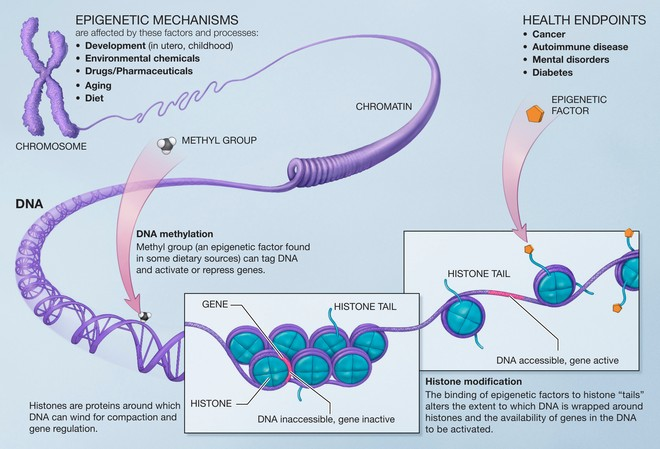
Now, recent advances in machine learning may allow us to estimate the age of cells and organs more accurately. One of these methods involves the methylation process of DNA. This is the accumulation of a group of methyl chemicals attaching to various parts of DNA.
Using methylation measurements, scientists can construct an epigenetic map to compare the biological ages of various tissues and organs. For example, a study calculated that breast tissue in women’s bodies is generally older than their actual age. This could explain why many women develop breast cancer.
And there is a chance that if we can somehow reverse the methylation process, we may help our tissues become younger, thus pushing back cancer before it appears.
Can we reverse the aging process of organs?
It is clear that no matter how we view the aging of the body, the ultimate goal remains to slow down or reverse it. At the cellular level, this might already be a feasible goal. In March 2020, researchers from Stanford Medical School announced they had found a way to rejuvenate cells taken from older volunteers.
They achieved this by creating Yamanaka factors, proteins previously used to revert cells back to an embryonic state. Using Yamanaka factors, after a few days, the cells extracted from older volunteers rejuvenated significantly.
But this is at the cellular level; rejuvenating an entire body part or organ is certainly much more challenging. Some scientists are willing to give up on specific aging processes to focus on a simpler goal: slowing down overall aging.
This goal focuses on extending the healthy lifespan – Healthspan – of older adults rather than extending their lifespan. A recent study from University College London found that some drugs like rapamycin, metformin, and lithium can delay the onset of age-related diseases.
This means that using these drugs can help an elderly person achieve a more fulfilling old age, unburdened by illness. However, they will still age and cannot reverse their overall aging process; they can only avoid certain diseases.

Richard Siow stated that, in general, the research strategy to understand the age of each organ is very meaningful. Because we can use the age of organs to plan health care strategies.
However, he noted that the lifespan of organs cannot be separated from the overall aging of a system. This is because the aging of one organ certainly affects the aging of other organs.
“If you have inflammation in your joints, that inflammation will also affect your brain and heart,” Richard Siow said. “Each organ has a different aging trajectory, but they are all interconnected.”
Source: BBC