


The cat family consists of ambush predators; they excel at stealthily approaching their prey and then using their strength to overpower it. During hunts, the cat family focuses on camouflage and the strength of the individual, thus a larger body size has an advantage in subduing prey.
In contrast, the dog family consists of pursuit predators; they cannot take down their prey with a single strike like cats can. Instead, they often bite the hips or legs of their prey to cause blood loss, shock, and ultimately death from exhaustion. Therefore, for species in the dog family, speed, endurance, and teamwork are vital. Being too muscular can negatively impact their long-distance hunting capabilities.
Thus, as we have observed, large cats such as lions, tigers, and leopards can quickly overpower large prey. Large canids, wolves, and African wild dogs, although much smaller, can also kill large prey due to their collective strength and long-distance running advantage. Their body structure today is highly adapted to their respective lifestyles and represents the optimal solution selected through evolution.
But who decreed that cats could only ambush while canines could only pursue? In the long evolutionary history of canines, was there never a giant ambush predator like the large cats?
However, historically, the dog family has three subfamilies: Borophagus, Hesperocyon, and True Canine. These three subfamilies continuously competed to become the top of the food chain; nevertheless, none of them succeeded in evolving into super-sized predators like those in the cat family.
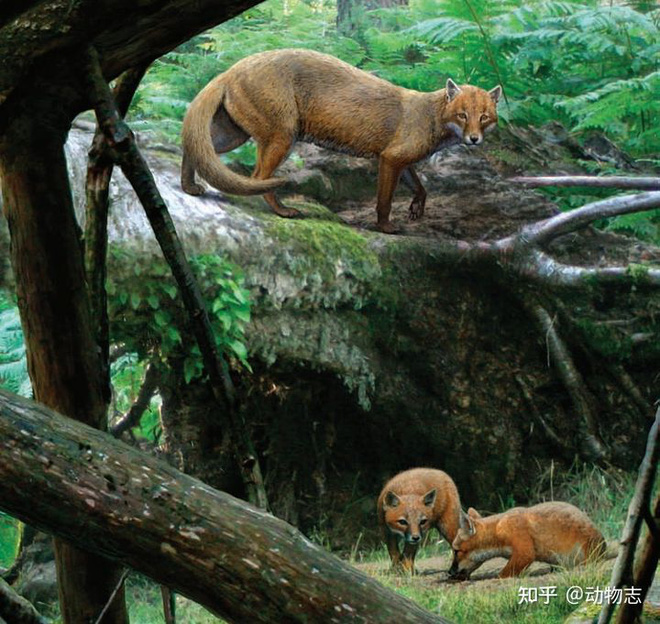
The dog family first appeared with the subfamily Hesperocyon, whose initial members lived in the western United States about 40 million years ago, at the end of the Eocene. They were very small, weighing only 1-2 kg, and their main diet consisted of rodents sized like rabbits and mice. However, based on the distribution of fossils, we can infer that they lived in groups, herds even at this early stage.
It can be seen that the dog family had been living in groups since the early stages of evolution and emergence, relying on the strength of the pack, which limited the growth of individual members.
From then on, they followed this evolutionary path and grew stronger, ultimately leading to the evolution of the Austrian dog, about 20 kg in weight, 21 million years ago. This was the first time in the evolutionary history of dogs that such a large species appeared, and they gradually differentiated into wolves and wild dogs.
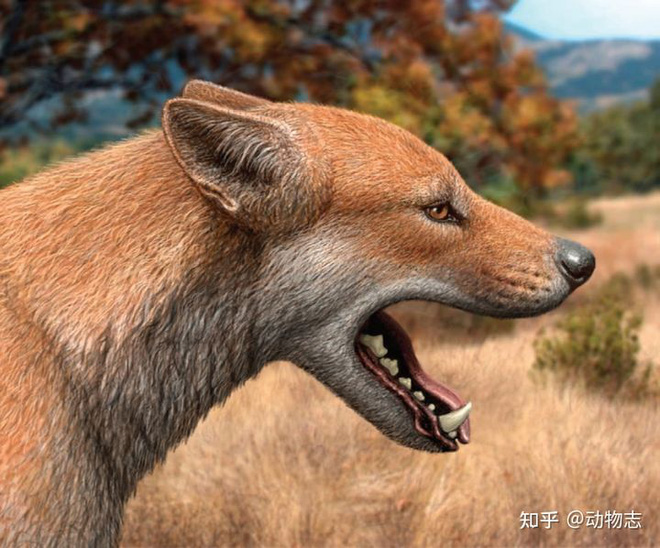
When compared to the same time frame, the common ancestor of cats was still lurking in the dense forests of Europe. Considering the development at that time, the dog family was ahead of the cat family by a step.
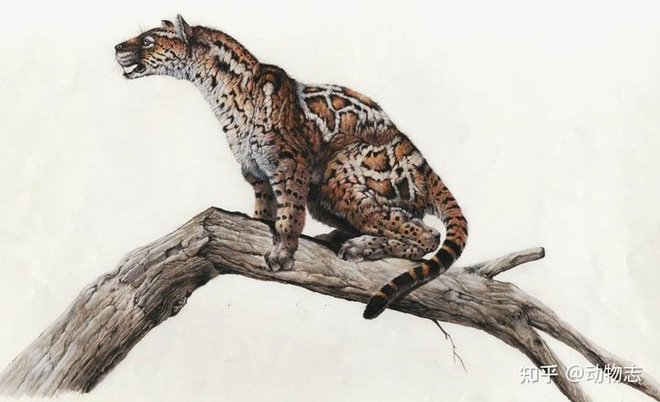
This first dog subfamily was supposed to continue evolving and growing stronger; however, they suddenly disappeared 15 million years ago, marking the abrupt end of the first large-scale formation. What happened here? This is directly related to the second subfamily we will discuss next.
The second subfamily of the dog family is Borophagus. It can be said that this is the most successful evolutionary subfamily in the history of the dog family. They were the largest in size and had the highest diversity. However, during this period, the dog family was surpassed by the cat family.
This second subfamily first appeared at the beginning of the Oligocene, about 32 million years ago. Since the first subfamily had established an advantage at that time, to avoid direct competition with their earlier relatives, the initial members of the second subfamily were all small, omnivorous animals weighing a few kilograms, even under one kilogram, very similar to modern-day civets.
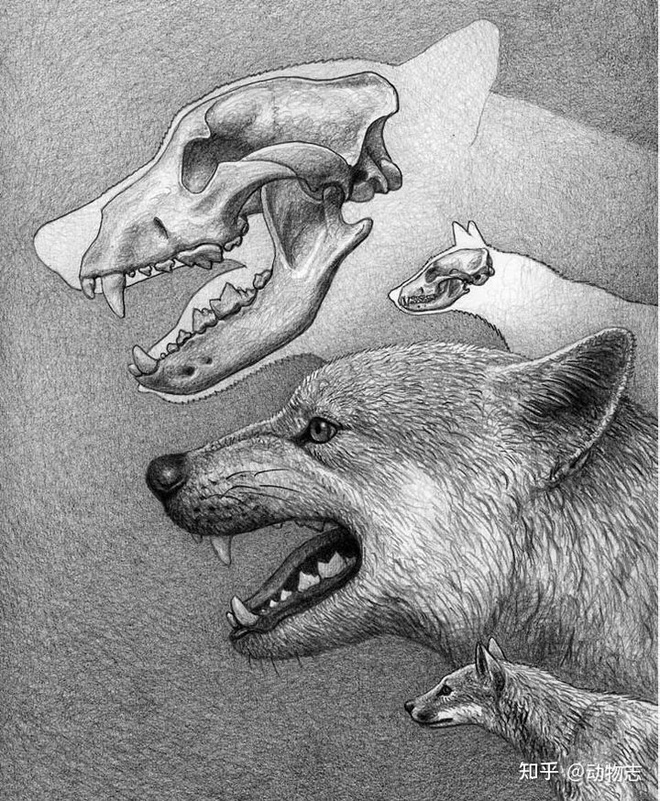
Later, the second subfamily evolved towards larger and more carnivorous forms, beginning to challenge the dominance of the first subfamily. In this escalating “arms race,” the first subfamily became the losers. During the Miocene epoch, about 16 million years ago, the second subfamily evolved into species weighing 20-40 kg and completely replaced the first subfamily.
With the extinction of the first subfamily, the second subfamily entered its golden age. At that time, there were 30 species of dogs living in North America, compared to only 9 dog species in present-day North America.
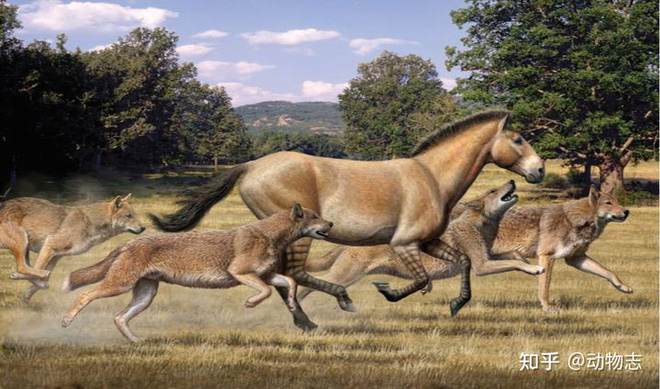
Starting from 17 million years ago, the cat family began to invade the territory of dogs – North America. At the same time, climate change caused temperatures to drop dramatically, and forests gradually transformed into grasslands. In this environmental shift, both the dog and cat families began fierce competition, which ultimately led to the decline and extinction of the second subfamily of the dog family.
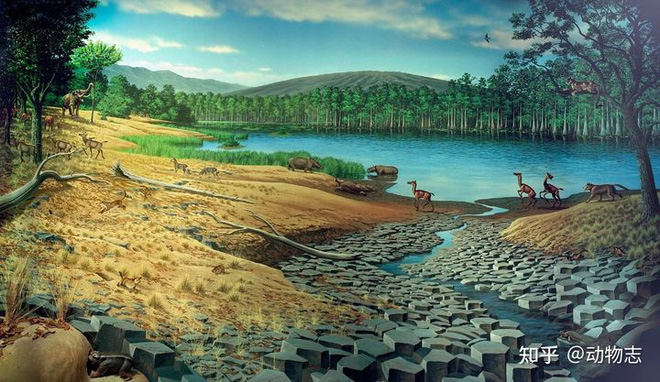
In an open environment, it became more challenging to approach prey, and at this time the environment favored ambush predators. Cats are professional ambushers; they have more robust body structures, larger and stronger necks, and sharper claws compared to the dog family. They can silently approach their prey, targeting vital points and dispatching them quickly.
Under pressure from the cat family, the second subfamily of dogs began to develop towards scavenging, as there were no hyenas in North America, and the niche for scavengers was largely vacant. This evolutionary strategy ultimately led to glory for the second subfamily, and they evolved into the largest dogs in history – Epicyon. Among them, the body size of the genus Epicyon haydeni could exceed 100 kg. However, their adversaries at this time were saber-toothed cats weighing over 300 kg.
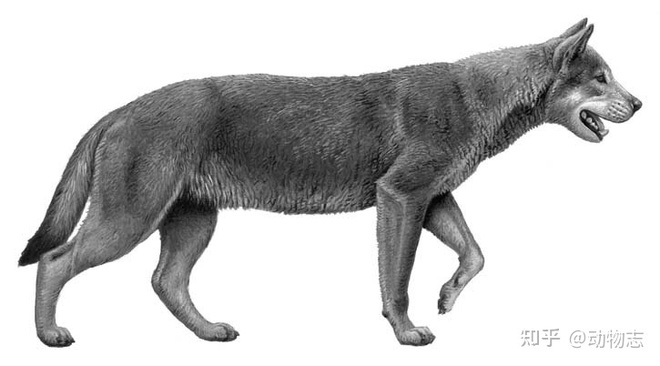
However, after the extinction of Epicyon, the last members of the second subfamily evolved towards smaller sizes and scavenger diets, weighing around 20-40 kg and having diets similar to modern hyenas. However, dogs went extinct 2 million years ago due to competition from the cat family.
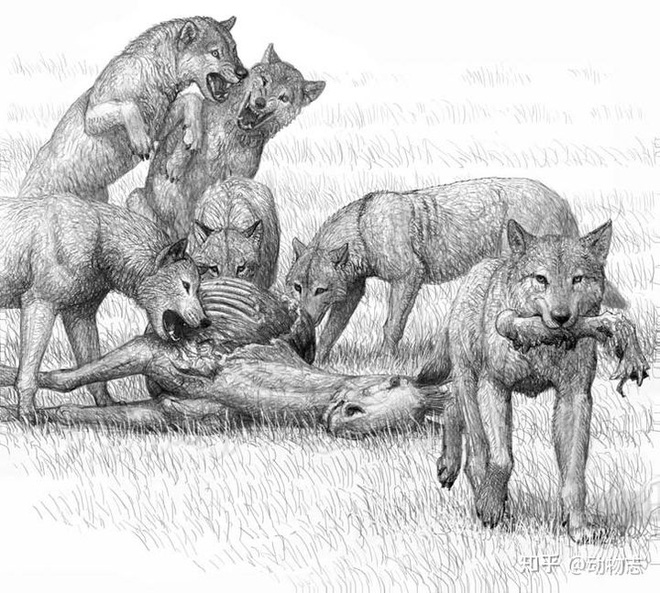
Just as the second subfamily and the cat family were fighting for survival, the third subfamily of dogs – True Canine quietly emerged. This third subfamily and the second subfamily appeared almost simultaneously; however, as time passed, the second subfamily thrived while the third subfamily was suppressed and did not develop, resulting in them being maintained at only a few kilograms in size.
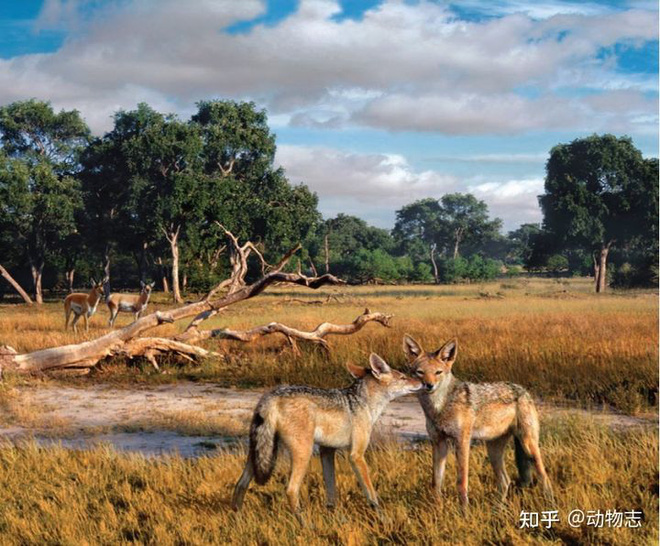
The characteristics of this third subfamily include a more slender neck and limbs, and a degenerated thumb with four remaining toes that are more slender. Because of these traits, paleontologists referred to them as slender dogs. Indeed, modern wild canids like wolves, wild dogs, and foxes also possess these characteristics, and all existing wild dog species belong to the True Canine subfamily.
The body structure of this subfamily makes them weaker in strength, but at the same time more suited for running. As the environment became more open and prey evolved faster, these traits became crucial advantages. In the race against prey, the second subfamily, with their large and clumsy bodies, failed, while this third subfamily easily triumphed in hunts.
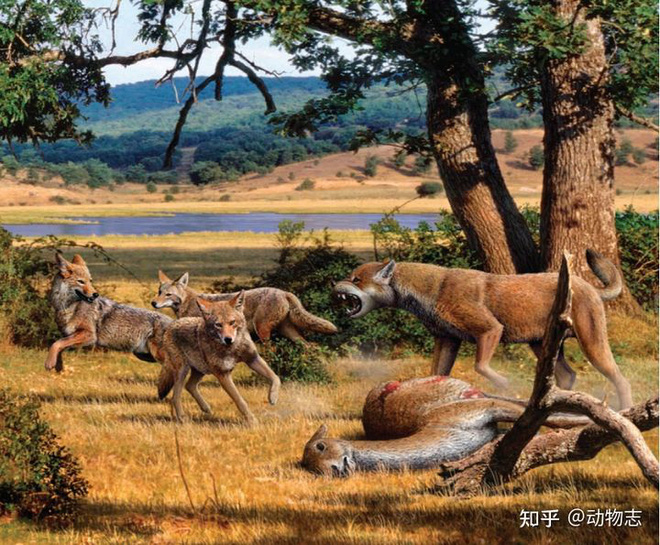
The failure of the second subfamily indicates that a large body can easily lead to survival failure. From then on, in the world of super-sized land predators, dogs could no longer compete with cats, and cats became the largest predators, carnivores on land over 100 kg.
The True Canine subfamily followed a completely different evolutionary path from the earlier subfamilies; they no longer attempted to compete in size with the cat family but instead used their body shape advantage in long-distance running, ultimately succeeding. It can be observed that wolves and red foxes are currently the most widely distributed carnivores in the world.
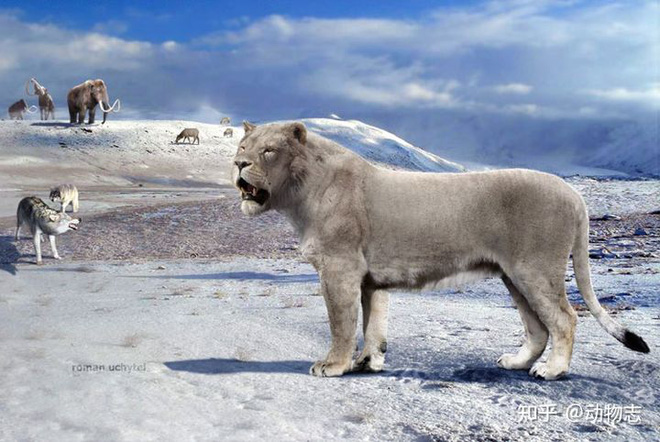
However, in terms of body size, the dog family has always been at a disadvantage compared to the cat family. The third dog subfamily reached its maximum size at the end of the Pleistocene – the Dire wolf could weigh up to 80 kg. However, contemporary saber-toothed cats could weigh over 400 kg.
Nevertheless, similar to the earlier large dog subfamilies, the large cat species ultimately faced extinction. At the end of the Pleistocene epoch, 12,000 years ago, the environment changed significantly once more, and dominant cat species like saber-toothed cats and maneless lions gradually went extinct. Among the species in the third subfamily, although the Dire wolf went extinct, the modern gray wolf survived and replaced the cat family to become the strongest carnivore in North America. Although from a body size perspective, wolves are not as strong as tigers and lions, it can be said that in terms of competition and evolution, dogs won by regaining North America.
And perhaps in the 17 million years of confrontation between them, the animosity between the dog and cat families has been ingrained in their genes. Today, we can easily observe domestic cats and dogs frequently fighting. Tigers and leopards often enjoy killing and eating dogs. Wild canids and African wild dogs will always surround leopards when they spot them..