


In addition to breakthroughs that enable interstellar travel, scientists are also working on optimizing resources for living in alien “foreign lands.” One of the most invested aspects is the method of bringing oxygen to the surface of the Moon.
In October, the Australian Space Agency (ASA) and the National Aeronautics and Space Administration (NASA) signed a collaboration contract to realize the Artemis project, sending landers to the Moon to collect rock samples – a vast, untapped source of oxygen.
The Moon has an atmosphere, but it is very thin and primarily composed of hydrogen, neon, and argon. This is not a gas composition that can support life for complex organisms, such as mammals.
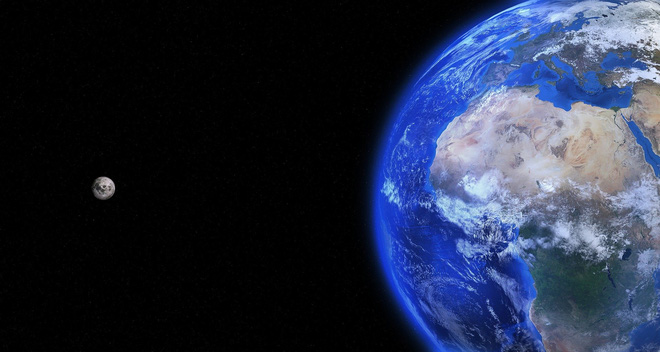
However, the Moon is rich in oxygen; it just doesn’t exist in gaseous form. Oxygen on the Moon is trapped in regolith – a layer of soil that is a mixture of rock and fine dust covering the entire surface of the Moon. If we can extract oxygen from this soil, the potential for supporting life on this barren celestial body would be unprecedented.
Oxygen is available in many materials around us. The primary composition of the Moon is similar to what you see at your feet. Minerals such as silica, aluminum, iron, and magnesium oxide are abundant on the Moon’s surface, and all of them contain oxygen, just not in a form that lungs can process.
On the Moon’s surface, these minerals exist in various forms, including solid rock, pebbles, fine dust, and gravel. This is the inevitable result of impacts between the Moon and freely flying celestial bodies in space.
Many researchers prefer not to use the term “soil” to refer to the materials covering the Moon’s surface because, on Earth, soil is produced from the activity of countless microorganisms breaking down the surface layer over millions of years. Soil is a dense network of minerals that do not exist in the original rock structure.
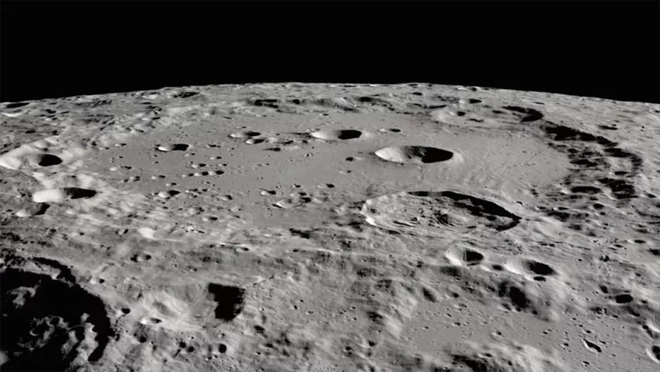
The soil around us has special structures, chemical, and biological properties. In contrast, the material covering the Moon’s surface is primarily regolith in its original state.
Filtering Gas from Rocks
The composition of the Moon’s surface regolith contains up to 45% oxygen; however, the oxygen molecules are tightly bound to the aforementioned minerals. To break these strong bonds, energy will need to be introduced into the compound. This is where scientists apply the method of electrolysis.
Electrolyzing the Moon’s regolith will produce mainly oxygen, alongside aluminum as a byproduct. Scientists will strive not to waste any materials obtained from the electrolysis process.
Although this is a straightforward process, it still requires a significant amount of energy. To support the electrolysis of the Moon’s regolith, we will need solar energy or other potential energy sources available on the Moon.
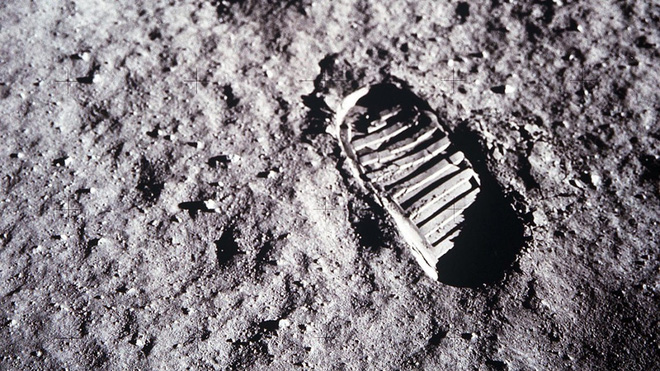
Historical footprints on the surface of the Moon.
This oxygen production chain will also require large industrial machines. The technologies needed for this process are all available on Earth; the major challenge will be transporting them to the Moon and providing a steady, abundant energy source for their operation.
Earlier this year, the Belgian startup Space Applications Services announced plans to assemble three oxygen-producing reactors through electrolysis. They intend to bring this technology to the Moon for testing in 2025.
How Much Oxygen Can the Moon Produce?
It is estimated that the oxygen reserves in the Moon’s regolith are vast. Each cubic meter of regolith contains an average of 1.4 tons of minerals, of which 630 kilograms are oxygen. NASA estimates that a human needs 800 grams of oxygen per day to survive, so 630 kg of oxygen would be enough for one person to live for about 2 years or more.
If we estimate the regolith on the Moon to be about 10 meters thick, and we can extract all the oxygen contained within it, then the Moon’s crust contains enough oxygen to support 8 billion people for 100,000 years. While this number will depend on various factors such as the efficiency of the production lines and the amount of regolith that can be mined, just half of that impressive figure would allow humanity to build a prosperous Moon base for many millennia.
The Moon will be a springboard for humanity to reach other planets in the solar system, and further, it will be the first step in conquering distant regions of space.
Source: The Conversation