


Titles are an essential part of videos uploaded to YouTube, serving as a way for video creators to differentiate their uploads and for users to search for the content they need. And probably everyone knows that titles can be changed even after the video has been uploaded, whether to correct spelling mistakes or because the uploader feels the old title no longer fits the content they posted.
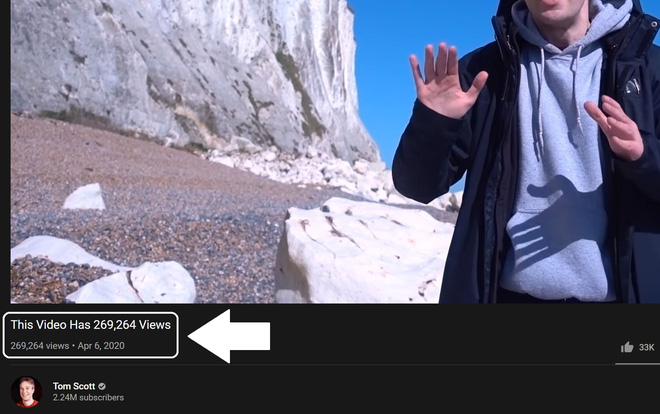
But would you believe that this title can even change in real-time, not only that but change according to the number of views the video receives? Recently, science and technology YouTuber Tom Scott posted a video that can do just that. Each time you click on the video or refresh the page, the title updates to match (or closely match) the view count displayed below. If you don’t believe it, you can check for yourself by clicking here.

What method did Scott use to make this happen? Has he ‘hacked’ YouTube? Or did he hire someone to ‘watch’ the view count increase and hit the title change button accordingly?
Fortunately for us, in this very video, he explained how he did it. He created an automated bot capable of reading the view count (called Y) and the number displayed in the title (called X). When it detects a difference between X and Y, the bot presses the edit button (Edit video) to correct it.

This is a very simple and understandable explanation of an API (Application Programming Interface), an important component of websites, especially services like Facebook, Twitter, or Google Maps. In the early days of the Internet, APIs were developed in an ‘open’ format, allowing anyone to create their own applications using the services and data of large companies without needing their permission.
Over time, APIs have become more tightly controlled for two main reasons: Security and money. Regarding security, while open APIs allowed users to access a large amount of information from popular websites, this information could easily be leaked, exemplified by numerous privacy data breaches from Facebook. Secondly, companies have tightened control over APIs to monetize their services, rather than allowing smaller developers to use them for free.
We invite you to learn more through the video: