


Through the world’s largest radio telescope system ALMA located in Chile, astronomers have captured stunning images of a fascinating astronomical phenomenon for the first time: the birth of an exoplanet hundreds of light years away from Earth.
The image was published in the astronomy journal Astronomy & Astrophysics on May 20, showing a spiral structure appearing inside a dense disk of dust and gas surrounding the star AB Aurigae. This is a young star located 520 light years (about 4.94 trillion kilometers) from Earth, belonging to the constellation Auriga. AB Aurigae is situated in an area known as a ‘stellar nursery,’ which is filled with gas and cosmic dust.
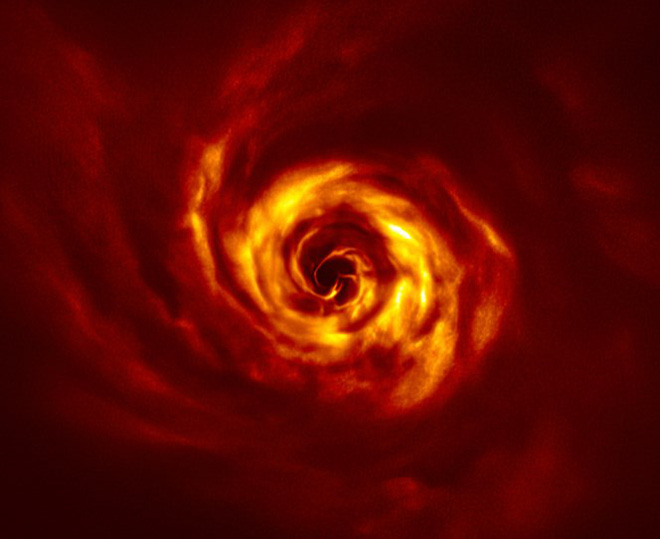
According to the European Southern Observatory (ESO), the spiral structure around AB Aurigae is a sign that a planet is gradually forming.
“Thousands of exoplanets have been discovered to date, but few know how they form,” said Anthony Boccaletti, an astronomer at the Paris Observatory (France).
“It takes millions of years for a planet to reach the final stage of its formation. Therefore, we cannot pinpoint the exact moment of a planet’s birth. However, we can affirm that we have almost captured the moment a planet is in the process of forming,” Anthony Boccaletti added. This research could help scientists better understand how planets form from the condensation of dust and gas in the disks surrounding young stars.
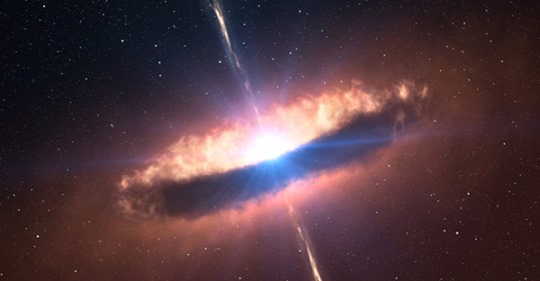
It is also noted that the distance between the ‘newborn’ planet in formation and its host star is approximately the same as the distance from Neptune to the Sun. Astronomers believe this is not a rocky planet like Earth, but a gas giant. It could be heavier than Jupiter, the largest gas planet in the solar system.
Source: CNN