


1. Humans Evolved from Apes
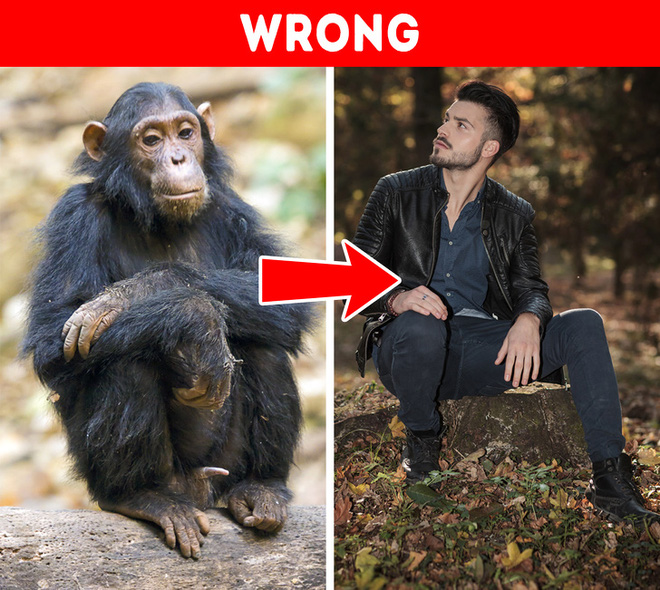
The idea that humans evolved from apes comes from a very common misconception about evolution. In fact, the creator of the theory of evolution, Darwin, never claimed that we humans evolved from modern apes. Instead, he argued that due to the significant similarities we share with monkeys and apes, we all must have a common ancestor millions of years ago.
2. Humans Are at the Top of the Food Chain
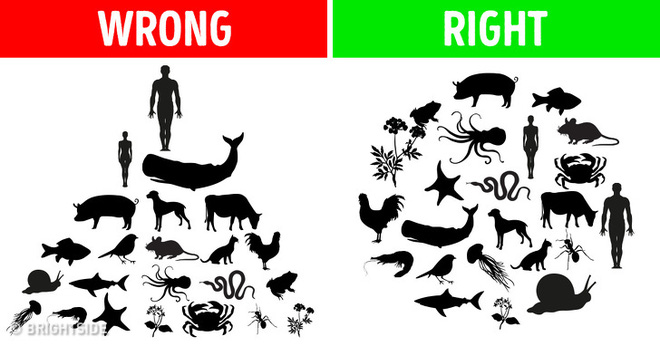
A group of French researchers attempted to calculate and accurately rank where humans stand in the food web hierarchy. Based on human eating behavior, we actually rank no higher than anchovies or pigs. And the food chain is not a pyramid shape. Humans, as omnivores consuming both plants and meat, definitely cannot be at the top.
3. Cats and Dogs Are Colorblind

There is a persistent myth that cats and dogs can only see in black and white. In reality, this originated from an experiment in 1915 when researchers failed to teach cats to distinguish between colored paper and gray paper. Subsequent experiments showed that cats can see colors but do not see red or see it less clearly than humans. Dogs are similar, being partially colorblind and unable to distinguish red and orange, but have no issues with other colors.
4. Humans Only Have 5 Senses
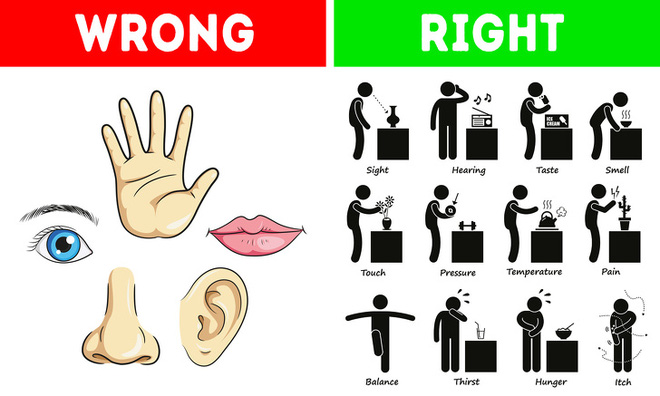
The principle of the 5 basic senses originates from Aristotle. However, despite its noble origin, this is merely a misconception. If senses are a way for the brain to perceive and acquire information about the outside world, then more than 5 types can be named. Hunger, thirst, and pain are senses that inform us about the body’s state. Additionally, we also possess pressure receptors and sensitivity to temperature. This list can be extended depending on the definitions or meanings we are using.
5. The Taste Map of the Tongue
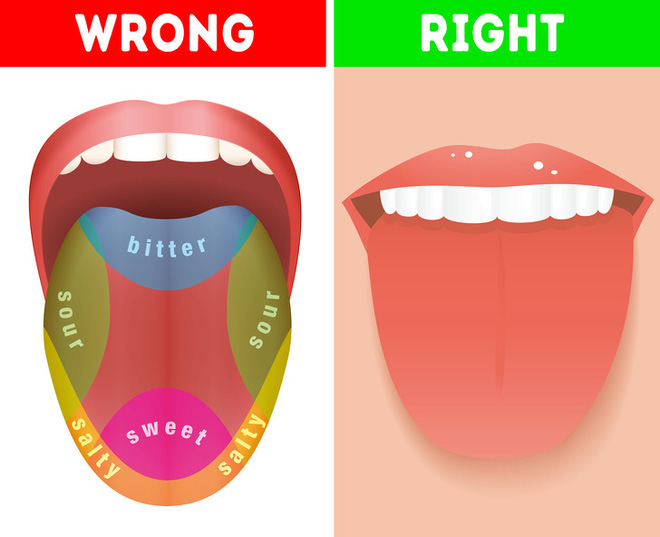
A common diagram divides the tongue into 4 regions: sweet, sour, salty, and bitter, with the assumption that the taste buds located in these regions determine specific tastes? You should forget it because, in reality, all basic tastes can be detected by each area of the tongue. The concept of the tongue taste map originated in 1901 and has been proven wrong many times since then.
6. Sugar or Sweets Cause Hyperactivity in Children

Many parents believe there is a link between their children’s hyperactivity and their diet, but in reality, most studies have found no connection between sugar consumption and children’s behavior. Furthermore, some studies show that when parents are unaware of whether a child has been given sweets, all perceived effects of sugar on behavior disappear.
7. Lemmings Prefer Mass Suicide
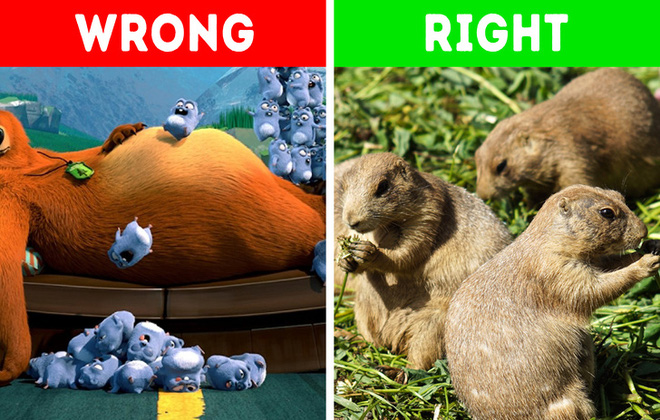
One of the most common rumors about these little lemmings is that they prefer to commit mass suicide by jumping off cliffs. In fact, this rumor stemmed from the Disney film White Wilderness released in 1958, where they staged scenes of lemmings pushing each other off cliffs. In reality, the act of a whole group of lemmings jumping from high places or swimming long distances is just normal migration behavior in search of a new habitat.
8. Ostriches Hide by Burying Their Heads in the Sand
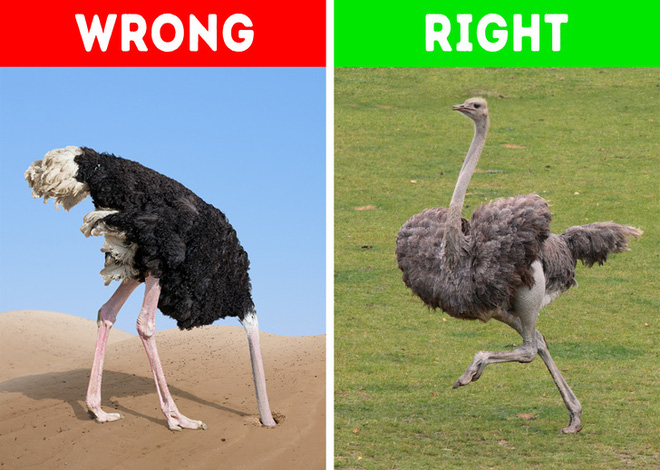
In reality, when ostriches feel threatened, they try to run away from it. If they cannot escape, they will lie down or stand still. They only bury their heads in the sand when trying to swallow pebbles and sand, which aids in digestion or when they need to dig a hole when nesting or turning eggs.
9. Goldfish Can’t Remember Anything Longer Than 3 Seconds
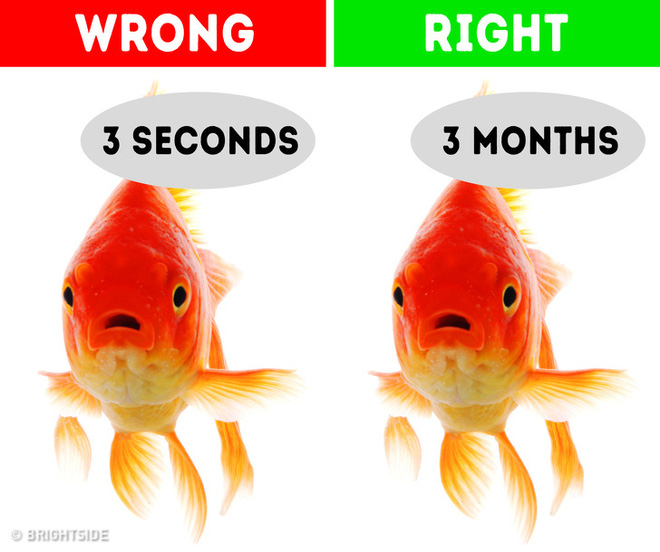
Someone with a poor memory is often compared to a goldfish, an animal believed to store information for only 3 seconds. But is this really true? Some experiments have shown that trained goldfish can remember their responses to certain sounds for months afterward.
10. Humans Cannot Develop New Brain Cells
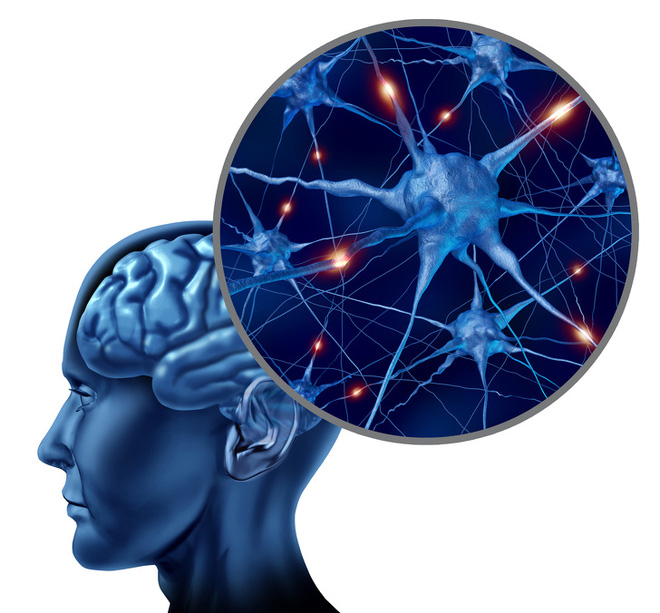
This is a common misconception that when brain cells die, no new brain cells will appear. Numerous studies have shown that our brains continue to produce new cells over time. This process is scientifically called Neurogenesis.
11. Deoxygenated Blood is Blue
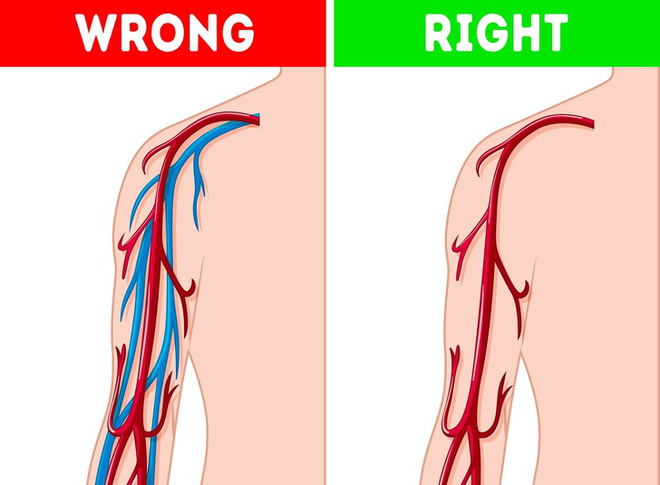
A misconception about deoxygenated blood being blue, similar to illustrations in biology books. In reality, human blood is always red due to a large number of red blood cells. It is true that our veins appear blue, but this is only due to the way light wavelengths are reflected from the skin: red light is absorbed and blue light is reflected.
12. Camels Store Water in Their Humps
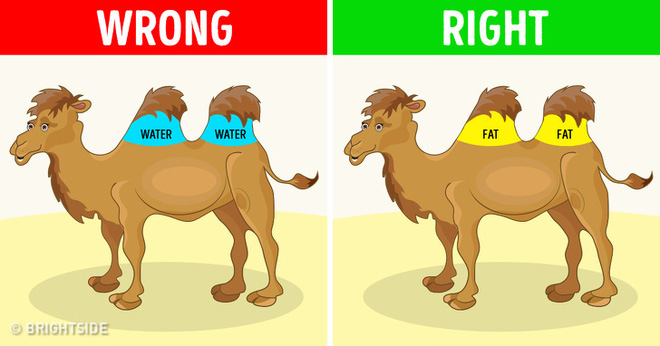
It is true that camels can survive several days without water, but not because of water reserves in their humps, as people often think. Camel humps are used to store fat tissue, not water. This tissue provides camels with energy for several days when food is scarce in the desert. And the actual water storage in a camel’s body is in its kidneys and intestines.
Source: brightside