


The UK government has officially recognized octopuses, crabs, and lobsters as sentient beings capable of expressing emotions, thus passing a law to protect these animals from suffering.
Until this significant moment, creatures from the decapod class (including crabs, lobsters, and various small shrimp) and the cephalopod class (including squid, octopuses, etc.) were not included in the Animal Welfare (Sentencing) Bill.
However, following a report published by the London School of Economics, which presented “strong scientific evidence” indicating that these animals are sentient and capable of experiencing both physical and mental pain, the UK government has changed its perspective.
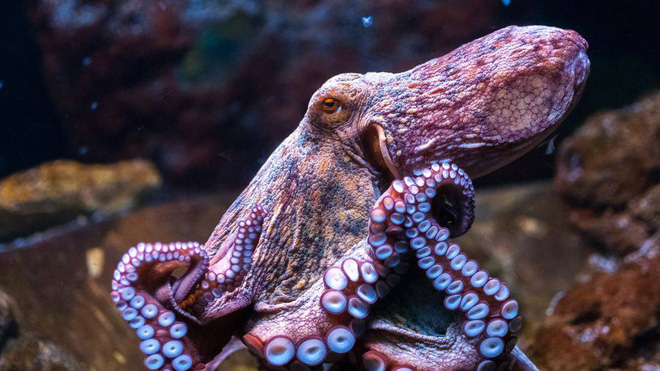
Mr. Jonathan Birch, an expert from the Centre for Philosophy of Natural and Social Science and the lead author of the new report, commented: “After reviewing over 300 scientific studies, we concluded that decapods and cephalopods must be classified as sentient beings, thereby included in the law ensuring animal welfare.
“The new act will also help eliminate a significant contradiction: octopuses and many other cephalopod species have been scientifically protected for many years, yet until now, they have not received protection from any other sector. There is a way for the United Kingdom to lead in establishing animal welfare, which is to strive to protect these invertebrates that are often looked down upon by humans.”
The report from the London School of Economics also advises against certain methods of preparing decapods, such as tearing off claws, stabbing the body with sharp knives, removing eyes, or selling these animals to inexperienced cooks. Additionally, they suggest banning the practice of boiling these animals alive without stunning them first.
Knowing that these animals can feel pain, torturing them before consumption, whether intentional or unintentional, can be considered inhumane. The move from the United Kingdom has received widespread support from animal protection organizations.