


This person says this and that in the same language and it can still be jumbled, let alone translating from a foreign language. If you go to Google Translate now and type in “kính cường lực”, it will definitely translate it as “tempered glass”, complete with a shield symbol.
This is because many people have called it that, so even if it’s incorrect, it becomes accepted. Vietnamese people love things that seem impressive; anything that looks grand is what we like. Calling it “kính cường lực” makes it sound cool, but if we called it thermal glass, it would be confusing.
Basically, the term tempered glass does not mean “kính cường lực”.
Tempered refers to the process of thermal treatment of glass, which includes heating and rapid cooling to create stress on the glass surface. Glass is simply glass.
Therefore, if tempered glass were translated as “thermal glass” or “heat-treated glass”, it would be more accurate. However, since the term kính cường lực has become so popular, we will continue to use this term.
Tempered glass, after the thermal treatment process, has surface molecules under much greater tension compared to regular glass, giving it better resistance. This surface tension is also what causes tempered glass to shatter into small, soft pieces when broken, making it safer and less likely to cause injury compared to regular glass.
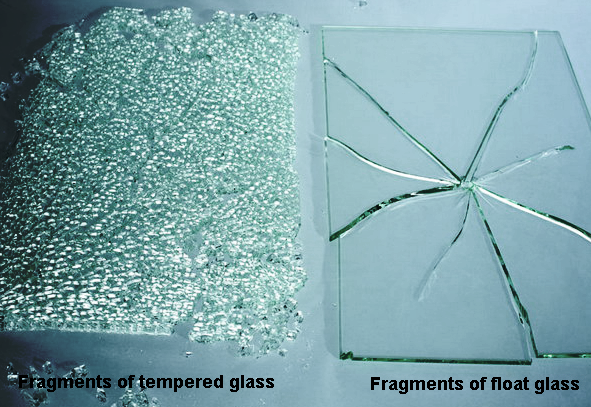
However, tempered glass has a drawback: it cannot be drilled, cut, or polished once it’s been heat-treated. A piece of tempered glass must be finished before the thermal treatment. Especially, even though it has good resistance, once it breaks, it will shatter completely rather than just chip like regular glass. That’s why many people find that if they tighten screws on tempered glass a bit too hard or let it bang against the floor a little too strongly, it completely shatters.
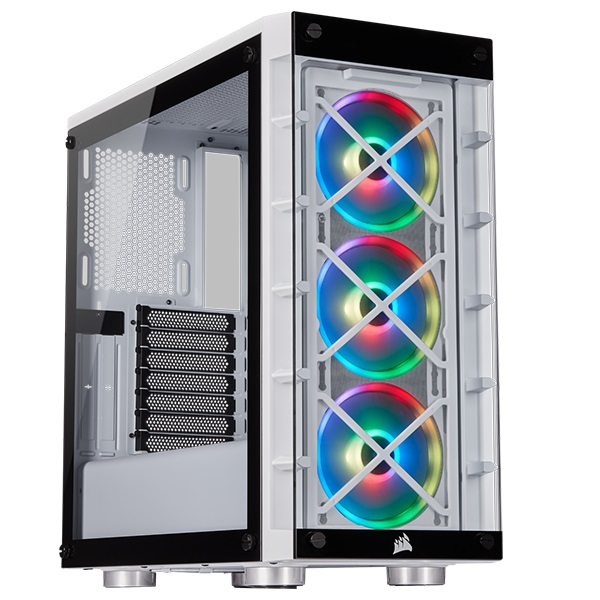
The tempered glass on cases is not designed to withstand significant impacts, so it is not thick, usually around 3-4mm, with high-end models only reaching 5-8mm at most. Therefore, it’s understandable that it breaks upon strong impact. If it were made thicker, it would not only increase the cost of the case but also make the glass heavy and cumbersome. While it is indeed more durable when you remove and install it, it is mainly to ensure safety in case it accidentally shatters; it does not mean this glass is indestructible.
Regarding the pros and cons of tempered glass, you just need to remember the basic points as follows:
Pros
– Better resistance than regular glass.
– When broken, it creates small, soft, non-sharp pieces that are less likely to cause injury.
Cons
– A chip or corner bump will completely shatter the glass.
– Cannot be processed after heat treatment.
So, don’t just look at the words “kính cường lực” and think this is super durable glass; if you’re going to disassemble it, do it gently!
According to Gearvn