


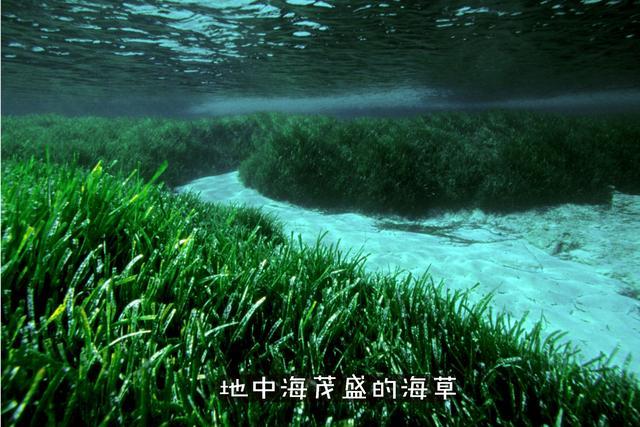
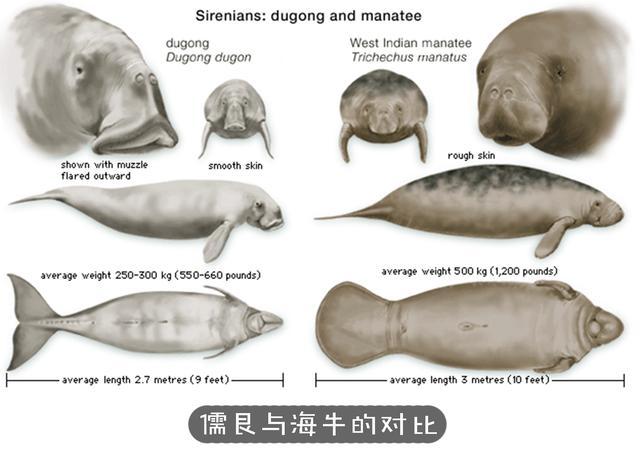
Today, the ocean has about 70 different types of seagrass belonging to 13 families and 6 orders, all of which are part of the angiosperms. Additionally, there are animals that feed on these types of seagrass and marine plants to survive, such as manatees, dugongs, and sea cows. These animals exhibit behavior where half of their body is exposed above the water to nurse, and sailors in the past mistook them for mermaids. In fact, today’s manatees show little variation because they all share a common ancestor.
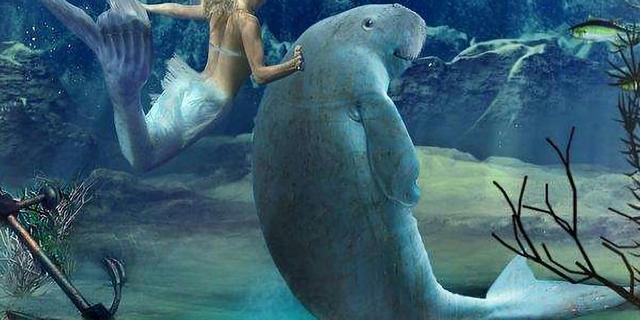
According to many archaeological and scientific documents, there is a commonality between seagrasses and marine herbivores: their ancestors, whether angiosperms or mammals, branched out entirely from land and all originated nearly 150 million years ago. They are all complex species with many more “strong” factors in evolutionary terms. In other words, their evolution has had more leaps and bounds.
Even more interesting is that the ancestors of seagrass evolved and transitioned from land to ocean around 70 million years ago, while the ancestors of manatees gradually transitioned around 60 million years ago. So why did their ancestors all come from land and not from oceanic creatures?
To address this question, we must discuss the differences between the natural environments of the ocean and land. But first, let’s answer the question of what size the creatures that consume the most food are?
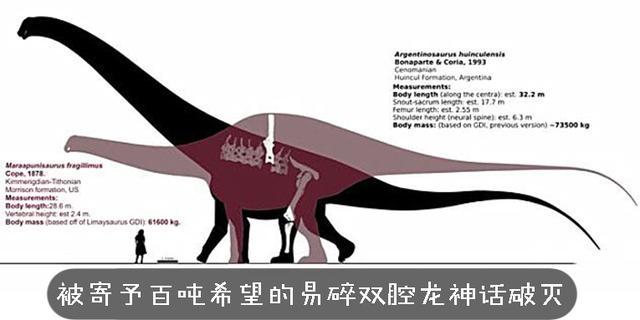
If we consider land animals, it seems that this question is quite difficult to answer clearly, as from organisms like aphids that are only a few millimeters in size to the largest animal on Earth today, the African bush elephant, they are all food-absorbing machines. However, in the past, there were dinosaurs that stretched over 20 meters and weighed tens of tons. Looking back, we see they have one thing in common – they were herbivores, and perhaps plants are the most direct and efficient source of energy.
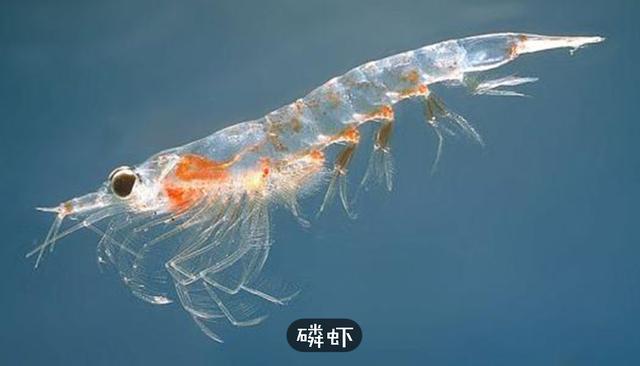
However, in the ocean, things seem to be completely different; the largest food-consuming creatures are mostly crustaceans with body lengths ranging from 1 mm to several centimeters.
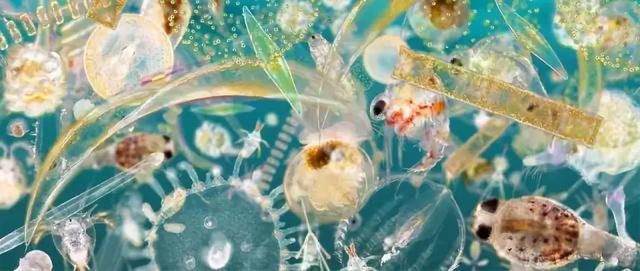
Why is that? Of course, we need to look for reasons from the food source. The “food producers” in the ocean are completely different from those on land. The “producers” on land are mostly plants. The largest trees can weigh over 6,000 tons, and the tallest can reach nearly 160 meters. But under the ocean, almost all “food producers” are single-celled organisms. Among them, diatoms (silica algae) produce 20% to 50% of the oxygen on Earth today.
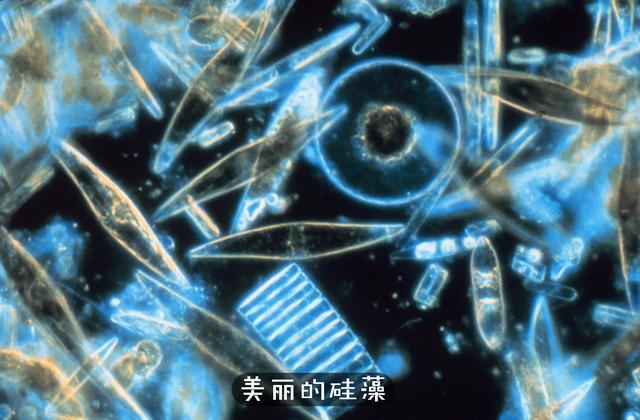
Diatoms are one of the most common types of phytoplankton, they often cluster into communities and range in size from 2 to 200 micrometers, with a diameter of about 90 micrometers and scattered in the water, making it impossible for large animals in the sea to consume them. This is because the size of marine animals is too large compared to them, making it difficult to filter and separate them from sea water.
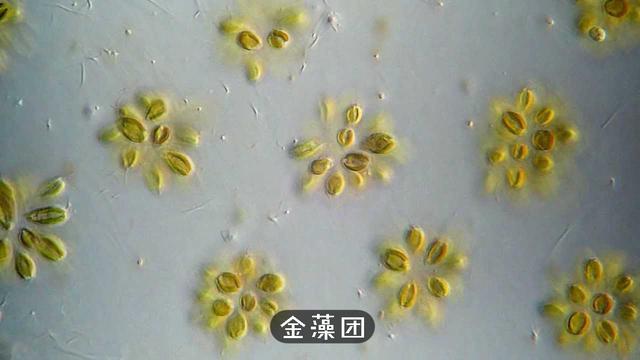
In this way, it is easy to understand that the most efficient feeding method for large marine creatures is to consume plankton, as they eat diatoms, which reproduce extremely quickly. They do not face any survival pressure because there are so many diatoms in the ocean, and each female can lay 1,000 eggs at once, providing up to 200 million tons of food for other marine animals each year.
So why are the “food producers” in the ocean dominated by single-celled organisms while land is dominated by plants?
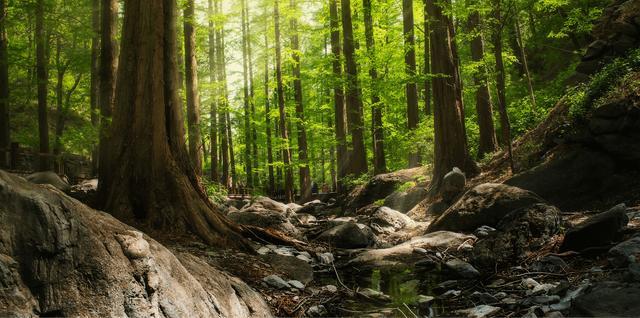
This is due to the spatial existence on land; to compete for areas with sunlight, plant species have evolved to occupy as much ground area as possible or to grow taller to capture sunlight. Being large has always been seen as an advantage for survival, as can be clearly seen in dense forests with many different plant ecological layers.
But in the ocean, the competition for sunlight does not always seem necessary, as there is plenty of sunlight from the surface down to about 200 meters underwater. Additionally, under the ocean, there is not as much resistance against Earth’s gravity as there is on land, allowing algae and plankton to drift in the water, without needing to be fixed in place to capture sunlight as land plants do. Under such environmental conditions, the most important ability of “producers” is to reproduce as quickly as possible when there is enough sunlight, which is considered an advantage of single-celled organisms as they can grow exponentially.
Environment determines form, thus the ocean is a world of single-celled producers, and seagrass is a vulnerable species, as they can only exist in shallow waters or places where they can grow fixed like land plants. Therefore, their prevalence is very low compared to seaweeds and crustaceans.
The reason why there are fewer herbivores in the ocean can now be answered simply: because the ocean has fewer seagrasses, and their appearance is very limited.