


However, since this incident occurred in the last year of the last century, many may not fully understand why this event shook the entire world and had such a significant impact. In this article, I will explain what Y2K is and why it affected the whole world.
How the World Trapped Itself
In the 1950s and 60s, most computer systems had very limited data storage capacity, only a tiny fraction of today’s RAM. For example, a common data storage method back then was punched cards, which usually had only 80 columns to hold data. Due to technological limitations and storage device capacity, people had to come up with many different ways to save space.
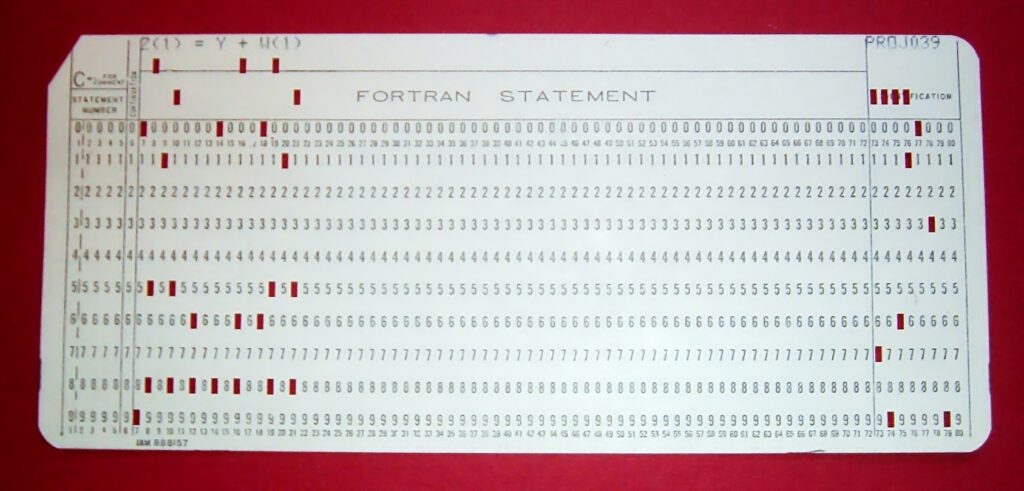
The easiest and most common method to save space was to shorten the year, displaying only the last two digits. For instance, the year 1966 would simply show as 66. You might think that shortening two digits wouldn’t save much, but in reality, we could easily halve the required storage space for data.
Although technology has advanced, with faster processors, larger RAM, and significantly evolved storage devices, programmers continued to create “space-saving” software.
Moreover, the tech world isn’t just about desktop computers or laptops. There are many other types of computers that have limited hard drive space and RAM, such as embedded systems, Programmable Logic Controllers (PLCs), machinery, robots, automated production lines, and industrial control systems, all programmed and controlled with the smallest software possible.

Everything went on like this until later, when the amount of data and software using a two-digit year format piled up. Changing this back to a four-digit format turned out to be a complicated process.
The Day of “Judgment” for the Tech World
If only the last two digits of the year are displayed, you cannot distinguish which century that year belongs to. For the software of that time, they were programmed to understand that regardless of the year, it would always be the 20th century. For example, if you wanted Google to find information posted in the year 2000, the computer would interpret your query as searching for the year 1900. And everything started from here.
At midnight on December 31, 1999, all computer systems and devices, whether smart or not, but with software and processors using a two-digit year format, encountered errors. Some software accepted the incorrect year and produced erroneous outputs, while others rejected the error and crashed. As I mentioned above, not only conventional computer systems failed, but all types of electronic devices, autonomous devices, or any devices using a two-digit year format were affected. This included critical systems like chips in airplanes, factories, power plants, military missile control systems, and communication satellites.
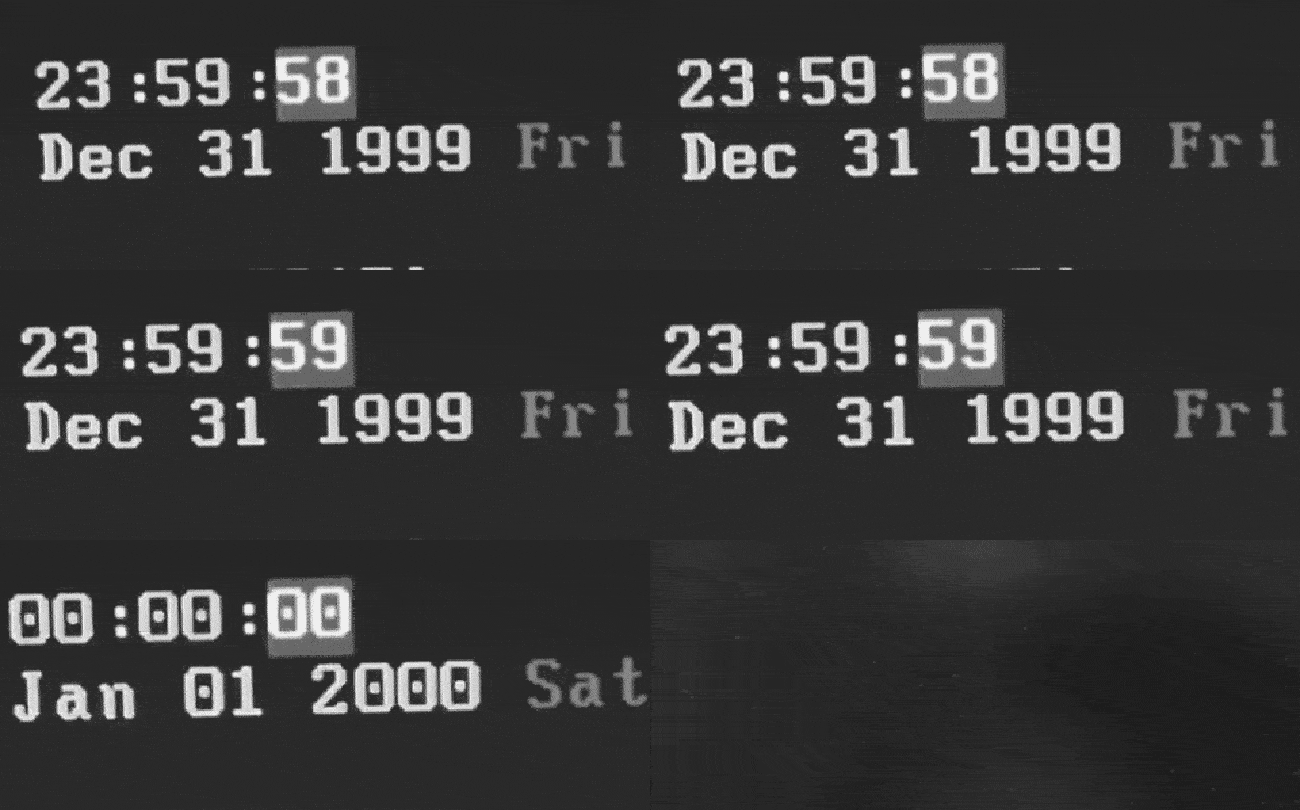
Besides the issue of all computers in the world “time traveling” back to 1900, the year 2000 also caused another problem with leap year calculations. Back then, programmers used the rule that any year divisible by 4 and not divisible by 100 was a leap year. However, they forgot to use the lesser-known rule that years divisible by 400 are still leap years. As a result, many computers did not recognize the year 2000 as a leap year, leading to the loss of February 29, 2000.
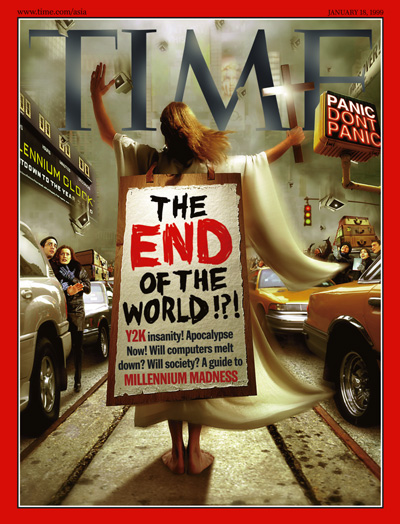
Because of its enormous and powerful impact, many unfounded rumors about the Y2K event circulated. Some believed it would be the end of the world and human society, while others stockpiled supplies in preparation for the apocalypse. In general, the situation was chaotic like in a movie.
How the “Y2K Disaster” Was Resolved
Long before 1999, governments and many tech companies worldwide recognized the problem and sought solutions to the Y2K issue before it happened. Initially, it was thought that the massive error could be fixed simply by extending the year format by two digits and adding 1900 to all past year data. However, in reality, this solution was not feasible due to high costs, data loss risks, and the need to change data formats on a massive scale.
In addition to the solution of adding two digits to the year format of all data worldwide, many different methods were devised to address the Y2K error. For example, using the month as a reference point, since the highest number for months is only 12, while two-digit numbers can go up to 99. Thus, the regulation would be:
If the month part of the data shows from 1 to 12, it is understood as adding 1900 before the two-digit year. If the month part of the data shows from 41 to 52, it is interpreted as adding 2000 before the two-digit year and then subtracting 40 to show the correct month. If the month part of the data shows from 21 to 32, it is interpreted as adding 1800 before the two-digit year and then subtracting 20 to show the correct month.
If this method is used, we would need to adjust the code for many programs so that they could recognize and decode the illogical month part.
Some other systems still displayed the date, month, and year with only six digits, but instead of using the DD/MM/YY format, they used DDD/C/YY as follows:
DDD: displays the day of the year (from day 1 to day 365, or 366 if it’s a leap year). C: displays the century. YY: last two digits of the year.
In general, many solutions were proposed, but they only provided short-term fixes. Using these methods would require a tremendous effort to correct a vast amount of data and programs that have existed since the early development of computers until that point.
Impact of the Y2K Incident on the World
Despite many efforts to save the world from the Y2K event, many incidents still occurred. Fortunately, no airplanes crashed or missiles were launched. Only a few “minor” incidents happened, such as two nuclear power plants in Japan experiencing small, insignificant errors that were quickly fixed; a newborn in Denmark was registered as 100 years old; bus tickets in Australia were printed with the wrong year, causing ticket scanners to reject them; Egypt’s national news portal crashed; a US reconnaissance satellite was disabled for three days due to a Y2K patch causing errors, etc.

For businesses, Y2K had a significant impact. Changing data formats led to the need for code fixes across a multitude of software. Software companies had to release updates to all their customers, and if their software malfunctioned and caused damage, they had to consider how to compensate. On the part of companies using the software, they faced mountains of paperwork and concerns about whether the patches would genuinely fix the issues or merely introduce new problems.
In summary, a ton of trouble arose from the Y2K error. The estimated global damage was between 300 to 600 million USD according to Gartner and 825 million USD according to Capgemini. The US alone spent over 100 million USD to address the aftermath.
The Conclusion of the “Y2K Apocalypse”
The Y2K incident was exaggerated by many. In reality, many tech experts had been warning the world about this day for years. Many computer systems had utilized month-based milestone methods and continued to “buy time” for several decades for programmers and tech companies to find permanent solutions. Some of those systems are still operational today and have shown minimal issues. In short, the Y2K incident, once a massive nuclear bomb, has been defused into many smaller time bombs that no longer affect everyday technology.
Source How To Geek, translated by Gearvn