


I have a simple yet interesting experiment for you: Take a pen, hold it at arm’s length in front of your eyes and start shaking it. Do you see it getting blurry? If you can’t find a pen, you can try it with your own hand, spreading your fingers and shaking.
Be sure to keep the pen or your hand, as we will conduct another experiment with it later in this article.
Now, of course, the pen will get blurry if you shake it, and so will your hand. This proves that our eyes cannot process images with fast movements. The FPS (frames per second) in the reality we perceive is limited.
But why is that?

The delay of the human brain in processing images
To explain this, we need to understand the visual processing mechanism of the brain. Let’s recall some eighth-grade biology. In your eyes, there are cone and rod photoreceptor cells similar to the sensor dots of a camera.
They are located at the back of your eyes, where they receive light emitted or reflected from all objects in the external world we live in. These cells then convert light wave signals and frequencies into electrical signals. Each light-sensitive cell is connected to a nerve ending that sends signals to the visual cortex for analysis and processing.
The brain then combines these signals and recreates the external world in your inner world. This process of reconstruction is both objective and personalized.
For example, you and a friend sitting next to you both see a car parked in front of you, and you both recognize it as a car, but you say it’s beautiful while your friend does not.
However, the important thing here is that if the car is stationary, you can see it clearly, but if it moves, maybe not. This is because the brain processes the visual signals it receives from the eyes with a certain delay.
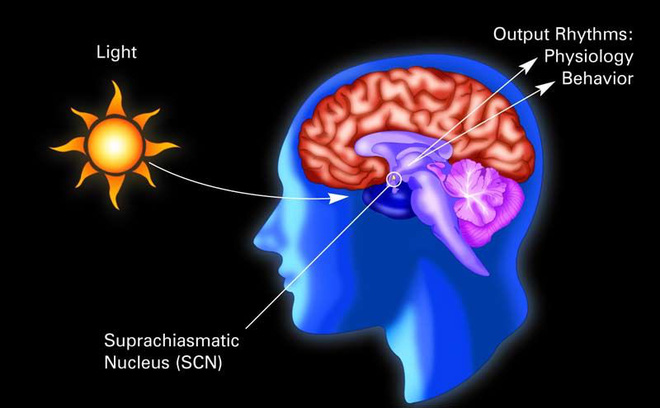
In 2014, a group of scientists at the Massachusetts Institute of Technology (MIT) in the United States conducted an experiment to measure how much this delay actually was.
They asked volunteers to sit in front of a screen and presented them with a series of 6-12 images that appeared and disappeared at different speeds. The results showed that volunteers could recognize images in about 13 milliseconds, or 0.013 seconds. This translates to 1/0.013 = 75 frames per second.
The delay of the brain in processing images limits the reality we perceive to FPS = 75. This number is higher than most small animals, from goldfish to dogs or cats. However, it is significantly lower than predatory birds like eagles, which can see up to 140 frames per second.
The amazing optical image stabilization system of the eyes
Now, let’s return to the initial experiment of this article. Do you still have the pen or your hand? Good, hold them up in front of you, focus on them, and start shaking your head up and down and side to side. Do you see the pen or your hand getting blurry?
A little bit, but not much! You can still clearly see the object you want to focus on. This is because inside your head is a superlative stabilization system called the vestibulo-ocular reflex (VOR).
The function of the VOR is to stabilize the image on your retina, similar to the optical image stabilization system of a camera.
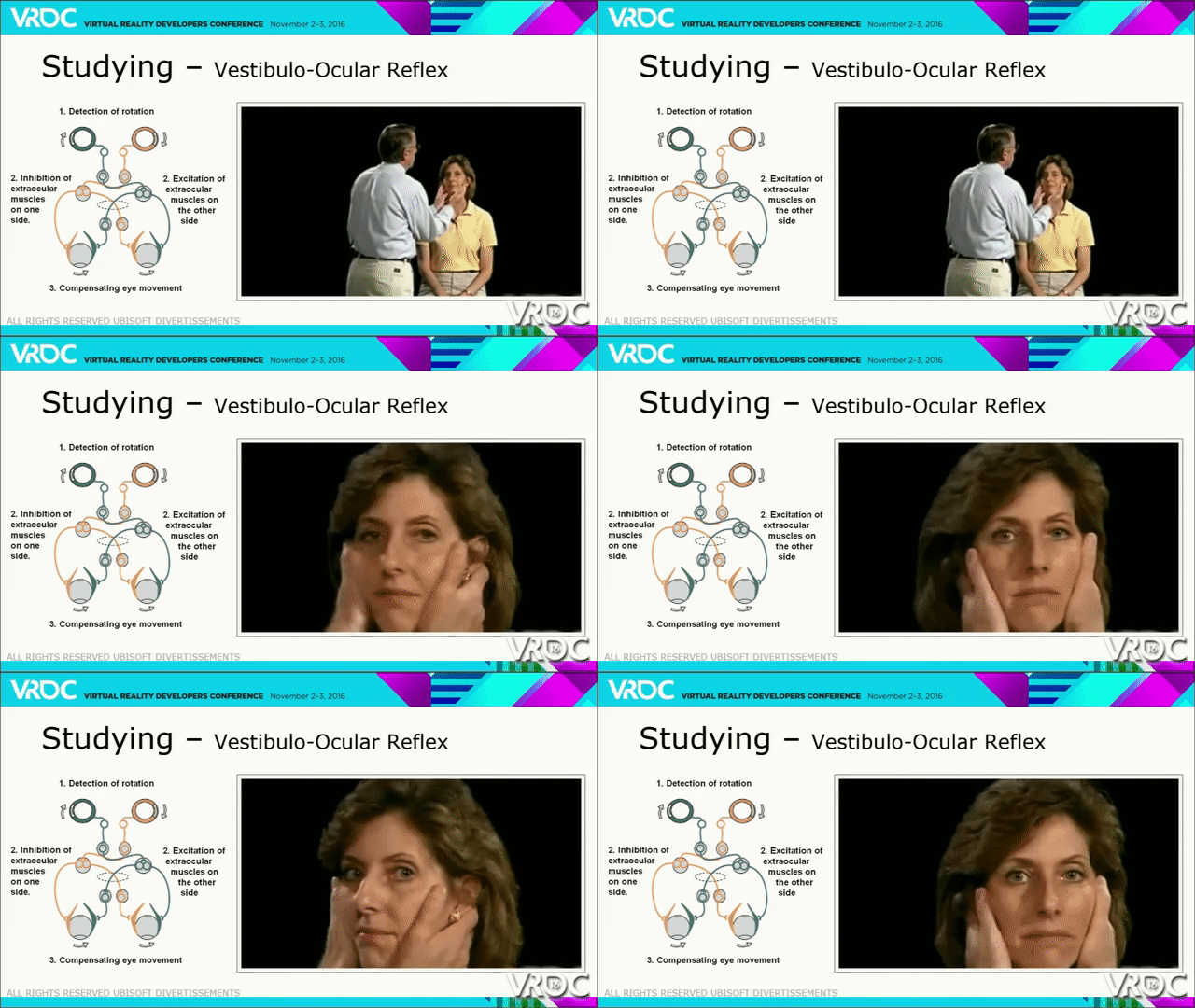
We know that inside each person’s inner ear is a system called the vestibular system. It is only about 3x5mm in size but plays a crucial role in human functioning.
The vestibular system is responsible for sensing all the movements happening with your body, helping you maintain balance when walking, bending down, or turning your body. People with vestibular disorders often experience dizziness, instability, and are prone to falling.
This system has a bundle of nerves connected to the eyes, helping you focus on objects in your field of vision. Once you shake your head to the left, the vestibular system senses this head movement and sends signals to the eyes to create the VOR reflex. The eyes then move in the opposite direction, to the right, to stabilize the image on the retina, allowing you to still see the object clearly.
The vestibulo-ocular reflex plays an extremely important role. If it is disturbed, you won’t be able to walk down stairs, as each step you take would shake the images you see. You also wouldn’t be able to see road signs clearly while driving, as we all know motorcycles and cars have vibrations while moving.
The resolution of the human eye
In 2005, Dr. Roger Clark, a scientist and photographer, calculated that the resolution of the human eye is approximately 576 megapixels. You can read the details of his calculations here. But keep in mind that this is only the resolution at your central point of view, in an area called the fovea.
Outside of the sharp focus area of the image, your eyes will blur the field of vision to reduce energy consumption and prevent the brain from being overloaded. The images outside the area of focus that you perceive only have a resolution of 5-15 megapixels.
Above are all the interesting coincidences between your eyes and cameras and electronic screens. Remember to take good care of them. And don’t forget, unlike cameras, your eyes need to stay moist. Make sure to blink at least 15-20 times per minute whenever looking at a computer or phone screen.
Summary