


In this article, I will explain the origin and why the QWERTY keyboard is widely used today.
The Origin of the QWERTY Keyboard
In the past, people didn’t have computers to type documents like we do now; they had to use typewriters. If you didn’t know, typewriters have a keyboard connected to metal arms with reverse-engraved letters through complex mechanical systems. Each time you press a key, this mechanism pushes a metal arm to strike the paper and print letters on it. You can refer to how typewriters work in the video below.
Early typewriters all had keyboards arranged in alphabetical order rather than in the QWERTY layout we have today. The issue was that if you pressed words with letters too close together too quickly, such as the word “bac,” the metal arms could collide and get stuck during use.
To solve this problem, an American inventor named Christopher Sholes rearranged the positions of the letters on the keyboard into the QWERTY layout so that the most frequently used letters were spaced further apart. This arrangement would reduce the likelihood of jamming because the typist had to slow down their typing speed.
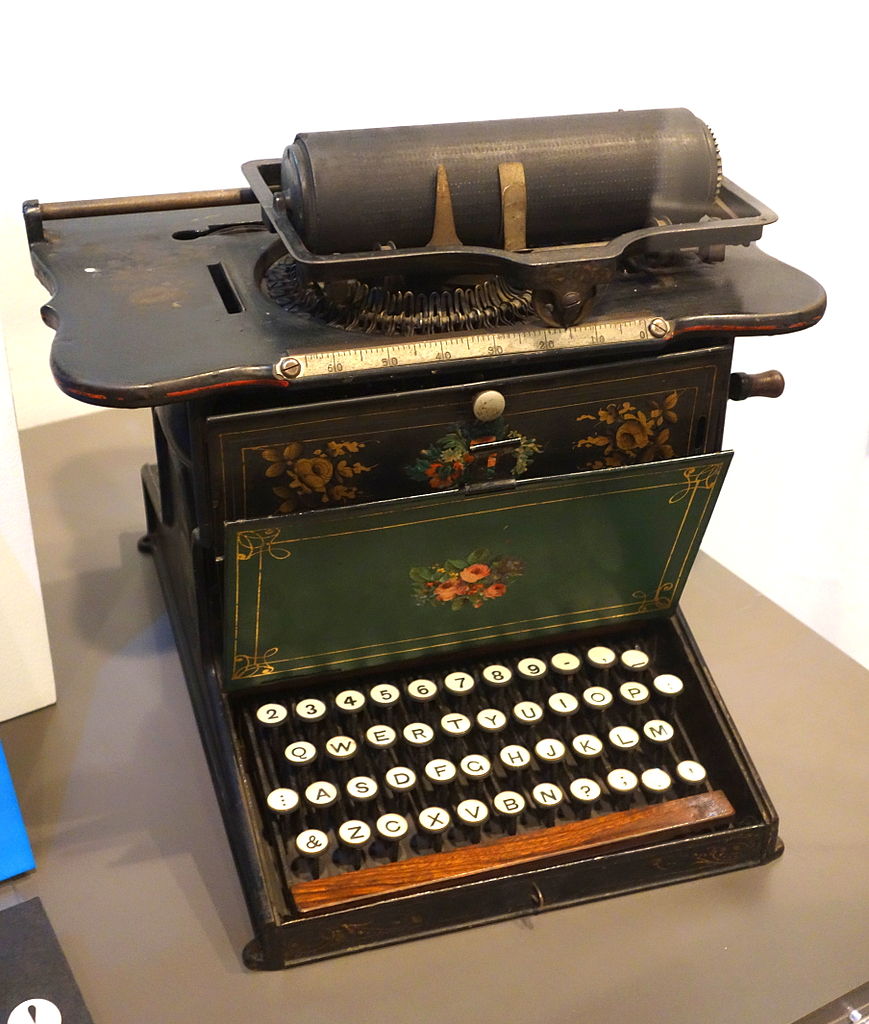
The QWERTY keyboard first appeared on the Remington No. 1 typewriter produced in 1874. Since then, all typewriters have used the QWERTY layout and it continues to be used on computers and many other modern devices because most people have become accustomed to this layout.
Why is the QWERTY Keyboard Still Trusted After Many Years?
Over the past 150 years, many different keyboard types have been created and tested. Many keyboards have been advertised as easier to use and faster to master than QWERTY. Among them, the Dvorak keyboard is often compared to QWERTY. This type of keyboard is designed to minimize the distance your fingers need to move and help users switch to other characters as quickly as possible.
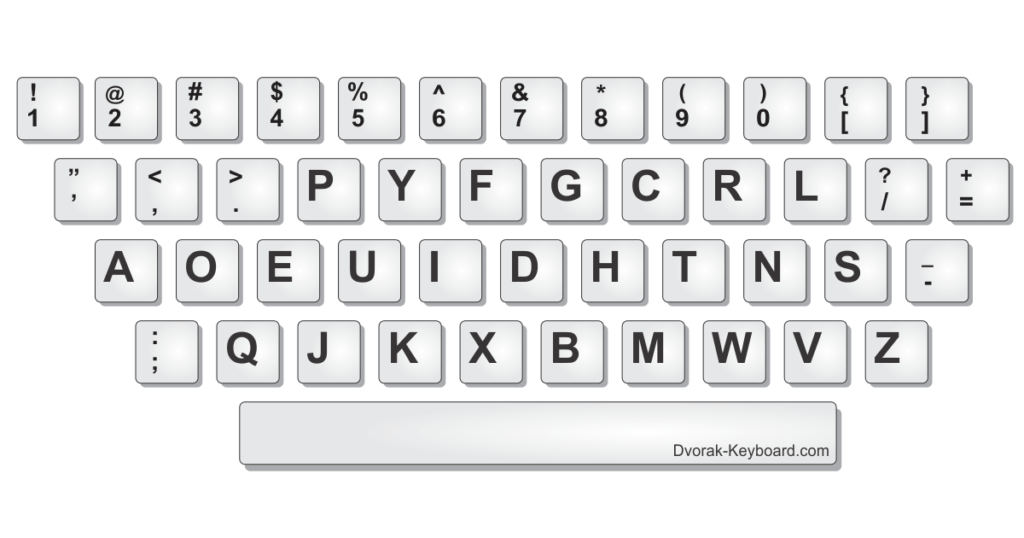
You will notice that the Dvorak keyboard arranges the most commonly used letters (in English) on the home row (the position of the letters ASDF and JKL on the QWERTY keyboard) so that fingers do not have to move too much. In this layout, vowels are placed on the left along with some consonants, while the right side contains the remaining consonants. Many people feel that once they get used to the Dvorak keyboard, they type much faster.
However, some studies show that there is not much difference in typing speed between the two types of keyboards. Additionally, switching keyboards requires time to learn how to use the new layout, plus needing to change function keys in games, Windows shortcuts, etc., which is very inconvenient. Because other keyboard types have not yet proven any significant advantages, we still use the QWERTY keyboard even though modern computers no longer jam letters.
Source: How Stuff Works, The Conversation translated by Gearvn