


According to the Wall Street Journal (WSJ), the lawsuit between Elon Musk and Twitter could be the strangest trial in the history of American mergers and acquisitions. The Tesla founder has kept the public and Twitter itself spinning, going from trying to convince everyone to buy the social media platform to attempting to abandon the deal altogether.
“Lady” Twitter, initially reluctant to fall into the hands of “Gentleman” Elon Musk, who is extremely wealthy, eventually agreed after a fierce battle for a staggering $44 billion, which experts consider too high as no one wants to spend that much on a social media platform rife with instability.
However, when Twitter’s stock price plummeted by 32% from $54.2 per share to $36 per share, Elon Musk began to seek a way out of what many considered a “bad deal.” Immediately, Twitter filed a lawsuit claiming that Musk had breached the contract, despite the fact that the social media platform had previously ignored Musk’s acquisition proposal.
Elon Musk’s camp accused Twitter of falsifying data, providing misleading information, and taking operational actions without Musk’s consent, including freezing hiring and laying off employees.
The WSJ reported that many legal experts believe Musk’s arguments are not strong enough against Twitter because the reasons the Tesla founder provided do not adequately explain the damages that led him to abandon the deal.
In reality, layoffs or recruitment freezes were not unique to Twitter. Even corporations like Meta (Facebook) and Tesla itself have had to adjust their personnel costs.
Ironically, even if Twitter wins the lawsuit, it cannot force Elon Musk to continue with the deal because no law exists to imprison buyers for refusing to spend money on something; at most, the buyer would lose their deposit and a small penalty.
The WSJ noted that there have been smaller deals where courts required buyers to fulfill obligations based on specific terms they had signed. However, there has never been a $44 billion deal where a U.S. court has forced a buyer to complete the contract. Most large deals like this typically end through negotiated settlements to lower the price, or the buyer agrees to forfeit a penalty.
A similar situation occurred in history when Tiffany sued the LVMH fashion group in 2020 for backing out. Ultimately, Tiffany agreed to lower the sale price from $16.2 billion to $15.8 billion to complete the deal with LVMH.
In Elon Musk’s case, the contract clearly states that the Tesla founder must pay $1 billion if the deal falls through, a figure that is quite small compared to his $220 billion fortune.
The Game of Cat and Mouse
At the end of January 2022, Elon Musk purchased 22.8 million shares of Twitter and continued buying in February-March 2022, thus owning 9% of the shares, equivalent to $2.6 billion, becoming the largest individual shareholder of the social media platform.
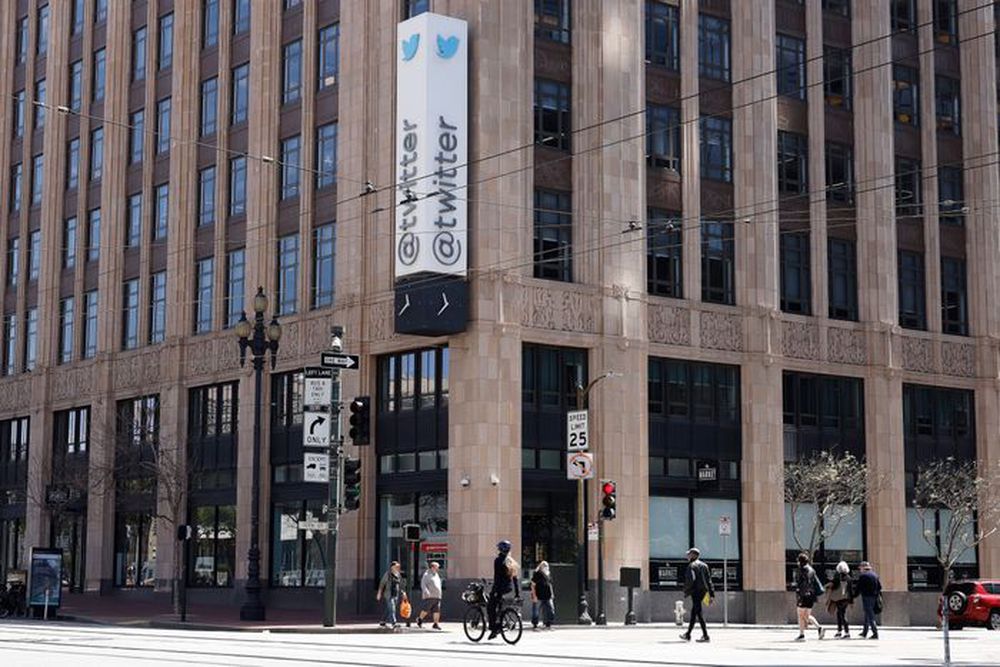
Notably, the Tesla founder boasted about owning Twitter through comments about whether to buy or build a competing social network. When the ownership shares were made public in April 2022, Elon Musk had secretly negotiated with Twitter for 9 days.
Initially, Elon Musk was rumored to want a seat on the board, but on April 9, 2022, just hours before Twitter agreed, the Tesla founder decided to withdraw. Only four days later, Elon Musk unexpectedly made an offer to buy Twitter at $54.2 per share, totaling $44 billion.
Musk’s arrogant attitude caused the Twitter executives to become frustrated, and they initially ignored the Tesla founder’s offer. However, gradually, the social media platform found it hard to resist the $44 billion figure as no one else seemed interested or able to spend that much money.
Twitter’s agreement sent shockwaves through the media as the world’s richest man shifted his focus to the social media business.
Nevertheless, the story did not end there as the stock prices of both Twitter and Tesla began to decline due to adverse macroeconomic developments. The pandemic situation in China affected Tesla’s manufacturing plant in Shanghai, and inflation pressures impacted costs, causing the electric vehicle company’s stock price to drop further.
It is worth noting that most of Elon Musk’s $44 billion was sourced from selling or mortgaging Tesla shares. As of May 24, 2022, Tesla’s stock price had lost nearly 50% from its peak in November 2021, wiping out over $100 billion of Musk’s wealth and weakening his ability to raise funds for the Twitter deal.
As of now, Tesla’s stock price has dropped by 37%, meaning Elon Musk will have to mortgage even more shares if he wants to gather enough money to buy Twitter. Currently, Elon Musk remains the largest individual shareholder of Tesla with a 16% stake.