


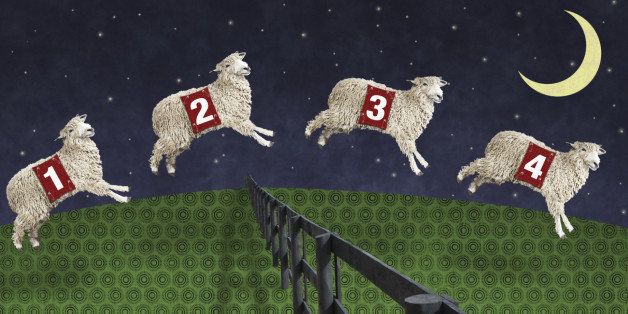
When I say you should try to close your eyes and imagine a flock of sheep jumping over a fence, can you do that? The vast majority of us have been able to do this easily since we were children. But some people cannot. They only see a blank black space in front of them, with no sheep jumping at all.
These individuals are suffering from a strange syndrome known as “aphantasia”, a term coined by Dr. Adam Zeman, a cognitive neurologist at the University of Exeter in England, derived from the Greek word “phantasia” meaning “imagination”.
In contrast to “phantasia”, the syndrome “aphantasia” is defined as the inability to summon any images from memory, whether it is the face of a loved one or a familiar place.
Although it has appeared in medical texts since the 19th century, the syndrome “aphantasia” was only accurately identified in 2015. Since then, scientific research on this syndrome has been sparse, mostly consisting of self-reports from patients.
One of the first people to speak out about their experience with “aphantasia” is Niel Kenmuir. In an interview with the BBC, he said he realized it as a child. Kenmuir’s stepfather had told him to imagine sheep jumping over a fence and count them to help him sleep. But he couldn’t.
“I can’t see any sheep jumping over the fence. There’s nothing to count,” Kenmuir said.
Sharing a similar experience with Kenmuir, a woman named Serena Puang also shared with the New York Times: “When I was in elementary school, I occasionally had trouble sleeping, and people told me to count sheep. Although I had seen sheep jumping over fences in cartoons, when I tried to imagine it, I never saw anything at all – just blackness. I silently counted in the dark for many years.”
Although “aphantasia” may make counting sheep difficult, it does not seem to significantly affect the creativity or imagination of those who have it. Most individuals with “aphantasia” live normal lives and often do not even realize their difference from others.
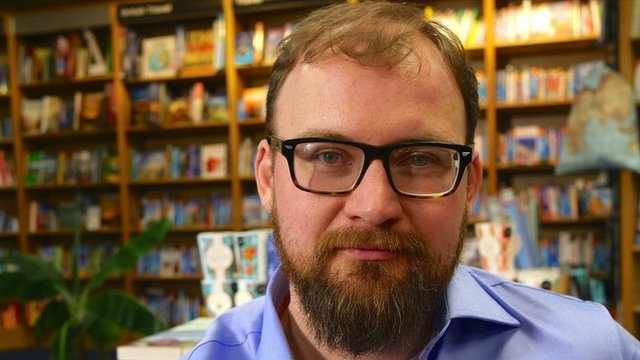
For instance, Kenmuir works at a bookstore. He can still remember which books are placed on the shelves without needing to visualize images of them. When asked by a BBC reporter how he has lived with his wife, Kenmuir replied:
“It’s the hardest thing to describe, what goes on in my mind when I think about everything. When I think about my fiancée, no images come to mind, but I know I am thinking of her. I know today she has her hair in a bun, and her hair is brown. But I don’t visualize an image in my head; I just remember her characteristics.”
On the contrary, Kenmuir’s wife is very understanding of her husband. She simply says, “You are so strange.”
Serena Puang had only a bit of difficulty when she started learning Chinese. “While my friend, Shayley, found it easy. I asked her how she remembered those pictographic characters, and she told me she was just ‘imagining the characters.’” Puang said.
To address the issue, she discussed her “aphantasia” condition with her professor, who drew the characters on the board and analyzed the differences for Puang. Since then, her Chinese learning has gone smoothly.
***
Additionally, some individuals with “aphantasia” still have very vivid dreams. They can still describe and recognize what people’s faces or a location looks like. “Aphantasia” simply means the inability to retrieve memories; their imaginative language and spatial memory remain intact.
Psychologist Wilma Bainbridge at the University of Chicago explains that this may be because individuals with “aphantasia” have encoded their memories entirely in words rather than images. For instance, when Kenmuir thinks of his wife, he encodes her using words like “brown hair, blue eyes, tall, or today, bun…”
This collection of words completely replaces the image that a normal person might imagine. Kenmuir still recognizes his wife; he just can never visualize the image of his fiancée in his memory.

“Their verbal expressions and other compensatory strategies can actually help those with “aphantasia” avoid false memories“, Bainbridge said. In some cases, the memory of individuals with this syndrome can even be better than normal people’s, as we often create false images in our memories.
Try to remember if you have ever recalled a room with an item, like a guitar, that was never actually there.
The peculiar memory recall in people with “aphantasia” is drawing more and more attention from neuroscientists. “These individuals have a unique mental experience, and they can provide necessary insights into the nature of imagery, memory, and perception in the human brain“, a group of authors wrote in the journal Cortex.
They are a clear testament to the idea that memory can be entirely separate from vision. Individuals with “aphantasia” may experience something similar to those who are congenitally blind. They can still describe and navigate a room, even though they cannot ‘see’ it.
“When I close my eyes, all I see are faint blue dots and darkness,” Puang said. “Yet for 19 years, I thought everyone else saw the same thing.”