


Rhodium, a high-luster, silver-white metal that is highly resistant to corrosion, is considered the rarest and most valuable metal on Earth – surpassing gold and silver. Its main use is in catalytic converters designed to clean vehicle emissions. Accordingly, rhodium – often combined with palladium and/or platinum – reduces the amount of nitrogen oxides in exhaust gases.
On January 13, 2021, the price of rhodium surged to $20,190 per ounce, compared to $16,990 on December 31, 2020, and just $615 in 2016.
Rhodium Price Chart
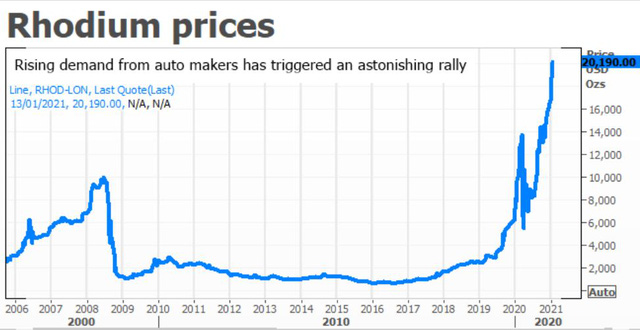
Thus, in just the past 5 years, the price of rhodium has increased by 3000%, and currently, just 1.5 kg of rhodium is valued at nearly 1 million USD.
Rhodium Price Increase Chart
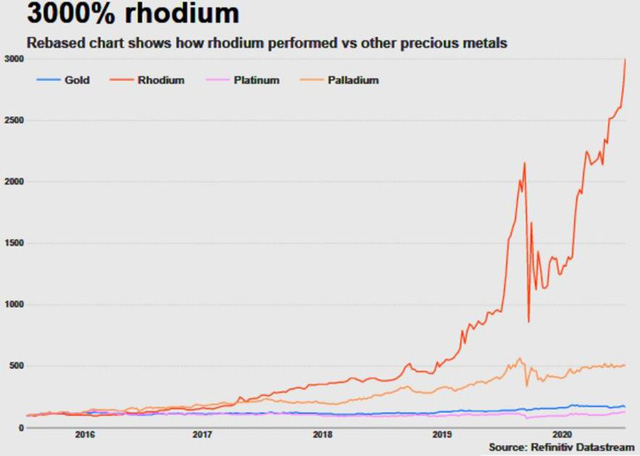
Automotive manufacturers consume about 85% of the global rhodium supply. The rapid recovery in automobile demand has further increased rhodium demand, and the market has become increasingly scarce.
Meanwhile, the Covid-19 pandemic has severely impacted supply, as many regions have had to impose lockdowns, disrupting mining and transportation activities in South Africa – the world’s largest rhodium-producing country.
Additionally, the temporary shutdown of Anglo American Platinum’s (Amplats) processing facilities has further reduced supply during this period, with total rhodium supply in 2020 decreasing by 16%, according to consultant Wilma Swarts from Metals Focus.
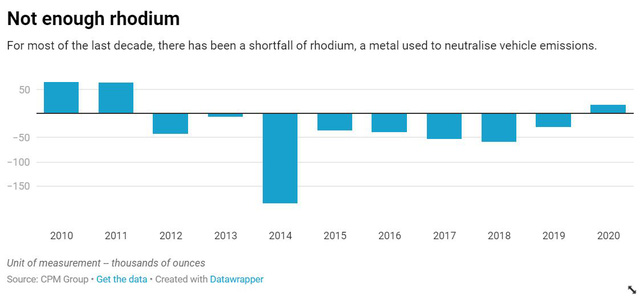
A 16% supply decrease while demand only dropped by 10% led to a market shortfall of about 1 million ounces in 2020, and it is predicted that the shortage will continue in 2021, potentially pushing prices higher.
Rohit Savant, an expert from CPM Group, stated that the rhodium market has been in deficit for nearly the entire past decade, causing reserves to dwindle and forcing users to ramp up purchases to make up for declining reserves, depleting market supply and driving prices up.
According to Savant, if averaged over the year, the market in 2020 had a slight oversupply, and 2021 is also expected to have a slight oversupply. He believes that, as usual, prices will temporarily stop rising or even decrease slightly during the year-end holiday period. However, “In the future, you will see the oversupply continue to shrink, and the market is likely to return to a state of shortage.”
The rhodium market has been in deficit almost every year
Source: Refinitiv