


While the whole world is dealing with the COVID-19 pandemic caused by the SARS-CoV-2 virus strain, scientists have reported that they have discovered 6 completely new strains of coronavirus lurking in bat populations in Myanmar.
This study was recently published in the journal PLOS ONE and is part of the results of the PREDICT project, a multinational effort coordinated by the U.S. Agency for International Development aimed at early detection of animal pathogens that could impact human health.
A positive sign from this research is that all 6 new strains of coronavirus discovered in Myanmar are only infecting bats. Scientists say their genomes are not very similar to SARS-CoV-2 or the two previous strains of coronaviruses that caused severe illness in humans, SARS and MERS.
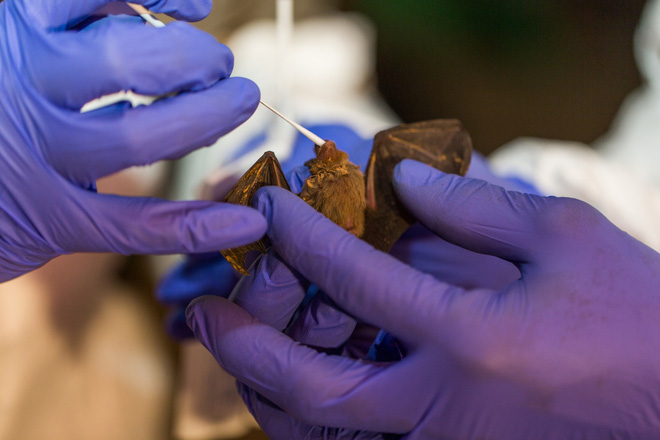
The PREDICT project in Myanmar was implemented from 2016 to 2018. During that time, scientists collected hundreds of saliva and fecal samples from 464 bats of at least 11 different species. They sampled at three locations in Myanmar where humans had close contact with wildlife.
Urbanization and agriculture have caused local residents to come into more contact with bats, such as some farmers who often collect bat droppings for fertilizing their fields. “Two of these locations also have famous cave systems where people frequently interact with bats through harvesting droppings, religious practices, and ecotourism“, researchers wrote in the study.
The interactions between humans and wildlife pose a risk of viruses from bats infecting humans, and then mutating to be able to spread from person to person. Many studies have also shown that bats and rodents, like mice, are the most potential reservoirs of viruses that could cause pandemics for humans in the future.
This is because bats are the only mammals capable of sustained flight, allowing them to spread diseases to a community of bats, animals they feed on, and humans over a wide area. Meanwhile, rodents may have adapted to thrive in human urban environments.
Scientists also suspect that the SARS-CoV-2 strain causing the current COVID-19 pandemic also originated from bats. It may have spread to an intermediate animal, possibly a pangolin, before infecting humans.
That is the reason PREDICT was established to identify potential pathogens before they infect us. In Myanmar, scientists have analyzed the genetic sequences of the viruses they found in bat saliva and feces.
After comparing with the genomes of known coronavirus strains, they discovered 6 new strains in 3 bat species: the Asiatic house bat (Scotophilus heathii) carrying virus PREDICT-CoV-90, the wrinkle-lipped free-tailed bat (Chaerephon plicatus) carrying viruses PREDICT-CoV-47 and -82, and the Horsfield’s leaf-nosed bat (Hipposideros larvatus) hosting viruses PREDICT-CoV-92, -93, and -96.
Researchers say they need to conduct further studies to predict the potential of these 6 coronavirus strains, assessing whether they can cross over to other species, including humans.
“Many strains of coronavirus may not pose a danger to humans, but when we identify these diseases early in animals, at their roots, we have a valuable opportunity to investigate potential threats,” said co-author of the study Suzan Murray, director of the Smithsonian’s Global Health Program, in a statement.
“Surveillance, research, and education are our best tools to prevent pandemics before they happen.”
And this is currently an urgent reality; years ago, billionaire Bill Gates along with many epidemiology experts warned that the world was unprepared and therefore too vulnerable to biological threats. The reality of the ongoing COVID-19 pandemic tragically proves that to be true.
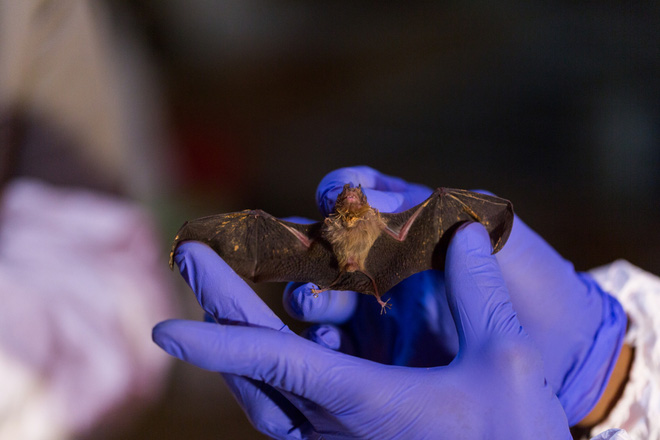
As humans increasingly encroach into wildlife habitats through activities such as hunting and consuming wildlife, urbanization, and habitat destruction, animals will have greater opportunities to intermingle with our environments, allowing zoonotic virus strains to cross over from animals to humans.
“Globally, humans are interacting with wildlife with increasing frequency,” said Marc Valitutto, a former veterinarian for the Smithsonian Global Health Program.
“Therefore, the more we understand these virus strains in animals and what allows them to mutate and how they spread to other species, the better our chances of preventing pandemics before they occur.”
PREDICT, an initiative of the U.S. Agency for International Development, is currently helping us do just that. This project was established in 2009 and is currently being implemented in over 30 countries worldwide.
In Vietnam, PREDICT is being implemented in collaboration with the National Institute of Hygiene and Epidemiology (NIHE). Since 2016, at least 2 studies have been conducted in Hanoi, Dong Nai, and Bac Giang to monitor human interactions with pets and wildlife, while assessing the risk of cross-species virus transmission from animals to humans.
Source: Livescience, Nationalzoo