


Sometimes, we suddenly forget what we are doing or what we need to do. This uncomfortable experience makes you feel as if a small section of your timeline has vanished. But this feeling is nothing compared to our billion-year-old Earth: throughout Earth’s history, there have been “memory loss” periods lasting up to hundreds of millions of years.
It can be affirmed that the existence of these historical gaps is evident in the geological characteristics of Earth: archaeologists have discovered two layers of rock from vastly different ages lying right next to each other; this temporal gap can be up to 1.2 billion years. This suggests that somehow, nature has caused the sediments of this time period to not appear in the ground.
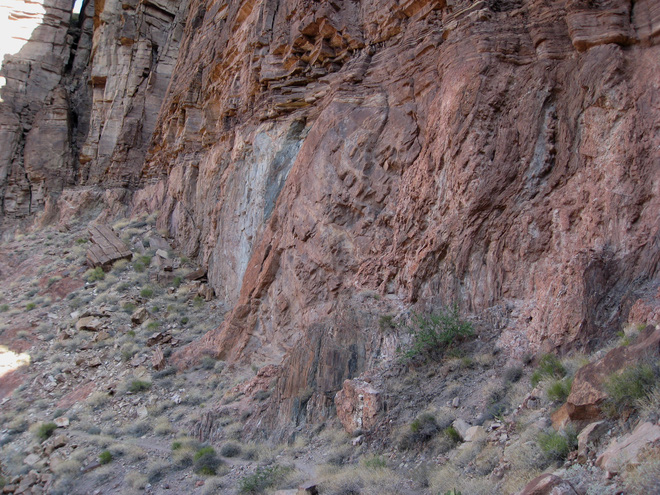
These discrepancies seem to mock our efforts to understand Earth’s past, as they are evidence of a mysterious period that has vanished. However, scientists can use this to learn how to read Earth’s memory, much like how we count tree rings to deduce the age of a giant tree.
“A big overarching question is the difference between a complete sediment block and a sediment block that has lost several layers due to erosion,” geologist Rebecca Flowers from the University of Colorado Boulder wrote. “Another point is that [it helps us] understand the connection between surface phenomena (like erosion), processes occurring underground, and long-lasting changes related to biology, climate, or the environment“.
Professor Flowers is the author of new research published on Monday in the journal PNAS. She points out that new findings relate to one of the most well-known gaps in Earth’s history, The Great Unconformity, which appears across many sediment layers around the planet.

This gap spans from around 550 million years ago (just before complex life forms began to appear) to over 1 billion years ago (when microorganisms were still “dominating” Earth).
Scientists hypothesize that fossils from this period have been eroded due to the effects of a nearly complete ice age on Earth.
However, in the new report, Flowers and her colleagues provide a new perspective on the formation of historical gaps: this is a characteristic of tectonic plates in specific regions rather than a global phenomenon. They conclude this when analyzing granite fossils at Pikes Peak, Colorado. This is not the only site from which Flowers collected research samples.
“We are working in many archaeological areas across North America, including the Grand Canyon, which is perhaps the most famous site featuring The Great Unconformity. We plan to visit new archaeological points in other continents as well,” Flowers said.
“The goal is to determine whether a global phenomenon, as many scientists have assumed, caused erosion leading to the appearance of The Great Unconformity, or whether multiple gaps appeared at different times, in different places, and for different reasons.”
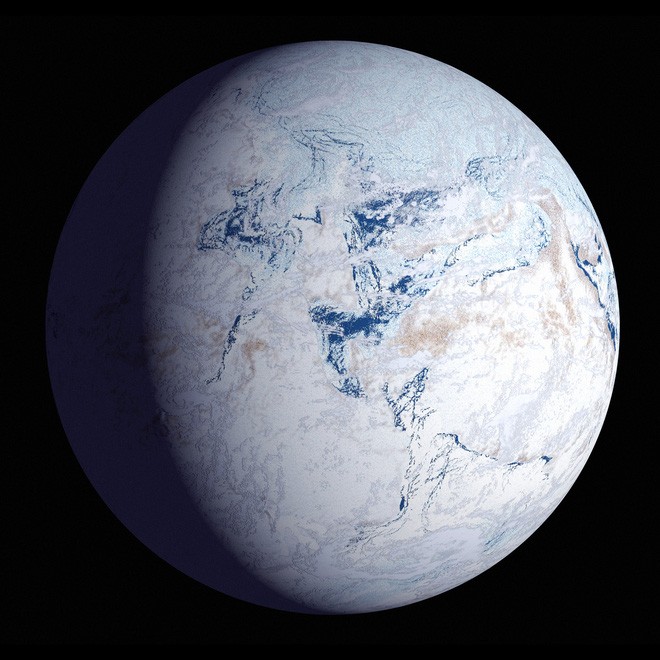
To address this issue, the team of mineral and crystal researchers aims to recreate the thermal history (a dating technique for sediment layers) of the sediment layers. The results indicate that the older sediment layer was eroded before Earth entered the first ice age, proving that The Great Unconformity did not arise due to erosion caused by ice.
The research results also lead researchers to doubt the previous hypothesis, which suggested that erosion parallel to the formation of The Great Unconformity resulted in nutrient cover on Earth’s surface, creating the Cambrian explosion – the time when complex life forms appeared 541 million years ago.
“If erosion occurred several hundred million years before the Cambrian explosion, it means that these two phenomena, the explosion of life and the erosion of The Great Unconformity, are unrelated,” Flowers explains. “Our research results indicate that at Pikes Peak, the erosive marks that create the Unconformity appeared several hundred million years before the Cambrian explosion“.
The research team believes that geological activities related to the formation and breakup of the supercontinent Rodinia caused The Great Unconformity at Pikes Peak. However, the nature of The Great Unconformity – the memory gap in Earth’s history – remains unclear. Further research on other Unconformities scattered around the globe may be needed to paint a complete picture of this lost time.
Source: Vice