


After further decisions were made to extend the nationwide school break to prevent the risks of the pandemic, many schools and teachers quickly adapted to online classes supported through applications, notably Zoom Cloud Meetings.
Teachers provide each student with an ID code to log into the class group managed by the teachers themselves. However, many students openly shared these ID codes on social media, even sending them directly under disruption videos in hopes that malicious individuals would handle the situation for them. As a result, these individuals could easily join the class and then use the names and images of notorious “cyber gangsters” to post inappropriate clips that severely disrupted the class’s learning process.
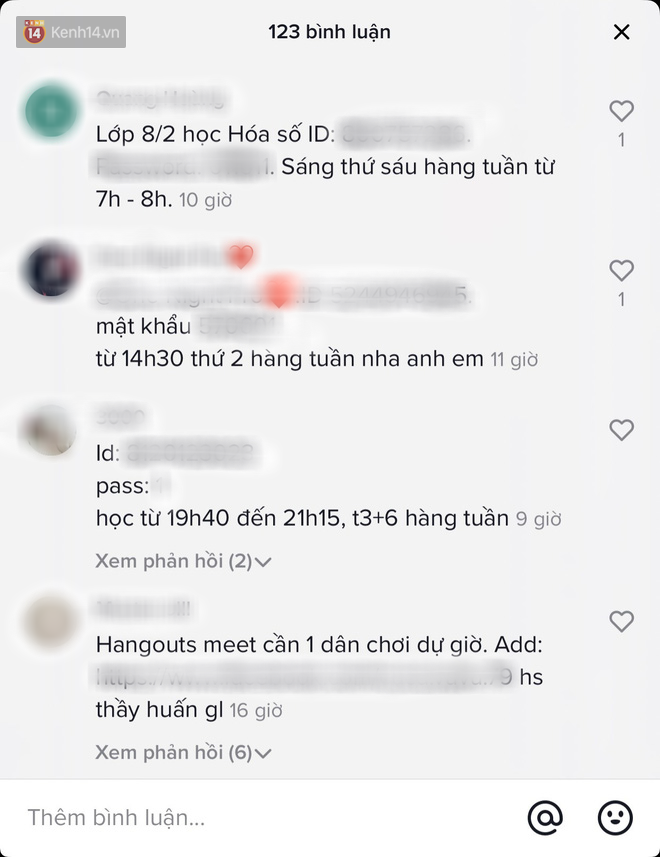

Sharing the ID code is done openly and easily on social media.
This greatly affects online classes. Many students and teachers are extremely upset to see unfamiliar elements in the class who are ready to respond disrespectfully to teachers, post inappropriate images or adult clips. In fact, some classes experience at least 2-3 such individuals every day. Even though they were later blocked from the group, this action severely impacted the learning mentality of the remaining members.
These malicious individuals often use images of notorious cyber gangsters such as Huan Hoa Hong and Ngo Ba Kha… Most of these individuals have either been imprisoned or are currently undergoing rehabilitation and detoxification.


Immediately after this incident, many internet users harshly criticized this group of irresponsible students. Allowing personal malicious intentions to affect the collective, especially the teaching efforts of teachers, is unacceptable. Many teachers, confused by the new learning method, find it very difficult to control this situation. In fact, there have been many cases where teachers had to cry in class due to disturbances.
“My colleagues have all been affected these past few days. Not only do they use random IDs, but they also change their names to disguise themselves and curse, then show adult clips. Even though we considered locking the room after 15 minutes, we feared it would disadvantage students with weak internet connections who might get kicked out, so for now, we still have to coexist with these disruptions,” one teacher shared.
“The other day, our class faced this too. They aggressively barged in, cursing at the teacher and classmates. Many schools have had similar cases, so we have to check names according to the class list before letting them in. Taking attendance alone can take nearly an hour for a class of over 60 students,” a student named H.T. shared.
“Then when it comes to exams, these same students shout that the questions are hard, claiming online learning is ineffective even though the exam content has been significantly reduced. It’s just talk; they don’t study but still complain in a group,” another student N.H. commented.
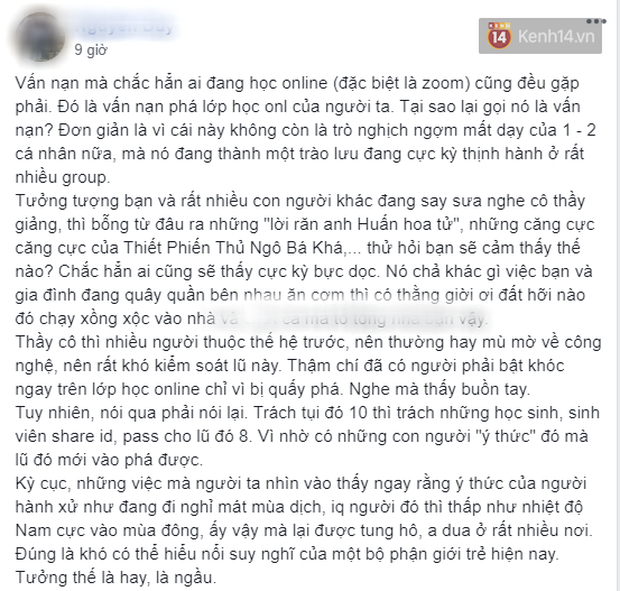

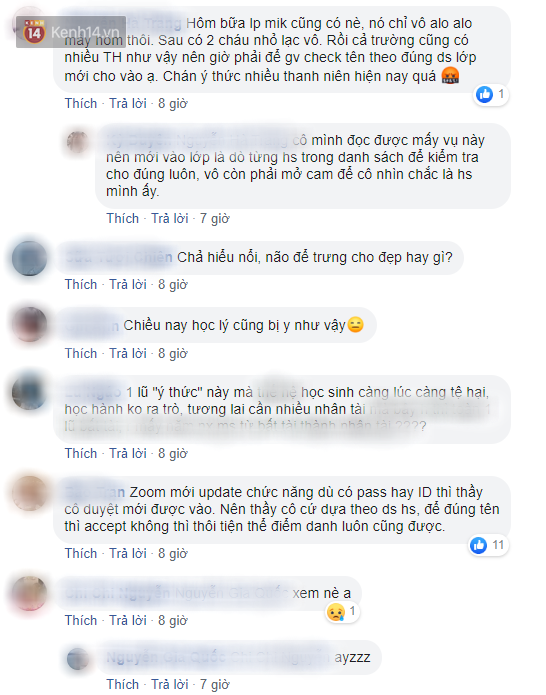
Many have also shared stories of being disrupted by malicious individuals during online learning.
Many people suggest that teachers should update the member approval feature before entering the class, kick out malicious accounts, and require students to take attendance by turning on their cameras. However, this takes a lot of time and effort from teachers. And especially if students do not change their mindset, online classes will have to face even more malicious tricks.
This is not the first time students have engaged in disruptive actions to sabotage online classes. Previously, a portion of students had collaborated to give 1-star ratings and leave vulgar comments on the application review sections, putting these apps at risk of being removed. Only when representatives from the apps shared that they were not affected at all did the students stop this behavior.
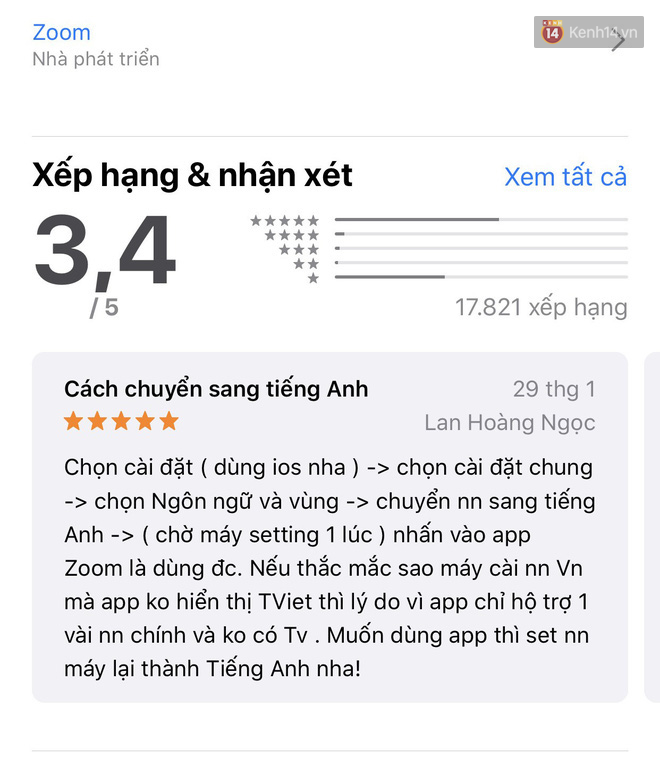

Previously, students also gave 1-star ratings and left vulgar comments in the app review section, attempting to get educational apps removed.