


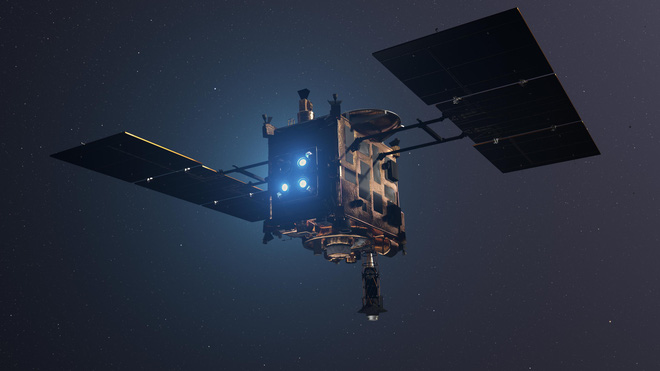
In the Woomera Desert, Southern Australia, scientists are holding their breath as they await a gift sent from space. On December 6th, Japan’s Aerospace Exploration Agency (JAXA) Hayabusa2 spacecraft will visit Earth after a long 6-year journey through space.
The shipment it carries is 100 milligrams of precious material obtained from the asteroid Ryugu. Hayabusa2’s return will mark a significant milestone in humanity’s space exploration efforts: it has traveled a distance of 5.24 billion kilometers to make it back home. After dropping off the sample container on Earth’s surface, Hayabusa2 will continue its cosmic exploration journey, collecting samples from other asteroids.
Navigating Hayabusa2 required scientists to calculate the asteroid’s trajectory, chart a path that would allow the spacecraft to reach its destination, and utilize Earth’s gravity for acceleration. Upon reaching Ryugu, Hayabusa2 skillfully touched the surface of the celestial body twice to collect samples before embarking on its journey home.
Currently, the research team is on-site in Australia conducting tests to ensure there are no mishaps during the retrieval of the precious shipment. JAXA’s previous Hayabusa mission aimed at studying the Itokawa asteroid failed due to sampling device malfunctions, resulting in the spacecraft bringing back only a few micrograms of material.
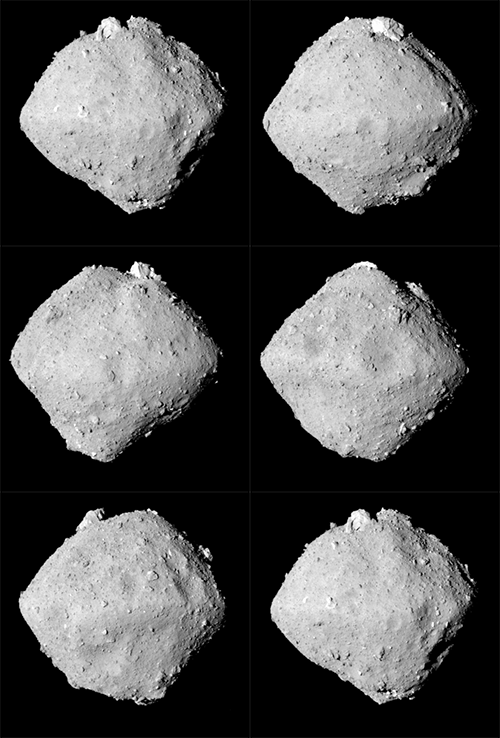
However, with around one hundred milligrams of material, scientists can conduct much more detailed tests. Since Ryugu is a primitive carbon asteroid, experts believe that this billion-year-old asteroid contains some of the most pristine materials from the Solar System, relatively intact since it formed 4.5 billion years ago.
Researchers hope that these samples will provide a window into a young Solar System, when rocky planets were just forming and undergoing billions of years of evolution.
The sample is expected to be dropped by the Hayabusa2 spacecraft between midnight and 1 AM on Sunday, December 6, 2020, Vietnam time. This corresponds to 3:30 AM – 4:30 AM local time, and the shipment will descend as a bright fireball. The sample container is shielded with materials that can withstand temperatures up to 3,000 degrees Celsius, so there is no need to worry too much about the precious material.
After deploying its parachute and safely landing within a designated area of approximately 100 km2, the sample container will transmit a radio signal to the research team. Since the ground station cannot receive these special signals, scientists will use helicopters to determine the precise location of the device.
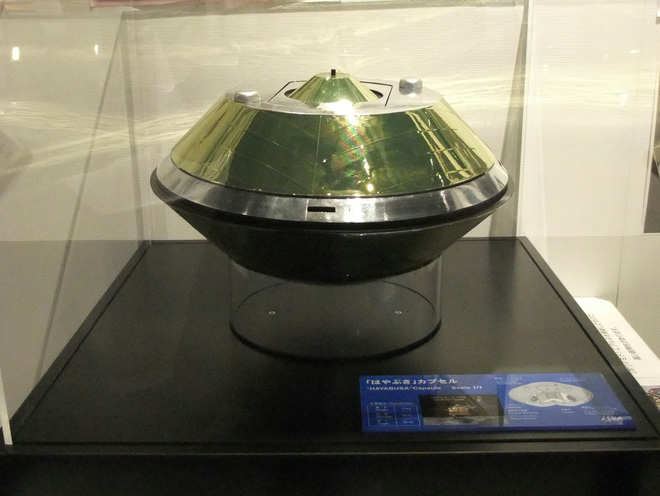
The sample container will be immediately transferred to the Quick Look facility. There, researchers will extract any gas present in the container before sealing it to be sent back to Japan. JAXA will be responsible for analyzing the valuable samples, hoping to soon share good news with the scientific community.
After ‘shipping’ the precious cargo back to Earth, Hayabusa2 will continue its journey. Its next destination is asteroid (98943) 2001 CC21, with the spacecraft expected to arrive in July 2026. If all goes well, Hayabusa2 will then visit 1998 KY26 in July 2031.
Source: ScienceAlert