


We are living in a world dominated by electronic screens. On average, a person spends more than 7 hours a day working on computers, watching TV, or looking at smartphones or tablets.
Electronic devices have changed the way people communicate with each other, but do they have any side effects on our health, body, and brain? Let’s explore this in the video below:
So now you know: Myopia, “computer vision syndrome“, and even unclear changes that may occur in the brain. These are issues that you or your children may face when spending too much time on electronic screens.
So how can we prevent this? Here are some tips for you:
1. The 20-20-20 Rule
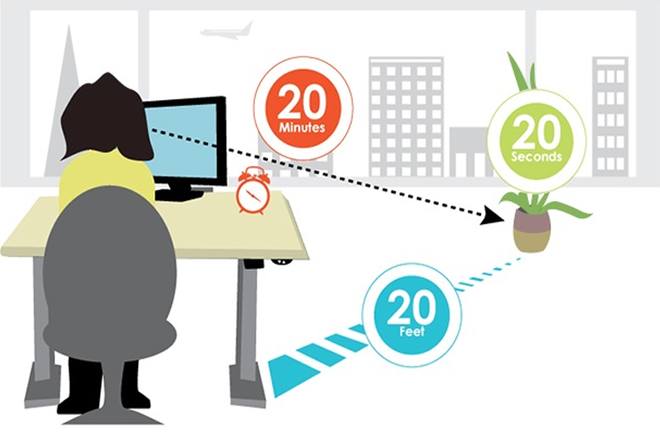
To minimize the risk of developing myopia and computer vision syndrome, you can apply the following principle when working: Every 20 minutes of looking at a screen, take 20 seconds to look away at something 20 feet away (approximately 6 meters).
2. The Harmon Rule

This rule calculates the optimal and safe distance for those using phone, computer, or tablet screens. It states that the distance from your eyes to the screen should be greater than or equal to the Harmon distance: measured from your elbow to the tip of your middle finger when your fist is clenched.
3. Recommendations for Children Using Electronic Screens
The World Health Organization (WHO) states that infants under 1 year old should not be exposed to any electronic screen devices, as it may negatively affect their development.
Children aged 1-2 years should also not use these devices. Children over 2 years can start using them, but for no more than 1 hour a day, and the less, the better. Similar limits are set for children aged 3-4 years.

However, eye doctors indicate that in addition to usage time, parents should also pay attention to children’s break time when using electronic screens. Specifically:
– Preschool children should not use or look at screens continuously for more than 5 minutes.
– School-age children should not look continuously at screens for more than 10 minutes at a time.
– Teens and adults should not look at screens for more than 20 minutes continuously each time.
Additionally, parents should monitor their children’s ability to focus after using electronic devices. For example, if after putting down an iPad, a child still seems distracted and unfocused when answering questions, you should limit their screen time.
Reference: Business Insider, CPR