


Users and developers of the world’s most widely used blockchain have been embroiled in intense debates about its carbon emissions since its inception. Now, new breakthroughs will finally allow this blockchain to significantly reduce its energy consumption within a year, or even sooner.
Ethereum and its competitor Bitcoin both operate on a system called proof-of-work, which requires a network of computers worldwide to operate continuously. Software developers on the Ethereum platform have been working for years to transition this blockchain to a new system called proof-of-stake—a system that employs a completely different approach to enhance network security while eliminating carbon emission issues.
This change—previously delayed due to complex technical glitches—could not arrive in time to save the cryptocurrency world, which is experiencing the largest volatility ever seen after Elon Musk announced that Tesla would stop accepting Bitcoin for car payments due to high energy consumption. The Bitcoin network currently consumes more energy annually than Pakistan or the UAE, according to data from the Cambridge Bitcoin Electricity Consumption Index. However, this data does not reflect Ethereum’s energy usage.
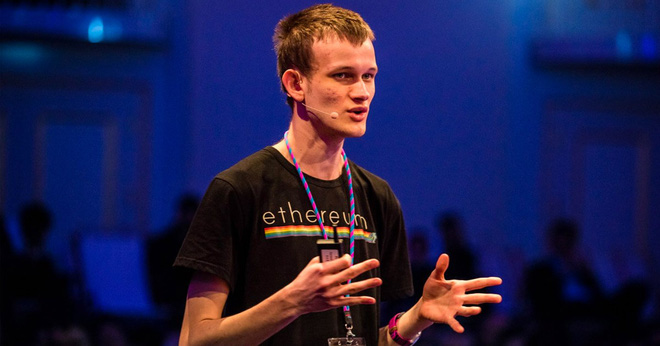
“Transitioning to proof-of-stake has become an urgent issue for us due to the growth of crypto in general and Ethereum in particular over the past year,” said Vitalik Buterin, the inventor of Ethereum, in an interview. He hopes to implement this change by the end of this year, while others suggest it will begin in the first half of 2022. This timeline is a year earlier than originally projected last December.
“I’m very happy that one of the biggest issues with blockchain will no longer exist once proof-of-stake is finalized,” Buterin said. He has urged developers to learn about this transition since his blockchain launched in 2015. “It’s amazing.”
This change is sure to push the value of the Ether cryptocurrency—necessary for using Ethereum—higher, as environmentally-conscious investors take note of its significantly lower carbon emissions. Most criticisms of the proof-of-work mechanism come from younger investors (millennials) and those who prioritize positive environmental, social, and governance (ESG) standards.
“It’s hard to overlook that the ESG trend is going to become very important,” said Wilson Withiam, an analyst at Messari specializing in blockchain protocols. “If you’re looking at Ether as an investment project, it’s not surrounded by such criticisms.”
Pantera Capital, an early Bitcoin investment firm, echoed this sentiment. “Ethereum has a large decentralized finance application ecosystem with rapid growth,” wrote Dan Morehead, the founder of Pantera, in a letter to investors on May 10. “Combining those two factors, we believe Ethereum will continue to gain market share equivalent to Bitcoin.”
The transition that Ethereum developers are undertaking is a massive project. They have created, tested, and implemented an entirely new solution to secure their network while maintaining the existing blockchain. Then, when the time is right, they will merge the existing blockchain into the new architecture using proof-of-stake to validate transactions. This transition will also significantly increase the transaction speeds that Ethereum can handle, allowing it to compete better with renowned payment networks like Visa and Mastercard.
Proof-of-work uses capital costs to purchase and maintain computer hardware as well as energy to operate them in the form of financial investments that must be paid by participants on the network, known as miners. In return, the first miner to validate the chain of Bitcoin or Ethereum transactions will ultimately be rewarded with free Bitcoin or Ether.
This system has faced criticism for years, most recently from Elon Musk, who called the energy consumption trend of this mechanism “insane.”
In proof-of-stake, the Ether cryptocurrency will replace hardware and energy costs as the capital cost. A user needs to stake a minimum of 32 Ether on the new network. The more Ether a user stakes, the higher their chance of being selected to process the next transaction chain, resulting in a reward of free Ether, similar to proof-of-work, but slightly lower.
To date, over 4.6 million Ether have been staked on what is called the beacon chain, worth approximately 11.5 billion USD at the current price of 2,503 USD/ETH. This means that once proof-of-stake officially takes effect, the only energy cost will come from servers hosting Ethereum nodes, similar to any company using cloud computing.
“No one talks about the environmental emissions of Netflix because they only run on servers,” said Tim Beiko, the development coordinator for Ethereum Foundation, responsible for establishing funds and overseeing the development activities of the Ethereum protocol.
Danny Ryan, a researcher at the organization, stated that Ethereum’s proof-of-work uses 45,000 gigawatt-hours per year. With proof-of-stake, “you can validate a blockchain using just a regular laptop,” he said. “My estimate is that you will see energy consumption reduced to just 1/10,000 of the current Ethereum network.”
One of the first breakthroughs came from developers creating a system where contracts on Ethereum can be executed off the main chain, called “rollups.” This helps reduce a significant amount of pressure and requirements from the main underlying network, which also means the network will need to make fewer changes.
The next leap is linked to rollups. The process of transitioning to the new Ethereum, called ETH 2.0, will split the network into 64 geographic areas, known as “sharding.” Transactions on one shard will be synchronized with the main network that links to all other shards, making the overall network much faster. However, this is also a complex issue, a difficult security question, and it is slowing down the transition process.
Once rollups can be used for transactions, it means shards only need to store data—Beiko said. In the previous model, the sharding system had to be up and running before Ethereum could transition to proof-of-stake. But that is no longer necessary.
“Sharding has gone from very complex to not overly complex,” Beiko said. “It is no longer a barrier on the roadmap.”
Rollups are limited by the amount of data they can link to the blockchain, Buterin said. This was previously an issue before developers realized that shards could store data.
“If you can release data on-chain, which you can do with shards, then the scale will increase tremendously,” Buterin said.
Beiko noted that proof-of-stake has made significant progress, demonstrated by a recent trial in which transactions on the existing Ethereum blockchain were successfully merged into the proof-of-stake system.
“I’m much more confident than I was a month ago,” he said. “There are a lot of challenging issues to work through, but the underlying architecture is there and looks promising.”
Thanks to: Bloomberg