


However, older computer systems also included a Turbo button, which, when pressed, didn’t make the PC faster but actually slowed it down. So why would anyone create such a counterintuitive button? Let’s explore this together through this article.
How “powerful” were PCs back then?
In August 1981, IBM launched a line of computers named the PC, using an Intel 8088 CPU with a clock speed of 4.77 MHz. This line quickly captured the number one spot in the market and created a standard called “IBM PC-compatible.” Shortly after, IBM’s competitors, such as Compaq and Xerox PARC, quickly designed computers that closely resembled IBM’s machines, running Microsoft’s MS-DOS operating system and meeting the IBM compatibility standard.
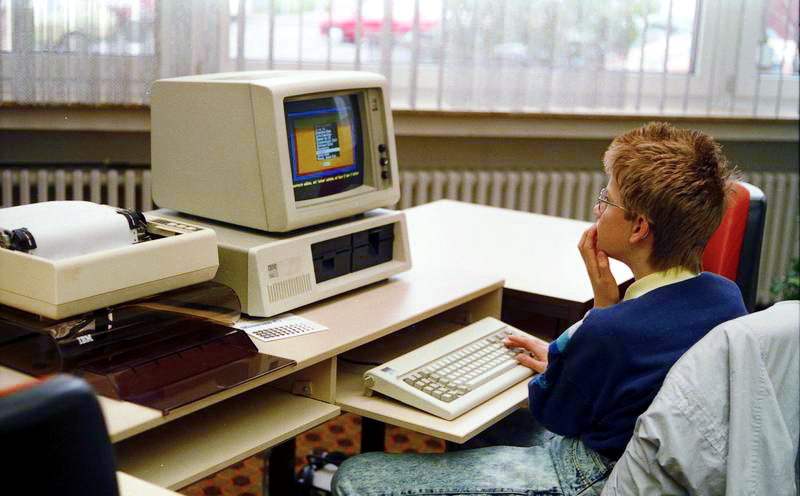
These “clone” computers often compensated for features that IBM’s machines lacked and were priced more affordably. Some models were equipped with additional peripheral connection ports, increased RAM capacity, and raised clock speeds. Some companies even produced “clone” versions that were more powerful than IBM’s original, using Intel 8086 CPUs with clock speeds of up to 8 MHz, making them two to three times faster than the original.
But we couldn’t take advantage of this power yet
However, the hardware race led to a new problem: most software developers in the 1980s did not anticipate that IBM’s PC would become a standard for the entire tech industry, and that clone computers would achieve surprisingly strong performance. As a result, most software and games of that time were designed to run at a clock speed of only 4.77 MHz. If you tried to run these programs on more powerful machines with 8 MHz or higher, the software would operate erratically, and games would run so fast that you wouldn’t see anything to play.
To solve this issue, computer manufacturers added a physical port at the back of the case that allowed the machine to switch between maximum speed mode and 4.77 MHz mode. On some models, you had to press the Ctrl + Alt + plus or Ctrl + Alt + backslash key combination when entering the BIOS to switch modes. However, this was not yet the counterintuitive Turbo button; it took some more time for this button to appear.
And then the Turbo button appeared
The origin of the term turbo comes from the “turbocharger” in cars that helps them run faster. In the 1980s, this term was used to advertise that a certain product had greater power or speed than its competitors.

In July 1984, a PC manufacturer named Egle Computer introduced a new product line called the Eagle PC Turbo. This PC also used an 8086 CPU with an 8 MHz clock speed and featured a Turbo button right on the front of the case. When this button was pressed, the computer would switch between 4.77 MHz and 8 MHz. Of course, no company wanted to label their product as “Slow,” and although pressing it did slow the machine down, pressing it again would speed up the PC again, right? A few years after the Eagle PC Turbo was released, technology continued to advance, allowing us to produce PCs in larger quantities. Many manufacturers copied Egle Computer’s design, and the Turbo button became increasingly common.
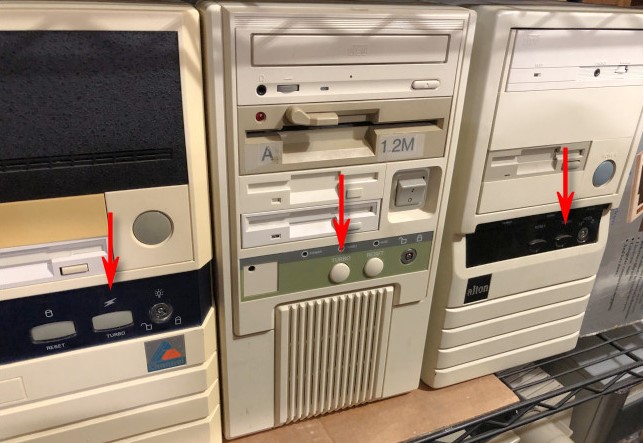
By the early 1990s, the average clock speed of an IBM PC had increased from 16 to 100 MHz. Therefore, PC manufacturers continued to keep the Turbo button to play older games. At one point, there were even small LED screens added to display the CPU’s current clock speed, which looked quite cool. However, this LED screen only required a few simple programming steps and did not directly take the information from the CPU.

And gradually disappeared from the tech world
At a certain point, as software companies began to realize that clock speeds and CPU power were continuously evolving over time, they started creating software that could adapt to the hardware’s speed and automatically adjust to keep programs running smoothly. As newer generation programs became more widely used, software from the 1980s quickly fell into obscurity, and fewer users relied on the Turbo button.

When Intel introduced the Pentium chip around the mid to late 1990s, most PC and case manufacturers had removed this counterintuitive button to save production costs. By the year 2000, the Turbo button officially became extinct on all PC lines. If users wanted to run incompatible programs or games with CPUs that had clock speeds that were too fast, they would use additional programs like Mo’Slo or CPUKILLER.
Today, the concept of Turbo has returned to its original meaning, especially for those passionate about CPU overclocking. Any motherboard with a Turbo button, when pressed, will actually speed up the machine rather than slow it down anymore.
Source: How To Geek