


A place known for its cold ice is witnessing record heat.
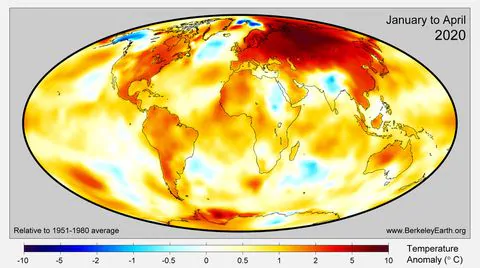
In Siberia, a region renowned for its bone-chilling cold, locals have experienced temperatures soaring to 30 degrees Celsius. The Arctic ice in the Kara Sea region is witnessing alarmingly low ice levels, with some areas experiencing such high temperatures that people have forgotten the annual cold and are now worried about the upcoming heat.
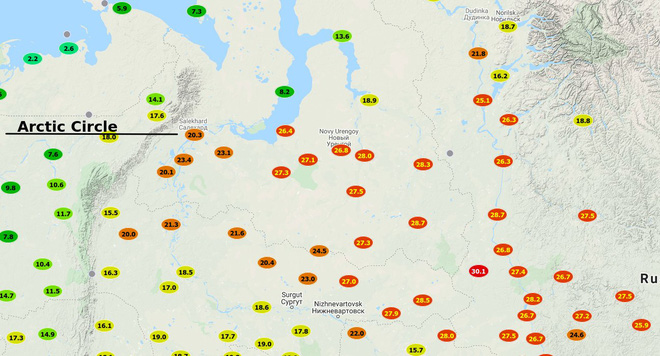
Mika Rantanen, a researcher from the Finnish Meteorological Institute, has marked on the map the unusually hot areas in Western Siberia. Last week, this region was hit by a significant heatwave, with temperatures expected to drop slightly in the middle of next week, but the heat will still spread across the area in the near future.
In a message sent to Gizmodo, Rantanen explained that the main cause of the heat is an “upper-level ridge,” a large pressure system shaped like an omega that creates clear skies and draws in air to the region. “However, I think it’s worth mentioning that this area has experienced a record warm winter. So, I believe the lack of snow in the region plays a role in this sudden warming phenomenon.”
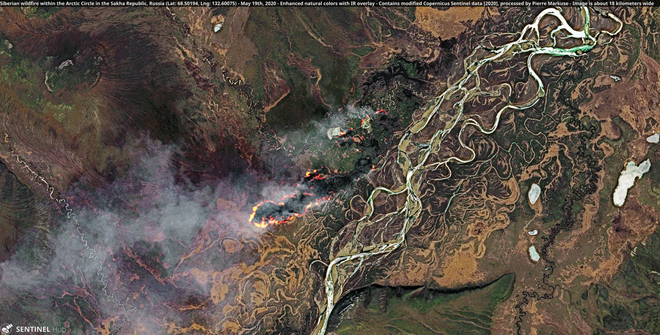
This weather indicates that wildfires continue to spread. Pierre Markuse, a satellite data monitoring expert, is keeping an eye on a series of unusual wildfires in the area above the Arctic Circle, which is known for ice rather than heat. Most of the fires recorded by Markuse are located in Eastern Siberia. Watching the fires burn right next to rivers and patches of ice, we immediately see the image of Earth in a time of climate change.
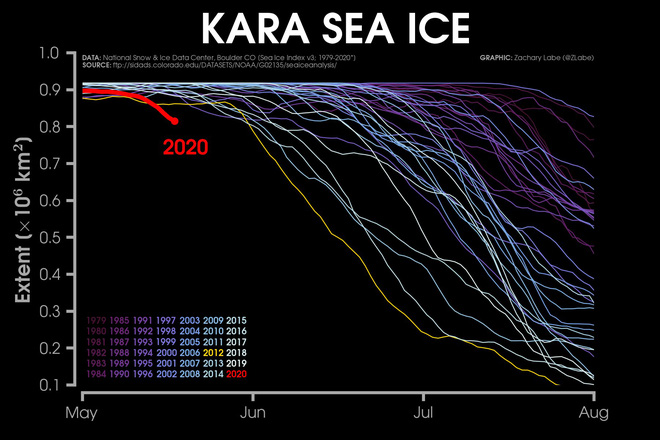
We must also mention the impacts of climate on the oceans. Warmth spreads over the water near the coast, and the Kara Sea north of Russia is witnessing alarmingly low ice levels. Previously, June heat would cause ice to melt, but clearly, things have changed.
Ice in many sea areas surrounding the Arctic has also significantly decreased. Although it hasn’t reached record lows like the Kara Sea, the Bering and Barents Seas both have lower ice levels compared to the same period last year.
These alarming high temperatures once again highlight the global warming trend caused by climate change. The Arctic is warming at twice the rate of other regions on Earth, and the events occurring in recent years are largely predictable, yet we have done little to prevent them. With each passing year, another sad record emerges, accompanied by the same warnings.
But it must be said that if we do not reduce emissions, the future of humanity will soon disappear in the unbearable heat.