


A small cut on the hand can quickly heal itself within a few days without leaving a scar. This is thanks to an amazing self-repair mechanism of our biological body.
After the wound is controlled for bleeding, immune cells rush to the site, mobilizing blood vessel cells to rebuild capillaries for you, recruiting new skin cells to help you heal the wound, and even fat cells to plump the skin, leaving no scar behind.
Unfortunately, this mechanism does not work effectively for large wounds, such as when someone is in a car accident, surgical incisions, or wounds from weapon attacks on the battlefield.
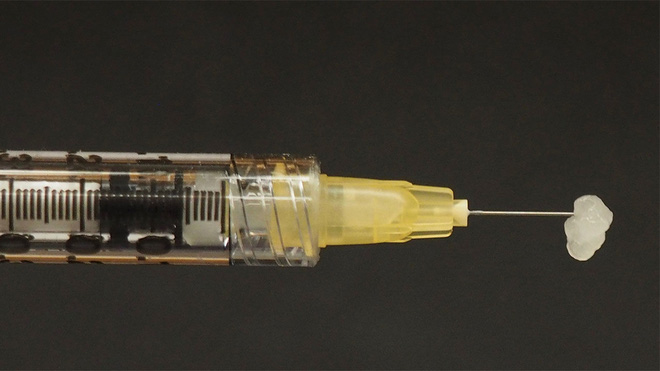
To address this issue, a research team at Johns Hopkins University School of Medicine in the United States has developed a special injectable gel reinforced with nanofibers. It can help any large open wound heal completely without leaving a scar. This injectable gel serves as a scaffold that allows muscle, skin, and fat tissues to adhere and grow on it until they can fully heal every wound.
Currently, this gel has been successfully tested on mice and rabbits. If successfully tested on humans, it could be a breakthrough in the field of orthopedic and cosmetic surgery, replacing tissue grafts and skin grafts that still have many shortcomings.
“Soft tissue loss is a common issue in clinical medicine,” said Sashank Reddy, a reconstructive surgeon from Johns Hopkins University School of Medicine in Baltimore, Maryland, USA. When faced with large open wounds, surgeons currently have limited options.
One is that they can choose to graft tissue from another part of the patient’s body to the wound site. But this inadvertently creates another new wound and causes tissue loss in another location on the body.
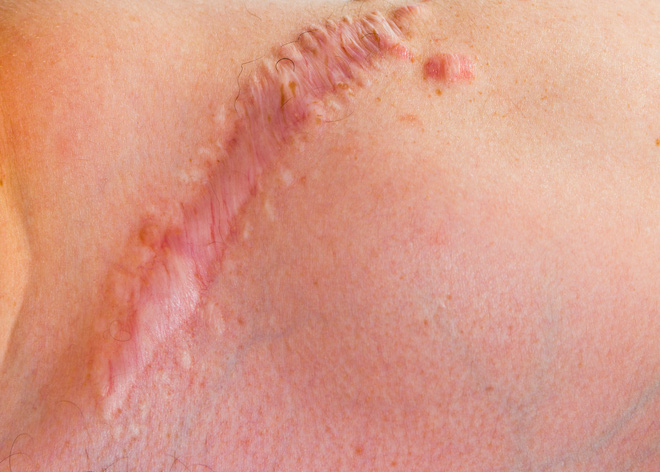
The second option is to graft synthetic artificial tissues. But immune cells often attack and remove those grafts, leaving thick and fibrous scars on the patient’s body that look very unsightly and frightening.
“As a cosmetic surgeon, I see patients every day who have lost soft tissues like skin, fat, and muscle due to cancer surgery, trauma, or other conditions. Currently, our options are limited to grafting, a choice that will cause fibrosis and other issues for the patient, or ‘borrowing’ tissue from another part of the body, which can cause deformities in the new location,” Dr. Reddy said.
To address scarring, doctors have to transfer fat from one part to another through a process called fat grafting. This is not always successful, as typically, half of the grafted fat will die after being implanted, and even doctors cannot predict the risks involved in such surgeries.
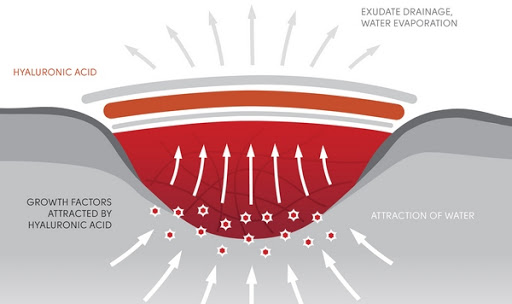
The most advanced technique for reconstructing damaged tissue areas is gel-like fillers. When a patient has small wounds, about the size of a finger, surgeons often inject a type of gel made from hyaluronic acid (HA).
This is a gel that immune cells, specifically macrophages, can infiltrate. When macrophages settle in the HA gel, they send signals out, inviting additional blood vessel-forming cells and other cells inside to repair the patient’s wound.
But this is only effective for small wounds; for larger wounds in the tissue, HA gel is often too weak to maintain their shape. Researchers have attempted to reinforce the gel-like substance by linking molecules together.
However, too many molecular links obstruct the pathways for macrophages and other cells. It alters the biological properties, and now macrophages release signals that promote scar formation instead of regenerating all normal types of tissue.
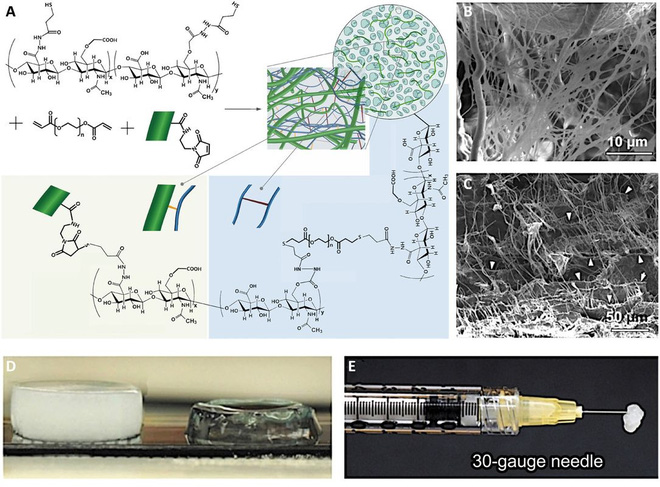
Now, Dr. Reddy and his colleagues have come up with a better solution to strengthen the HA gel. First, they created nanofibers with a diameter just 1% that of a human hair from polycaprolactone. This is a biodegradable polymer that has been used for decades to make absorbable sutures.
Then, they treated these fibers so that they could bond with the HA gel, creating a gel that has elastic properties similar to soft tissue. These fibers resemble the rebar in concrete, forming a scaffold that allows healthy tissues to adhere and begin the wound healing process.
To test their material, Dr. Reddy and his colleagues injected it into mice and rabbits. These animals had previously undergone surgery to remove a portion of fat tissue from their bodies.
As expected, the animals that were only injected with HA gel could not heal wounds larger than 1 cm. However, when injected with the nanofiber gel mixture, macrophages quickly infiltrated and resided on the nanofiber scaffold, recruiting blood vessel-forming cells and fat tissues for these mice and rabbits.
The research results were published by Dr. Reddy and his colleagues in the journal Science Translational Medicine.
“This new gel is a scientific breakthrough,” said Ali Khademhosseini, a biology expert at the University of California, Los Angeles. He noted that this gel is different from other gels; it does not require growth factors and signaling biomolecules.
Instead, this gel simply supports the body in healing wounds as naturally as possible. Therefore, it could be easily approved by the U.S. Food and Drug Administration, Khademhosseini said.
The gel can also help repair soft tissues inside internal organs, such as heart muscle cells. Hai-Quan Mao, a biomaterials expert and a member of the research team at Johns Hopkins, stated that they hope to create stem cell matrices that form heart tissue on this gel. If successful, their gel could also help repair tissue damage after a heart attack for patients.
With this vision, Dr. Reddy’s research team hopes to move towards human trials this year or next year. To commercialize this miraculous gel, they have also established a startup company named LifeSprout.
“As engineers, our job is to invent something, then try to apply it in real life,” Hai-Quan Mao said. “In the case of this gel, we see it as necessary for doctors and patients. We have initially succeeded in testing and are trying to commercialize it. We aim to complete a full loop [research-application].”
References: Science, Hopkinsmedicine