


A Real-time PCR machine for COVID-19 testing costs about 4-5 billion VND. Dutch scientists are wondering: Can they create a super cheap biological testing machine to replace plastic and metal machines in detecting samples containing the SARS-CoV-2 virus?
The idea is to train bees to become COVID-19 testing healthcare workers. In comparison, a queen bee costs only 20 USD, equivalent to 450,000 VND, regular bees cost less than 1 USD, and an experimental beekeeping system costs just over 7 million VND.
At the Veterinary Biomedical Laboratory of Wageningen University, researchers are raising a colony of 150 such bees and training them to detect samples from COVID-19 patients.
If successful, it would be a testing machine cheaper by 500 times and faster by 2,000 times compared to the Real-time PCR machine.
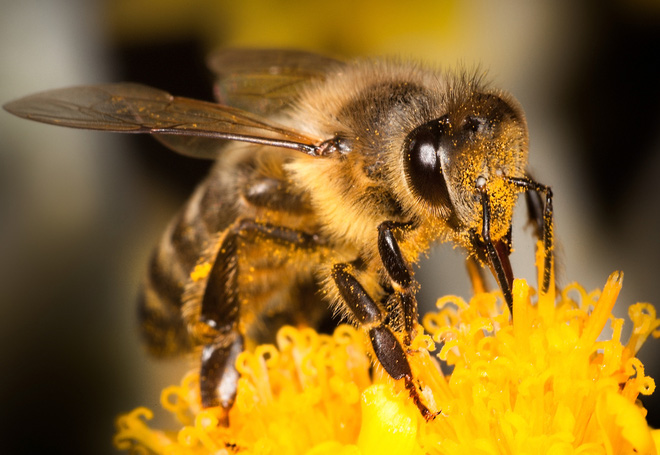
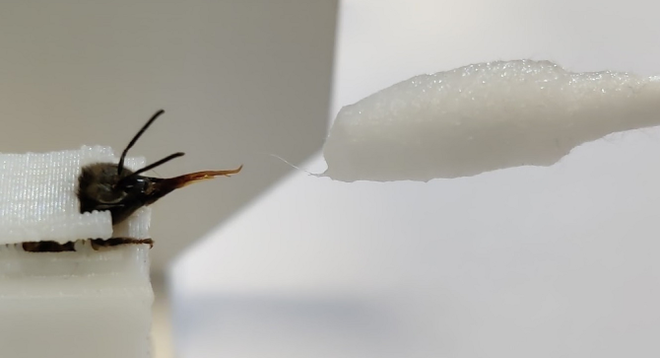
Scientists have trained the bees by allowing them to drink a sugary solution every time they encountered the scent of a COVID-19 infected ferret. Conversely, when the bees encountered a sample that was not infected, they would not receive a reward.
In animal training science, this is a process known as Pavlovian conditioning. Just by repeating that action, the bees will automatically extend their proboscis when they encounter the scent of a COVID-19 sample, even if they do not see the sugary solution there.
By the end of the training process, the bees at Wageningen University were able to identify a COVID-19 sample in just a few seconds, compared to several hours running the Real-time PCR machine. And at the end of the day, scientists only need to reward them with a bit of sugary water.
Bees are not the first animals trained by scientists to detect COVID-19 samples by scent. Previously, some research groups have also trained dogs to distinguish between saliva or sweat samples from individuals positive for COVID-19.
The accuracy of these tests is quite high. A small study in Germany showed that dogs could identify COVID-19 positive samples with an accuracy of up to 94%. This is because metabolic changes caused by the SARS-CoV-2 virus make the bodily fluids of infected individuals smell slightly different from those of healthy individuals.
However, scientists are still unsure whether trained animals are the best option for sniffing out COVID-19 cases outside the laboratory?
Holger Volk, a veterinary neurologist, told Nature: “No one is saying they can replace a PCR machine, but what they can do may be very promising“. PCR machines are what laboratory technicians use to process standard swab tests. The downside is that they are very expensive, with high test costs and time-consuming. However, the specificity of PCR tests is almost absolute, nearly 100% accurate.
But trained animals could be used to test for COVID-19 in places where medical equipment is scarce or where modern machines are not accessible. They could be used in remote areas, islands, and in emergencies.
Additionally, scientists at Wageningen University are also working on a very interesting idea. They want to release bees into a training machine to help them recognize the presence of the SARS-CoV-2 virus in the environment.
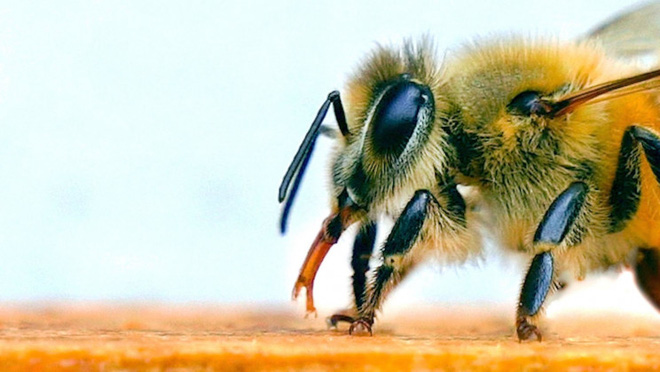
The bees’ noses are actually more sensitive than those of dogs. Bees can detect volatile substances with a sensitivity of up to one trillionth. For example, they can find a flower several kilometers away thanks to the scent in the air.
Now, imagine you could release a few bees into a room or an elevator in a building where someone has just tested positive for COVID-19. The bee would then extend its proboscis to tell you: “The air in this room contains the SARS-CoV-2 virus, don’t go in there and call the disinfection team immediately.”
Isn’t that fascinating and promising?
Refer to Businessinsider