


In a court hearing held on Monday, Apple agreed to distribute $18 million in penalties to the plaintiffs. They are individuals who sued Apple for disabling FaceTime on their iPhone 4 and iPhone 4s in 2014.

The agreement includes the establishment of a joint fund worth $18 million, which is nearly 30% of the average estimated damages according to American economist and policy consultant Justine S. Hastings. The plaintiffs’ attorney estimates that each successful claimant will receive $3 per device, though this amount could increase. The condition for receiving compensation is that their older iPhone devices like the iPhone 4 and 4s must be running iOS 6 and not jailbroken.
The two representatives of the lawsuit, Christina Grace and Ken Potter, estimate they will receive a compensation of $7,500. Meanwhile, the group of attorneys representing the class-action lawsuit will receive 30% of the compensation amount, equivalent to $5.4 million for attorney fees and $1.1 million for reimbursement of incurred costs.
Apple’s settlement agreement comes in the context of a lawsuit that has dragged on for more than three years without resolution. And those who filed the lawsuit against Apple continue to pursue it to the end.
FaceTime launched in 2010 as an online video technology for the iPhone. At that time, Apple used two methods to transfer audio and video data between multiple devices. Initially, Apple utilized a direct peer-to-peer (P2P) connection, then switched to a method using third-party server forwarding. The FaceTime calls at that time utilized Akamai’s servers, which cost Apple significantly more than the P2P technique.
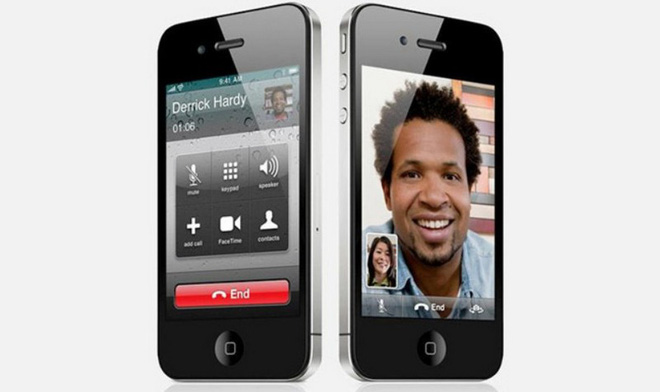
However, by 2012, when Apple’s P2P technology was found to infringe on patents owned by VirentX, the court ruled that Apple had to cease using direct connection protocols and reroute FaceTime calls through third-party forwarding servers. Naturally, this caused Apple executives to worry about the rising costs.
To address the server cost issue, Apple developed a new peer-to-peer protocol in-house and introduced it in iOS 7, which launched in 2013. At that time, some iPhone 4 and 4s owners were not ready to upgrade from iOS 6 to iOS 7 due to the new operating system causing glitches on older devices, particularly with FaceTime. This was explained as Apple wanting users to limit the use of the old connection method on iOS 6 that utilized Akamai’s servers.
For this reason, many believe that Apple deliberately “broke” FaceTime to encourage users to upgrade to iOS 7. Meanwhile, Apple blamed compatibility issues, stating that if users wanted stable FaceTime, they should ideally upgrade to iOS 7.
The defendant, Apple, subsequently accepted the lawsuit until January 2020, just before agreeing to the settlement terms.
Source: AppleInsider