


Scientists have successfully created a special mutated enzyme capable of degrading plastic. The context of this enzyme’s discovery is quite unusual: scientists became aware of its existence while researching a pile of decaying leaves.
This special enzyme can degrade plastic bottles into small plastic pieces, a material that can be used to produce high-quality plastic bottles. Current plastic bottle recycling technology is still very “rudimentary,” so the recycled plastic products are only sufficient for making clothing or carpets.
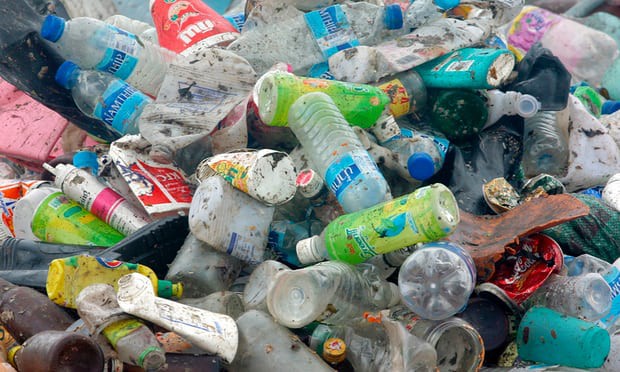
Carbios is the company behind this breakthrough that has the potential to change the production processes of many large companies, and they have plans to recycle plastic bottles on an industrial scale within the next five years. The first two major companies to partner with Carbios to research the production of the new enzyme are the snack and beverage giant Pepsi and the cosmetics company L’Oréal. Renowned experts have described the new enzyme as a significant advancement in the field of recycling.
A series of surveys and research indicate the presence of plastic everywhere on Earth, from the Arctic ice to the depths of the ocean, affecting the living environment of millions of marine organisms, and even posing potential health risks to humans. If this enzyme succeeds on an industrial scale, we could significantly reduce the amount of plastic waste released into the environment each year.
A recent scientific report published in the journal Nature discusses the origins and mechanisms of how this mutated enzyme performs its wonders. The research began with the data of 100,000 potential microorganisms, among which is a species of bacteria that thrives in decaying leaf piles (discovered back in 2012).
“We completely forgot about it, but it turned out to be the best thing we have,” said Professor Alain Marty from the University of Toulouse, France, and also the head of science at Carbios.
Researchers analyzed the enzyme released by the aforementioned bacteria, forcing it to mutate to enhance its ability to degrade PET plastic – the chemical that makes up the water bottles we know. This enzyme remains stable at a temperature of 72 degrees Celsius, a point considered nearly perfect for rapid degradation.
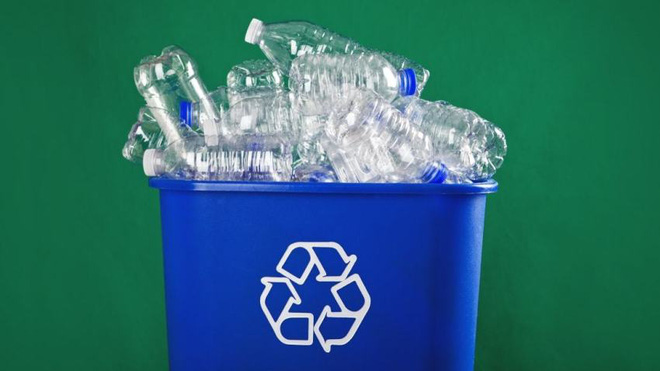
In the experiment, the scientific team used this optimally mutated enzyme to degrade one ton of plastic bottles. They achieved remarkable success, with 90% of the plastic waste being eliminated after about 10 hours. This waste was reused to produce food-safe plastic bottles.
Currently, Carbios has signed a contract with biotechnology company Novozymes, which has the capability to produce this special enzyme from fungi, at a production cost only 4% of that for creating new plastic from crude oil.
The cost of PET plastic recycled by this method is still higher than that of new plastic, due to the costs of collecting and heating the plastic before adding the degrading enzyme. However, according to Martin Stephan, the CEO of Carbios, the current low-grade recycled plastic prices are very high due to supply shortages, so this technology still has its place.
“We are the first company to introduce this technology to the market,” said Director Stephan. “Our goal is to be operational by around 2024, 2025, at an industrial scale.”
It is difficult to measure the importance of plastic in modern society, but the tricky issue lies in plastic waste. Therefore, to support a new and highly effective recycling technology, we need to enhance plastic waste collection.
About two years ago, around this time, a group of scientists accidentally created an enzyme capable of degrading plastic bottles. Professor John McGeehan, one of the researchers behind this study and also the director of the Enzyme Innovation Centre at the University of Portsmouth, affirmed that Carbios is the leading company in plastic-degrading enzymes. He enthusiastically called the new research a major breakthrough.
“A truly feasible industrial-scale plastic recycling line is possible thanks to the new enzyme. It is an important advancement in terms of degradation speed, efficiency, and heat resistance,” Professor McGeehan said. This will be a technology that allows us to reduce dependency on plastic production from crude oil, cut down on emissions and energy consumption in plastic production, and additionally encourage plastic bottle collection for recycling.
Source: Guardian