


You may be familiar with the ozone hole hovering over the skies of Antarctica. In the early months of 2020, there have been two major news items related to the ozone layer – Earth’s shield against ultraviolet rays – that you should know about.
Bad news: between March and April, a region over the Arctic experienced a significant drop in ozone levels.
Good news: this hole just closed last week.
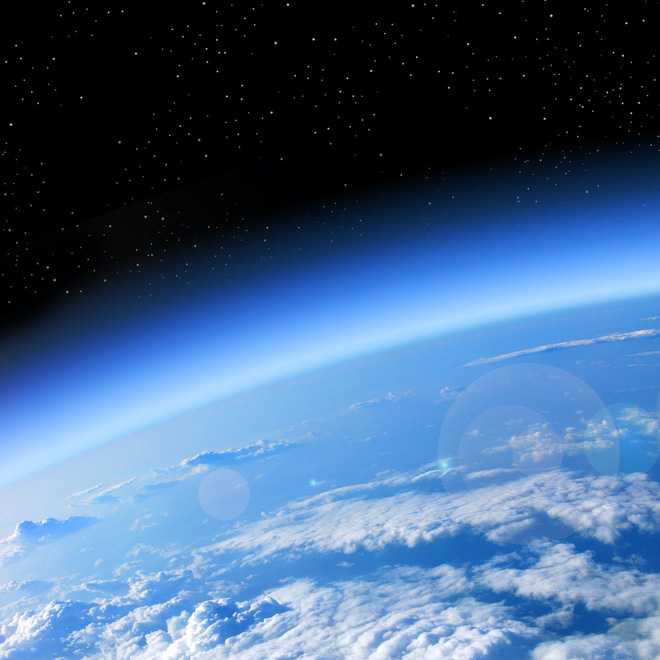
It should also be noted that this ozone hole is not a cause for major concern, and while its sudden closure is unusual, it hasn’t surprised the scientific community. According to Professor Paul Newman, director of the Earth Science Division at NASA’s Goddard Space Flight Center, this event can occur approximately once every decade.
In the past, the two previous closures of the ozone hole occurred in 1997 and 2011, also over the Arctic skies. However, measurements show that this year’s ozone levels are significantly lower than in previous instances. More importantly, recent ozone measurements are not as low as those of the Antarctic ozone hole. Currently, the Antarctic ozone hole is gradually recovering.
Despite sharing the same name, the ozone holes at the two poles are fundamentally different and cannot be compared. Professor Newman remarked that if this sudden closure phenomenon occurred in Antarctica, we would all be celebrating joyfully.
Why is there an ozone hole over the Arctic?
One of the main reasons is the polar vortex, a swirling air current that appears at the poles during winter. Scientist Antje Innes from the Copernicus Atmosphere Monitoring Service in the EU stated that this year’s polar vortex is particularly strong and prolonged.
Cold air is locked in over the Arctic, preventing it from spilling down into the subpolar regions of the Northern Hemisphere. This frigid air (down to -78 degrees Celsius) leads to cloud formation in the stratosphere, where the ozone layer resides. These cold clouds create an ideal environment for CFCs – artificial substances that harm the ozone layer and have been banned for decades – to interact with sunlight, producing chlorine that depletes the ozone layer.
Moreover, the polar vortex prevents ozone-rich air from other regions from reaching the Arctic, further decreasing the ozone levels in this frigid area.
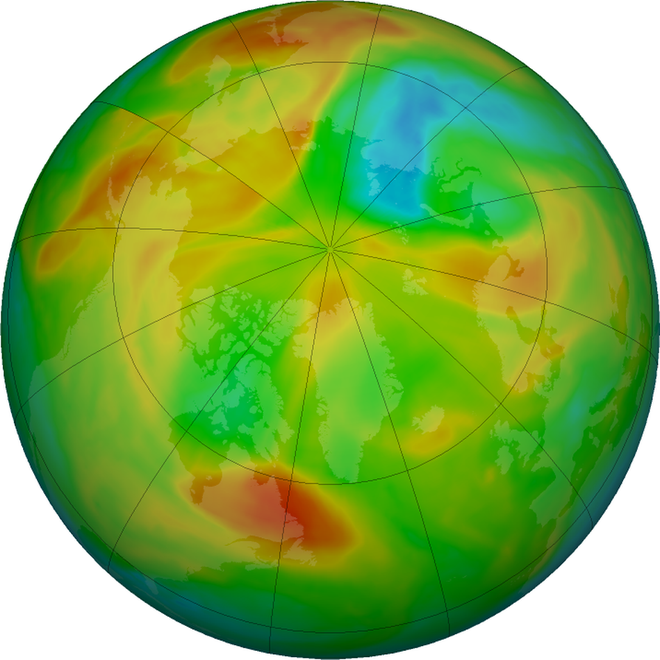
However, last week, the polar vortex dissipated, allowing ozone-rich air to surge into the Arctic, almost immediately resolving the ozone deficiency occurring there. Essentially, the ozone hole over the Arctic has closed. Fortunately, governments have long banned CFCs, so this ozone hole incident does not leave complex consequences.
Nevertheless, science still has an unanswered question: why was this year’s polar vortex particularly strong? To uncover the truth, researchers must continue monitoring future fluctuations and analyzing recent phenomena in hopes of finding an answer.