


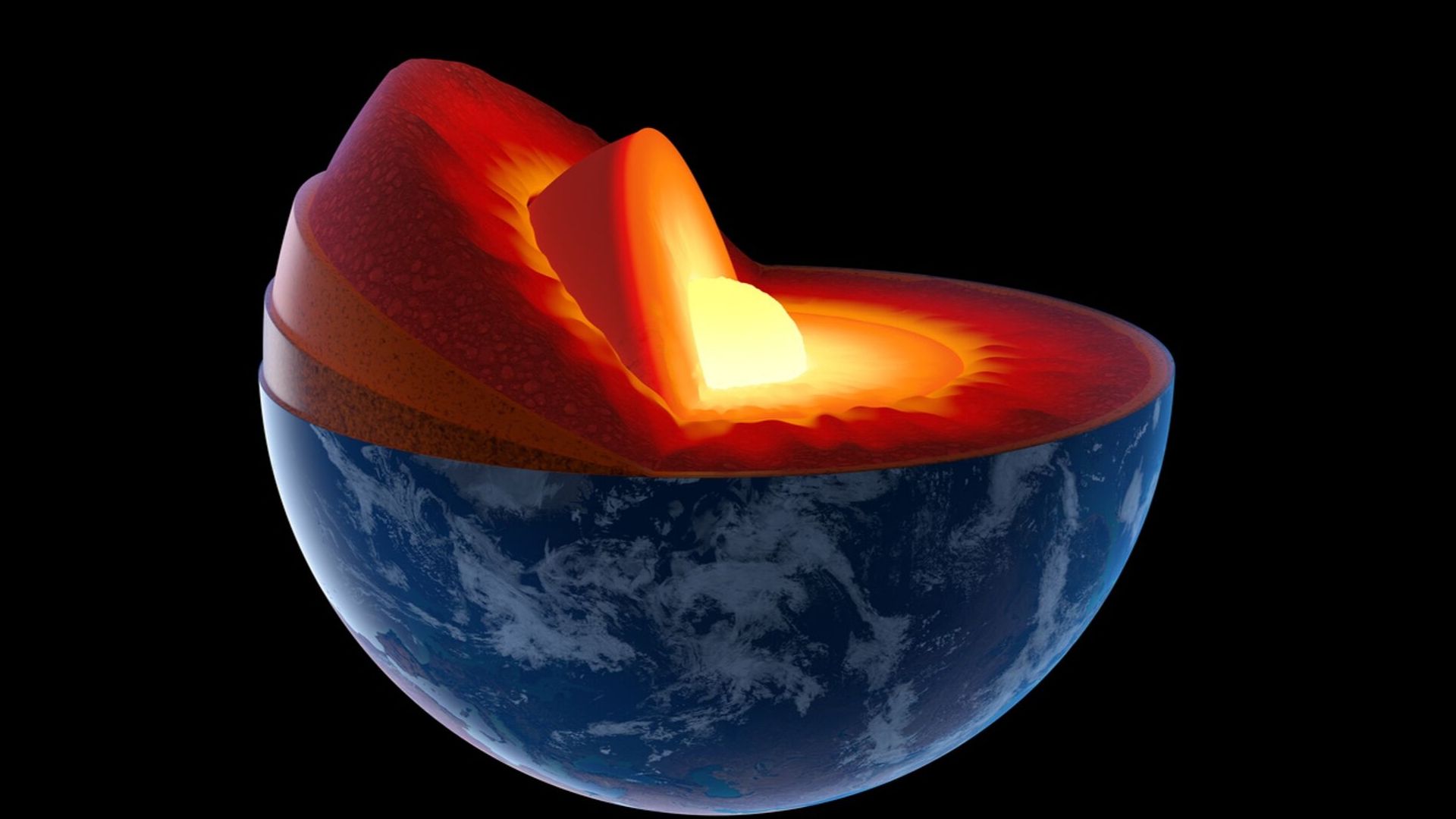
Scientists have recently discovered a gigantic structure made of a dense layer of material, located approximately between the outer liquid core of the Earth and the underlying mantle. By using machine learning algorithms originally designed to analyze distant galaxies, the team of experts set out to explore the deepest points of the Earth. The research process is detailed in a scientific report published in the journal Science this past weekend.
One of these anomalous areas lies deep beneath the Marquesas Islands and has never been detected by science before; the report also mentions another strange structure located beneath Hawaii, which is much larger than previously predicted.
The lead researcher is Doyeon Kim, a seismologist at the University of Maryland. He incorporated seismic charts from hundreds of earthquakes that occurred between 1990 and 2018 into the Sequencer algorithm, allowing him and his team to analyze over 7,000 different metrics regarding earthquakes.

“This research is particularly special because it is the first time we are systematically looking at a large amount of data, which somewhat includes the entire Pacific Ocean,” Kim said. Although science has successfully illustrated maps of structures deep within the Earth, this new study presents a rare opportunity to “connect everything together and provide a more comprehensive explanation.”
Earthquakes generate seismic waves that travel through the Earth’s crust and gradually dissipate when they encounter structures deep within the Earth. Distorted patterns appear in seismic charts, which monitor and record all wave activities in the Earth, allowing seismologists to glimpse the underground world beneath our feet.
The research team focused on observing secondary waves (S waves) moving in the boundary region between the Earth’s outer core and the underlying mantle. These secondary waves travel slower than primary waves (P waves, the first waves measured after an earthquake); S waves typically produce clearer signals.
“We often use S waves for research because they have greater amplitude and the data obtained is clearer than that of P waves,” Kim said. Specifically, the team observed S wave disturbances at the boundary layer between the core and the underlying mantle, aiming to study this yet-to-be-fully-explored geological structure.
When secondary waves hit these structures, they produce signals similar to echoes, indicating that there are strange structures deep underground, known as ultra low velocity zones (ULVZ). Science is still unclear about how ULVZs form or what their composition is, but it is now known that they are approximately 100 kilometers thick and dense enough to block seismic waves.
By incorporating thousands of seismic charts into the Sequencer algorithm, Kim and his colleagues discovered notable signals coming from beneath the Hawaii area and the Marquesas Islands. This provides evidence for the existence of two super-ULVZs, extending over 1,000 kilometers or more.
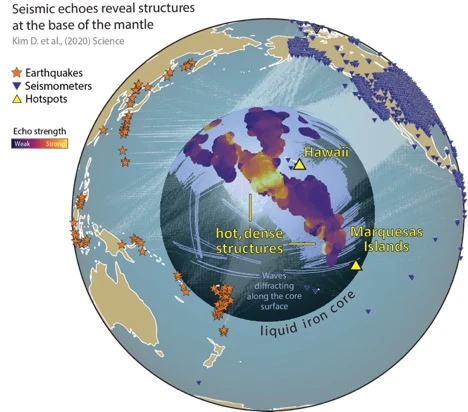
The ULVZ area beneath Hawaii had previously been mapped based on the results of many earlier studies; however, Kim’s research team discovered that this area is much larger than initially estimated. Meanwhile, the ULVZ beneath the Marquesas Islands is a strange region that has never been discovered before.
Super-ULVZs are significant structures to study because they may contain materials older than the Moon’s lifespan; this is based on the hypothesis that the Moon formed after a collision between Earth and a Mars-sized celestial body 4.5 billion years ago, resulting in debris floating in space.
The new research also demonstrates the power of algorithms like Sequencer, which can showcase analytical strength in various fields, including astronomy, healthcare, biology, and more.
The team plans to continue developing this method of probing deep into the Earth, hoping to gather more specific details about the mysterious structure of our home planet. They are also considering applying this research method to the seismic activities of the Atlantic Ocean.
Source: Vice