


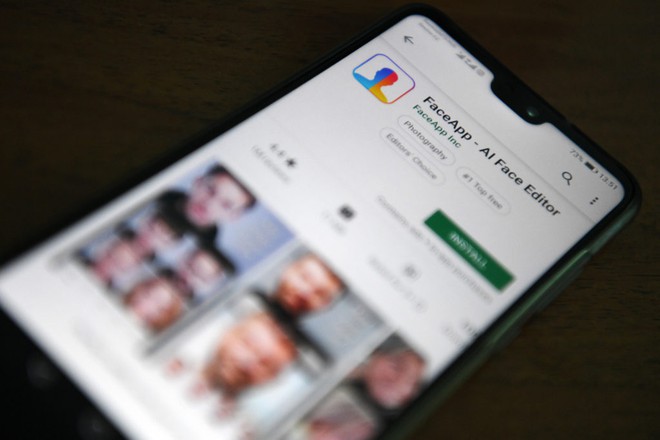
Recently, the app Faceapp is back on top as it continuously ranks number one in the Photo and Video category on the App Store. FaceApp was launched in 2017, but it wasn’t until 2019 and especially in the recent days of 2020 that this app became hotter than ever. Previously, Faceapp was known for its ability to edit users’ faces to look younger or older.

However, in its latest return, Faceapp introduced a new feature that allows users to swap their face gender from male to female and vice versa. This is also the reason why this app has become a trend, attracting a lot of attention and shares from users. Especially, Faceapp has hit on the curiosity of people who want to know how they would look after changing to a different gender.

Like many other mobile apps, Faceapp is always suspected of whether it collects user information and performs overreaching actions or not. When installing Faceapp, users will see that this app requests too many permissions such as running at startup, accessing storage, running in the background…

And the question now is, if Faceapp continuously runs in the background, accesses the phone’s data, and transfers important information to the server, how large will the user data repository of this app be, in the case that the developers use this information illegally, what would happen to users worldwide, including in Vietnam?
Notably, facial recognition is one of the security features being used, and this data stored on Faceapp’s servers could be sold or stolen by a third party. However, not many users, especially in Vietnam, are concerned about this issue.
Jake Moore, a cybersecurity expert at ESET, warns: When anything is free, you should always ask yourself what is in it for the app owners and how do they make money? Although there have been no reported cases of Faceapp leaking user data, this is still an issue everyone should be concerned about.
Fabio Assolini, a senior security analyst at Kaspersky, mentioned that companies owning such apps have the ability to facilitate or sell these images to entities using artificial intelligence to perform facial recognition modifications. “Additionally, we must consider that this data is stored on third-party servers. The data could be stolen by hackers and used for identity theft” (according to Thanh Niên).

Of course, at this moment, Faceapp remains a hot app and creates a trend for users worldwide. However, issues related to personal data security are also something that everyone needs to pay attention to in order to avoid unnecessary risks in the future.