


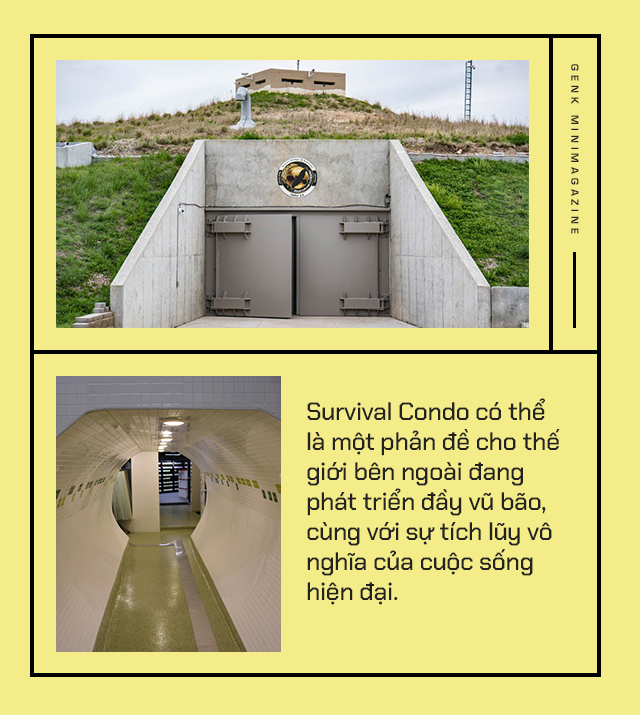
Hidden among the cornfields in Kansas, USA, in an area where the natural landscape is quite unremarkable, is a lush green mound visible from a dirt road. The mound is surrounded by a military-grade steel fence, beneath the shadow of a large wind turbine. At the gate of the fence, a security guard in camouflage walks back and forth with a rifle in hand.
If you pay close attention, you might notice that the mound resembles a concrete capsule resting on a small hill. Around the hill, there are cameras at every corner. These security measures protect a bunker, which from a distance may not seem ostentatious, but up close, it becomes clear that it is not easy to attack.
For many, this bunker is simply unbelievable.
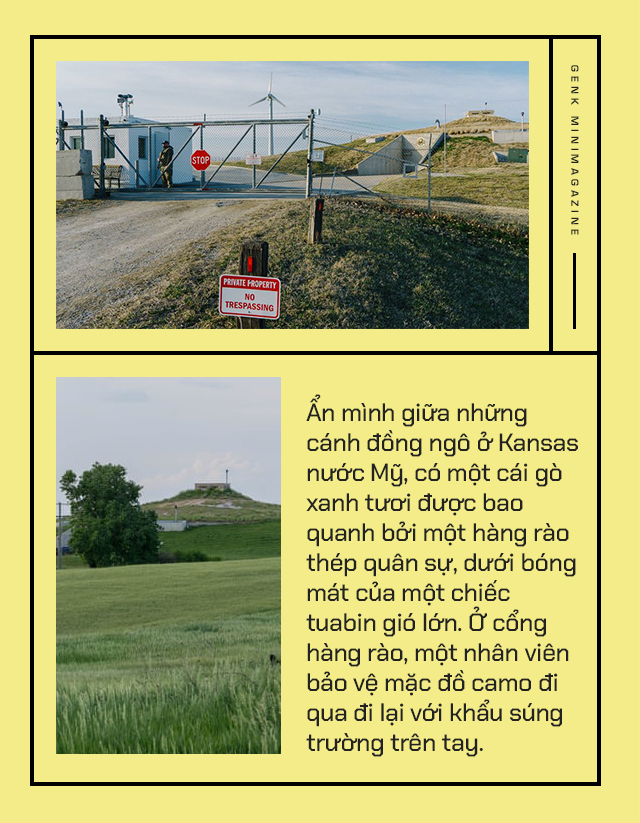
What lies beneath this cornfield will surely give you the feeling that it is a secret government facility — which it once was. But this is not a bunker constructed to shield politicians or the public from the truth; in fact, it was built by the government for a different purpose.
This is one of 72 silos — or underground missile silos for the Atlas F, a type of intercontinental ballistic missile developed by the United States in the early 1960s. Each of these missiles was equipped with a nuclear warhead, and it was 100 times more powerful than the atomic bomb dropped on Nagasaki.
Not every American citizen is aware of the existence of the Atlas F, but historically, these missile complexes played a crucial role in the U.S.’s geopolitical agenda with the world, with programs that escalated to levels capable of causing extinction during the Cold War.
However, by the mid-1960s, with the advent of more efficient missile technologies, the nuclear Atlas F silos were quickly decommissioned and replaced. The bunkers in Kansas no longer belonged to the U.S. government. In 2008, they sold one to Larry Hall, a former government contractor.
Larry Hall has since transitioned into real estate, and he purchased this silo to prepare for an apocalyptic scenario he believes is coming.
Hall’s idea was to transform it into a 15-story inverted tower, digging deep underground — a facility named Survival Condo. It is designed for a community of up to 75 people, who can live together for 5 years in a completely closed, self-sufficient environment.
Hall believes that this duration is sufficient for any apocalyptic events to settle down, allowing those inside to emerge into a post-apocalyptic world. They would disperse to rebuild everything from the ruins left behind, whether from a meteor explosion, solar storm, World War III, or, of course, a pandemic scenario.

“The main idea is that we can build a green structure for the apocalypse, one that someone could use as a second home, similar to nuclear fallout shelters.” Hall said.
He views Survival Condo as a safe, self-contained, and sustainable architectural experiment — akin to Biosphere 2, a project that Arizona State University ambitiously embarked upon in the early 1990s.
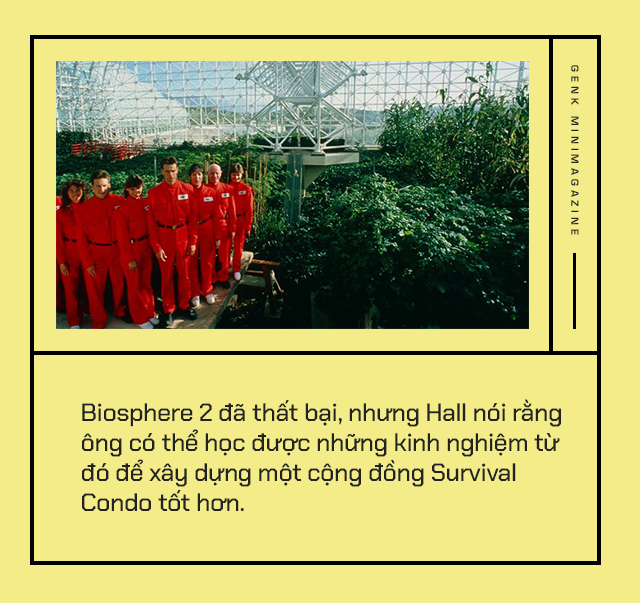
Biosphere 2, also known as the “Greenhouse Vault“, is one of the most famous experiments in history. Four men and four women voluntarily locked themselves in an artificially built biosphere in the desert for two years.
True to its name, they had to stay inside a sealed greenhouse, with no entry or exit. No one was allowed to bring supplies into the biosphere, nor could anyone remove anything from it, including air.
The vegetation in the biosphere had two tasks: to filter air and provide food for the eight participants. Along with a certain amount of stored provisions, they were expected to sustain a self-sufficient life for at least two years, simulating the time required for a trip to Mars.
Although Biosphere 2 ended with unforeseen failures that 20th-century scientists did not anticipate (the biosphere’s system collapsed when it failed to recycle CO2 into O2, volunteers cheated by bringing in items from outside, and the scientists behind the project had disagreements), Hall confidently states that he can learn from the mistakes of Biosphere 2 to build a better Survival Condo community.
“This is a completely self-contained system. People have tried to build such systems above their farms, but they were not completely sealed and were still susceptible to rain, wind, and pests. We have addressed all those factors.” Hall said.
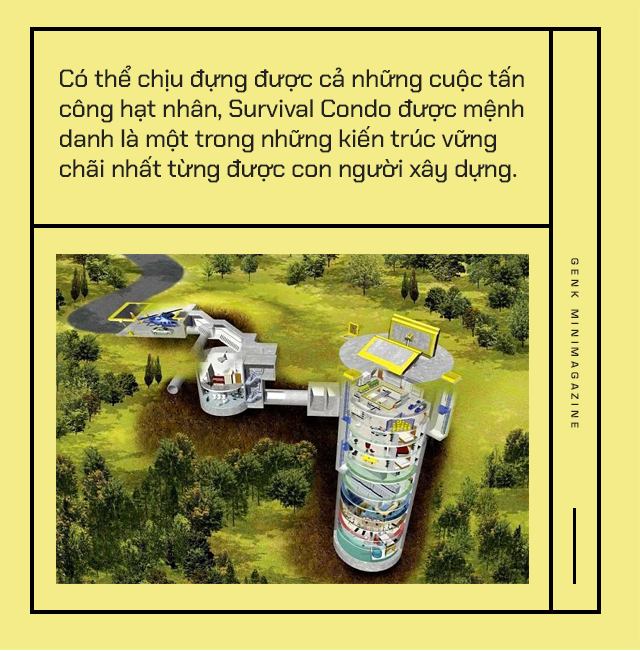
He spent 6 years and 20 million USD to convert this Atlas F silo into a 15-story inverted apartment building with a total floor area of over 5,000 square meters. The U.S. government spent 15 million USD in the 1960s to equip this silo with 2.7-meter-thick concrete walls.
Along with 600 tons of rebar and blast doors, this silo structure can withstand a nuclear attack. It is touted as one of the most robust buildings ever constructed by man.
In 2008, to build a silo like this from scratch, Hall estimated he would need at least 60 million USD. Therefore, the liquidation price the U.S. government sold it to him still made it a bargain. On average, each of these silos sold for between 1.5 to 3 million USD, and all have been purchased.
According to Hall, Survival Condo is now the best practical model for self-sufficient systems that can simulate a space journey. It is not only equipped with tools to eliminate dependence on the outside world but also retains amenities that only emerged in the later stages of capitalism (hint: Survival Condo features a bar, swimming pool, shooting range, and a movie theater with a large screen up to 4K quality…).
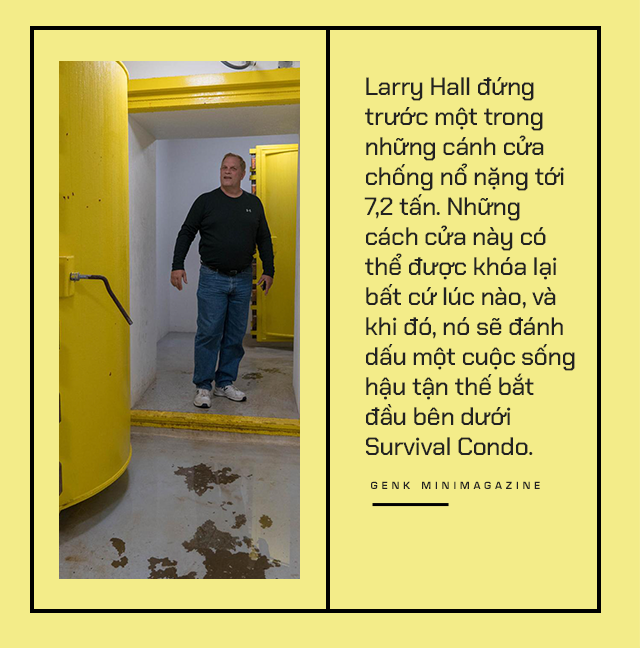
I followed Hall through one of the 7.2-ton blast doors, doors that can be locked at any time to begin a post-apocalyptic life. He then led me to the air filtration unit, a machine capable of removing all pollution from the surface, including nuclear radiation, chemical agents, and biological threats.
Hall stated that he equipped Survival Condo with 3 military-grade filters, each capable of providing over 180 cubic meters of air per minute, costing 30,000 USD each. “I have invested up to 20 million USD in this place. But once you start buying military equipment from the government, you will see money disappear quickly.” he said.
Hall’s team drilled 91 meters underground to install a water filtration system using UV purification and carbon filter technology. This system can filter 45,400 liters of water per day, which is pumped into 3 tanks of 113,500 liters that are automatically monitored.
The power supply for Survival Condo comes from 5 different backup systems, so when one system fails, the remaining 4 keep it alive. Electricity is crucial because losing power means all air and water filtration systems stop working, and everyone living down there would perish.
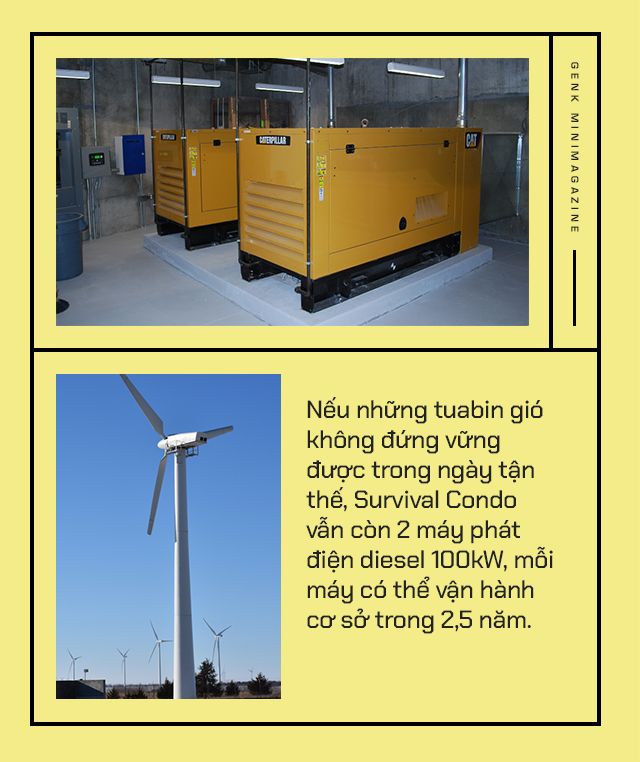
“We have a bank of 386 submarine batteries with a lifespan of about 15 or 16 years. Currently, we are operating Survival Condo at a consumption level of 50-60kW, with 16-18kW coming from wind turbines.” Hall said.
“However, we cannot build a solar energy system here… because the panels are very fragile, and this area is in Tornado Alley.”
He has even prepared for scenarios where the wind turbines are destroyed. “They probably won’t withstand 5 years of storms and hail, so we have equipped 2 diesel generators of 100kW each, each capable of running the facility for 2.5 years.”

Along with food supplies for 75 people over 5 years — a task not too difficult to prepare, all the technical life-support equipment helps Survival Condo survive. But Hall pointed out that survivors need more than just survival; they need amenities as well.
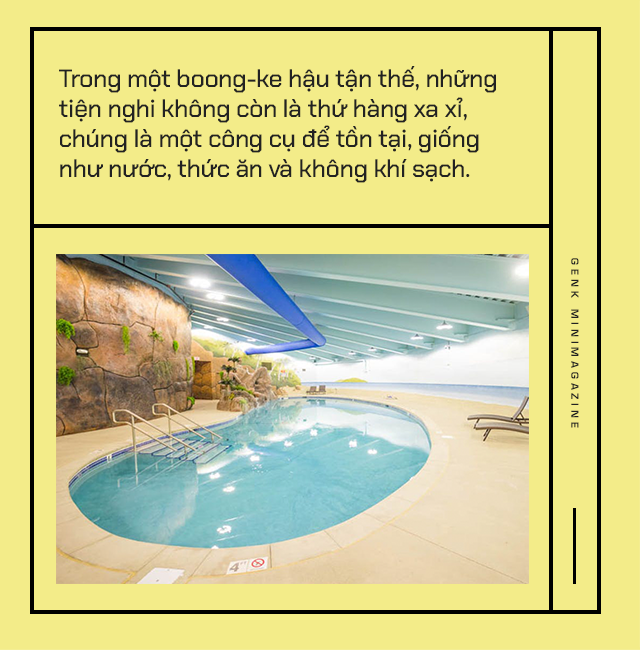
Therefore, in addition to private apartments, Survival Condo is also designed with public areas, similar to what you would find in any high-rise apartment complex. Hall dedicated one floor of the bunker to build a 227,000-liter swimming pool, designed with a waterfall, lounge area, and outdoor dining tables.
This room resembles a balcony at a resort — although down here, you won’t be able to see the sun.
Survival Condo has a movie theater, where we sat back in leather chairs and watched the film Skyfall in 4K quality. The theater connects to the bar, which features a wine cellar with a stock of about 2,600 bottles. When introducing me to these areas, Hall emphasized that entertainment, sharing, and community are also crucial elements to maintain in Survival Condo.
He noted that similar isolation experiments, some conducted by the military in submarine environments, often overlook social factors. However, Hall himself believes that entertainment holds survival significance similar to water, food, and air in a post-apocalyptic era.
“Many people come here often want to know why “luxury” amenities like movie theaters, climbing walls, ping pong, video games, shooting ranges, saunas, libraries, and everything else… are necessary in a survival situation.” he said. “But what they don’t realize is that those amenities are not a luxury; they are a tool for survival.”
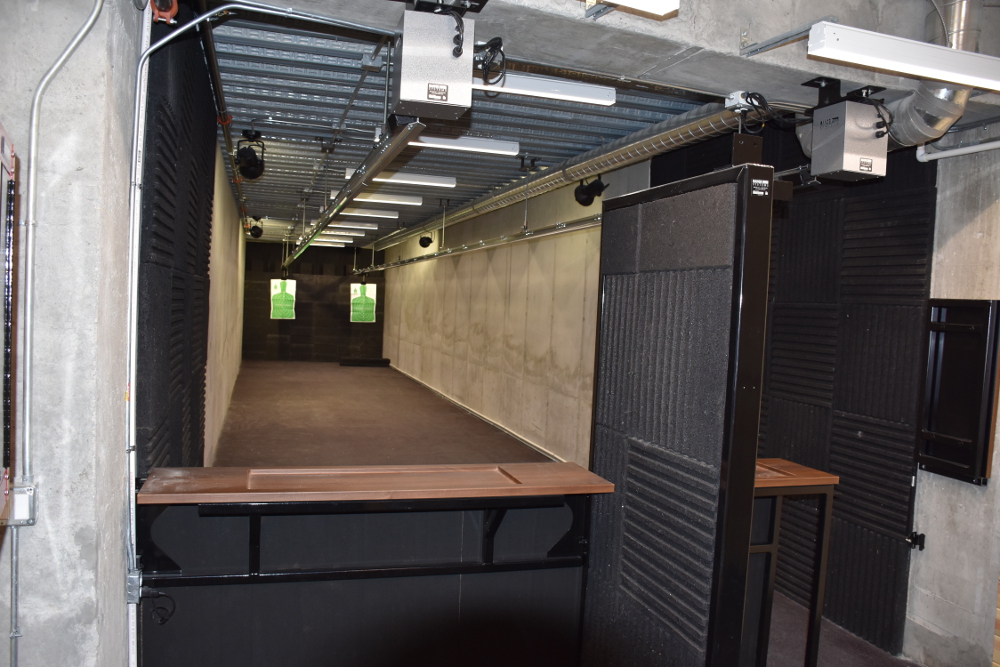


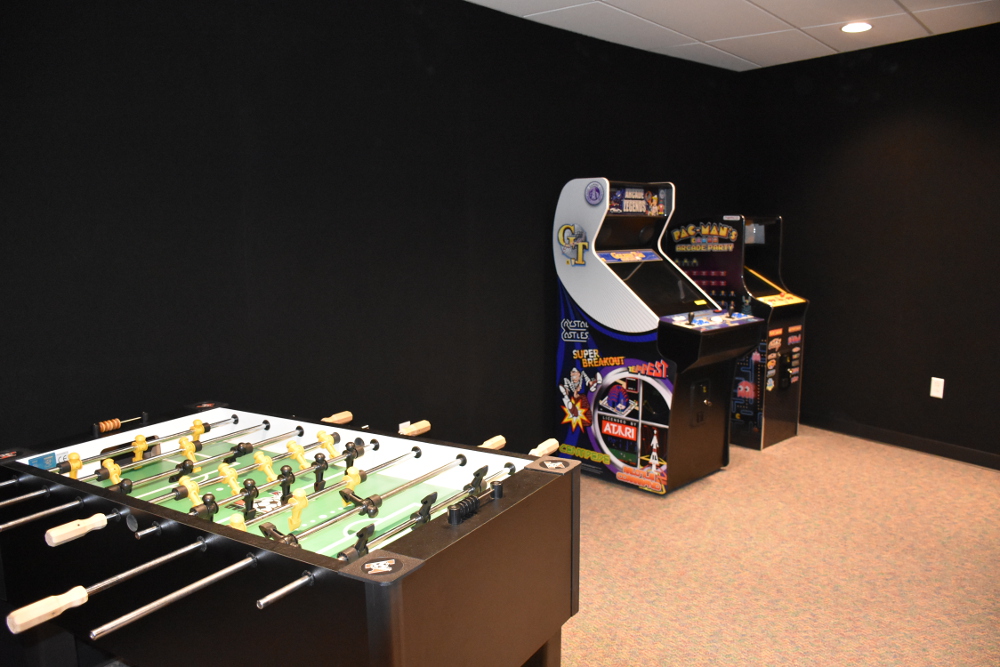
A NASA expert was hired to design social activities under Survival Condo. Everyone here must work 4 hours a day, and children must attend school.
Hall believes that if these amenities are not integrated to keep everyone’s brains busy, they will soon develop abnormal thoughts, leading to depression and unpredictable behaviors.
Learning from the Biosphere 2 project, he hired a NASA astronaut healthcare expert to run Survival Condo, ensuring that everyone inside always has something to do. They can study, work, exercise, and entertain themselves, but they are not allowed to sit idle for too long.
Idleness is not conducive to good behavior; bored people tend to become destructive, Hall said. Thus, one principle in the Survival Condo community is that everyone must work 4 hours a day, and children must attend school.
Below this bunker are classrooms with computers and a library, although the shelves are currently empty. Books will be brought down to fill these spaces when people move in.
There are also two areas where people can choose to work, a plant-growing area with sunlight lamps and a fish farming area — both are sources of fresh food for the community.
Additionally, Survival Condo has a food reserve, consisting of dry and canned goods with a shelf life of over 20 years. These are placed in a shopping area with low black ceilings, beige walls, but the tiled floor and decorative areas are designed to be quite appealing.
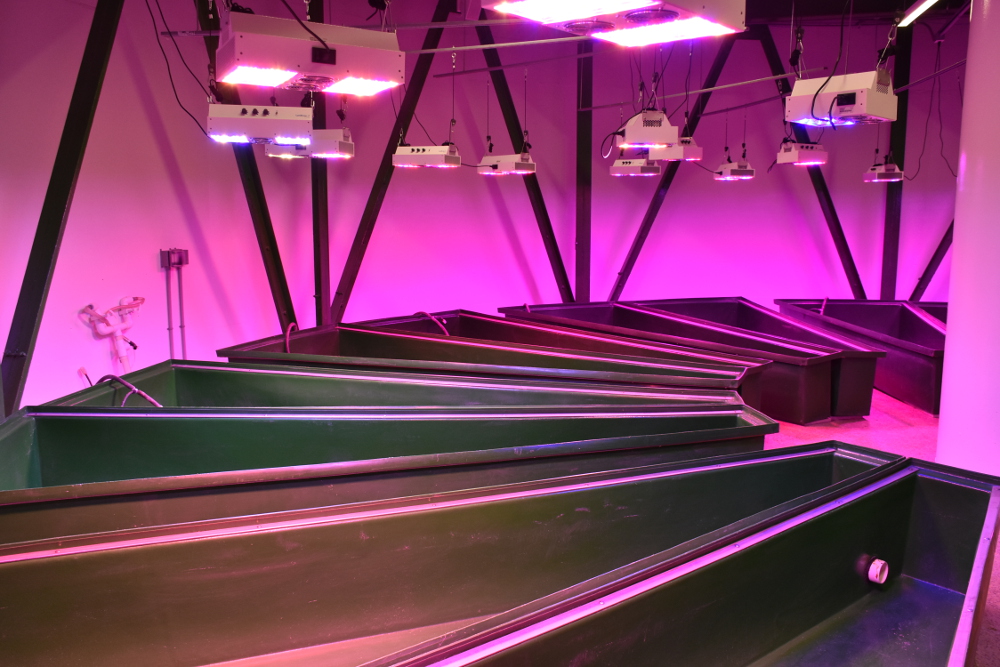
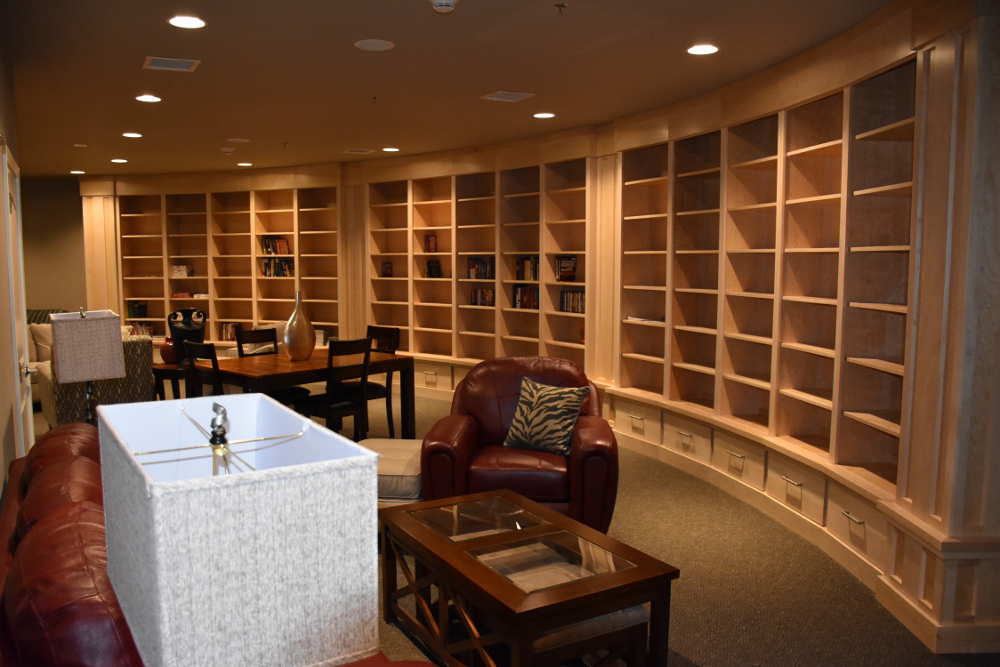
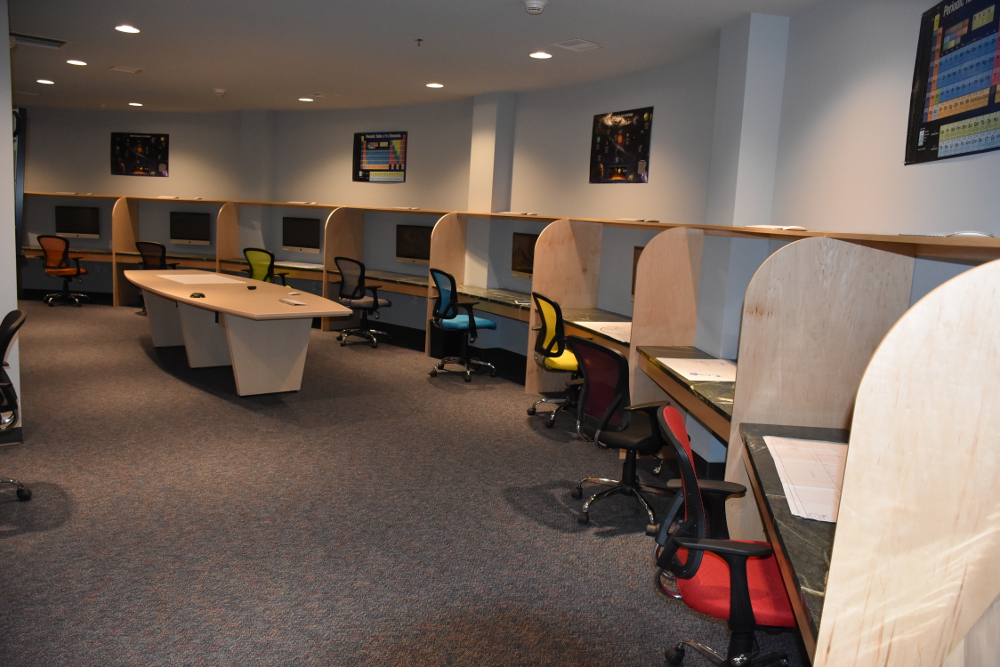

Survival Condo has canned goods and dry foods with shelf lives of up to 25 years. They also have a vegetable-growing area, a library, and classrooms.
If people just went to the food bunker and pulled food out of the boxes, they would soon become depressed by their own meals. Therefore, Hall wants people to visit the grocery store as a social event.
“You need to encourage people to come down here, smell the bread baking, brew coffee, and chat with each other.” he said. As I walked through a room about 170 square meters, it was not hard to recognize it as a clean and luxurious hotel lobby.
I looked out one of the “windows” and was shocked to see that night had fallen outside. In reality, that window was a large LED screen fed by a high-resolution camera. Looking through it, you could see the oak leaves rustling in the wind, the car I had parked outside, and in the distance, the guards still patrolling back and forth.
“The screens can broadcast any scenes people want to see, of course including live cameras showing what’s happening outside, but most people prefer to know whether it’s day or night out there rather than views of a beach in San Francisco or anything like that.” Hall explained.
Survival Condo simulates a space experience more like a luxury cruise ship than a spaceship or submarine. Inside the enclosed spaces, some people will have to endure Claustrophobia, a condition that causes anxiety and often panic.
Thus, what Hall wants to do is to make life in Survival Condo as normal as possible. Those who move down here will quickly forget that they are living in an underground bunker. And for the children born in Survival Condo, this place will become their new world.

In the early days of the Cold War, the government, military, and universities in the U.S. conducted many experiments to see how long people could endure being trapped underground.
In a government study in 1959 in Pleasant Hill, California, 99 prisoners were confined for 2 weeks. When they were released back to the surface, “everyone was in good health and spirits,” the study confirmed.
But it seems that this effect only occurred with those who were certain they would be let out. For those who thought they would be trapped forever, such as in mining accidents, most would become despondent after a short time.
That is why Hall established Survival Condo with a specific milestone: everyone would be released after 5 years. It is a goal everyone will aim towards, giving them hope in a post-apocalyptic world.
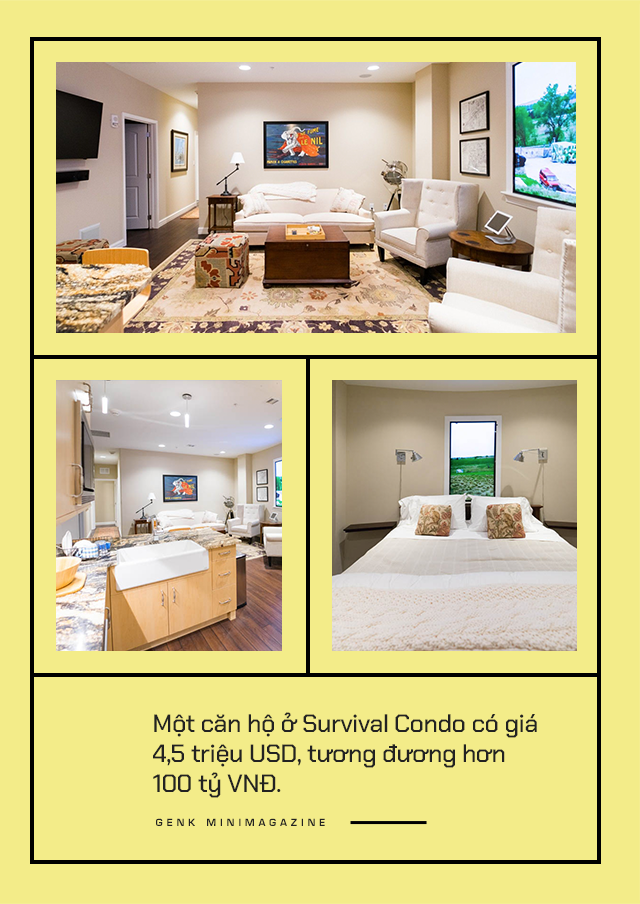
To reside in Survival Condo, you will have to pay 4.5 million USD for an apartment (which can house 6-10 people). A smaller version, a half-floor apartment (which can house 3-6 people) also costs up to 1.5 million. Hall has already sold out the first silo and is currently renovating to build a second silo.
In reality, not everyone can afford that huge sum to own a 5-year post-apocalyptic holiday. But certainly, those who have bought their way into Survival Condo do not want the day to come when they have to use it.
A post-apocalyptic survivalist in California said: “People do not desire the feeling of going down to the bunker; they only yearn for the moment of coming out of it.”
But what would it feel like to escape from bunkers like Survival Condo? “I imagine the moment I step through the bunker door when everything finally ends. The anxiety will be shed. I imagine I have spent all that time there with my family, in peace and becoming the best version of myself,” another person said.
When asked about what you can do in the bunker, a post-apocalyptic survivalist in South Dakota said: “Well, you can do anything; you can learn meditation, you can learn to fly, you can learn to walk through walls. When you escape all the meaningless distractions around you, who knows what you can achieve?”.
Many view Survival Condo as a chrysalis, where people can finally escape all earthly burdens to become their “best selves”. And perhaps you have experienced a part of this effect during the COVID-19 quarantine.
The quarantine period ultimately allowed you to have a bit of privacy, turn inward, do what you could do, rather than chase the frantic obligations of society.
Contrary to some views that wealthy post-apocalyptic survivalists are selfish, and the shelters they are building are grim and dark, Survival Condo could be a counterpoint to the outside world that is evolving in chaos and the meaningless accumulation of modern life.
During the COVID-19 pandemic, many people argue that their preparation for post-apocalyptic living in bunkers is not selfish. Accordingly, their ability to self-isolate for long periods can now relieve pressure on healthcare systems, conserve medical supplies, and many other social resources. They are not necessarily escaping from society; these individuals are looking to enhance society with their preparedness.
It can be seen that post-apocalyptic survival facilities like Survival Condo are not a social anomaly. They are merely reflecting a contemporary society with more threats, similar to the anxieties of the Cold War era.
In the 21st century, nuclear winter may no longer be a constant threat to humanity. But we are facing many similar issues like climate change, the rise of pandemics.
Humanity seems to never stop living with their persistent fears in their minds. The COVID-19 pandemic has only heightened the anxieties of many people. It has the potential to normalize shelters like Survival Condo.
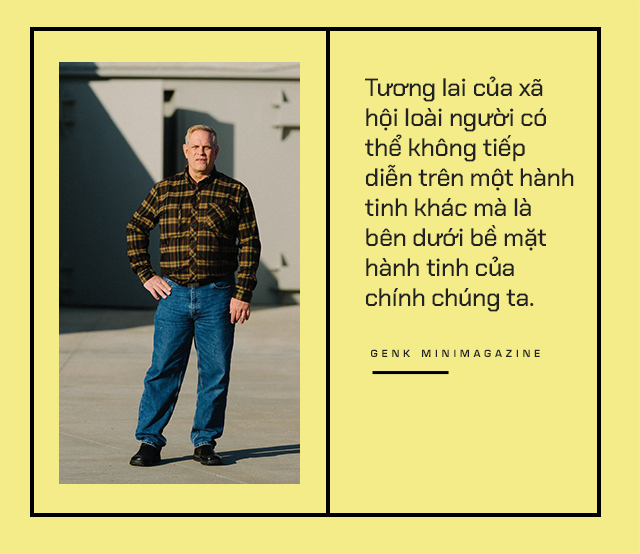
So while interplanetary travel remains a distant dream, perhaps we will see more and more of these underground shelters in the future. The future of humanity may not unfold on another planet but beneath the surface of our own planet.
Reference: Theconversation