


Once you step into the world of PC gaming, you’re entering a sacred race where the old is constantly replaced by the new… until that new thing becomes old and is trampled by something even newer. However, a PC is not a singular block. It consists of many components, and not every component needs to participate in this endless arms race. These will be the things you can confidently invest in because they will not (or very rarely) become outdated. Typically, they could serve you until they literally die, or at least until you decide to replace them with something better.
Case
This is obvious; a block of metal and tempered glass can hardly become outdated, right? The case does not affect the performance of your PC at all. Whether it’s an old or new case, the performance remains unchanged. When buying a case, just choose one that is well-built, looks decent, and you can take it home and use it. No matter how many generations of hardware pass, as long as you still find it visually appealing, the case is not broken, and the ATX design standard still exists, you can keep using it.
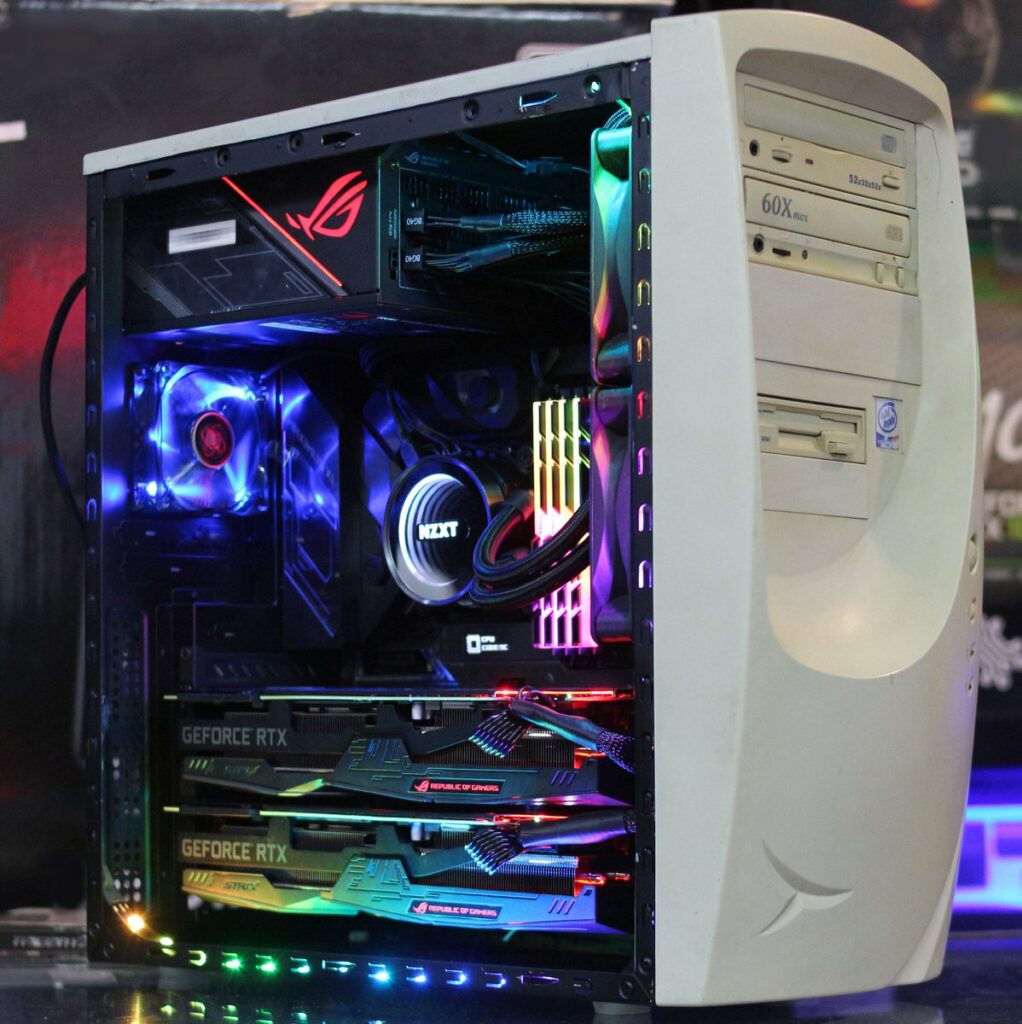
Besides being a box to hold and secure your components, it also helps protect your components, create airflow, and enhance the overall beauty of your PC, so if possible, don’t hesitate to invest in a good case. Buying a good-looking case is never a waste, as long as the price doesn’t become a burden.
Fans
A fan is a fan, and regardless of any cool features or LED lights, at its core, it’s still just a fan. Its job is to create airflow to help the case exchange air continuously, allowing the cooling components to operate at their best. That’s all it does, and as long as it still runs, it’s not outdated and can be used until it breaks.

Remember that fans mainly come in two types based on speed control capability. The first type is a standard fan, which uses a 3-pin connector and has only one speed. The second type is PWM fans, which can adjust their speed dynamically. PWM fans are newer and fancier, but that doesn’t make standard fans outdated; they are still the top choice for those looking to save costs while ensuring good airflow in their case.
Air Cooling
A cooling system serves to extract heat from the CPU and dissipate it into the surrounding air. Each cooler is designed to dissipate heat from a CPU up to a certain power level. As long as you don’t replace it with an overly hot CPU that exceeds the cooler’s capabilities, it can serve you for a long time, across various CPU generations. As long as the positions of the screws on the motherboard don’t change and the cooler isn’t broken, you can keep using it.

Moreover, cooling systems are usually very robust compared to other parts of the system. It consists of two main components: the cooling fan and the heatsink. We’ve already discussed the fan, so let’s focus on the heatsink. Heatsinks are as durable as your case, as there are no moving parts or friction, aside from the thermal material inside the copper pipes.
Heatsinks with copper pipes and aluminum fins that aren’t coated with anti-oxidation may rust and slightly reduce efficiency, but overall, it’s not a significant issue. For those that are nickel-plated, both the copper pipes and aluminum fins may only fail if you damage them. If the fan breaks, you can simply buy a new one and attach it, and everything will be fine.
Power Supply

As mentioned above, with the rapid development of technology, PC components tend to become outdated quickly. However, the power supply doesn’t follow this trend; it doesn’t have semiconductor bases and doesn’t adhere to Moore’s Law, so it is almost immune to obsolescence.
A good power supply can serve you throughout its lifetime or until you decide to replace it with a better one. While the GPU, motherboard, CPU, etc., become outdated each year, the power supply will remain as is. With a high-quality power supply that provides stable current and durable components, you can use it for many years without any issues. Investing in a “premium” power supply is never a lost investment.
HDD

Many might wonder why I would bring up this outdated technology first introduced in 1953 and claim it isn’t outdated, right? It is indeed outdated compared to SSDs (especially PCIe NVMe SSDs). The development of HDD technology for mainstream users seems to have stagnated in recent years; they remain bulky and slow.
However, that’s the noteworthy point. Since HDDs can’t get any faster, buying an HDD now means you won’t have to worry about it becoming outdated compared to future generations of HDDs. While they may not be as fast as SSDs, they are significantly cheaper, making them suitable for storing data that doesn’t require high access speeds. In this day and age, while they may not be ideal for online gaming or operating systems, they still work well for storing movies and offline games. HDDs are sure to last for many more years, at least until SSDs can replace them at a more ideal price point.