


Billionaire Elon Musk, CEO of rocket company SpaceX, plans to send humans to Mars by 2024 with the goal of establishing “a self-sustaining city on Mars as soon as possible.” To achieve a self-sustaining city, it must have its own economic activities, and according to Musk, it will operate based on cryptocurrency.
In response to a tweet from AI researcher Lex Fridman, Musk agreed that “the economy on Mars will be based on cryptocurrency.” He even mentioned that the currency could be Dogecoin or a new cryptocurrency called Marcoin.
The Marcoin project was founded in 2014 and saw a brief surge during the cryptocurrency market boom at the end of 2017, but since then it has almost disappeared. According to CoinMarketCap, this cryptocurrency now has a total market value of less than $100,000.
Dogecoin may be a more suitable candidate as it is relatively more popular than Marcoin and has many decentralized properties similar to Bitcoin.
Last week, the price of Dogecoin increased by one-third after Musk changed his Twitter bio to “Former CEO of Dogecoin” and tweeted: “One word: Doge.”
A few months ago, Musk advised actress Maisie Williams not to invest in Bitcoin, calling it a “demonic currency.” However, just a few days ago, Musk asked Michael Saylor, a well-known figure in the cryptocurrency field, about the feasibility of transacting large amounts using Bitcoin.
Not only the economy, but Musk also sparked controversy earlier when he stated that international law would not apply on Mars. Instead, there would be a set of “self-governing rules.”
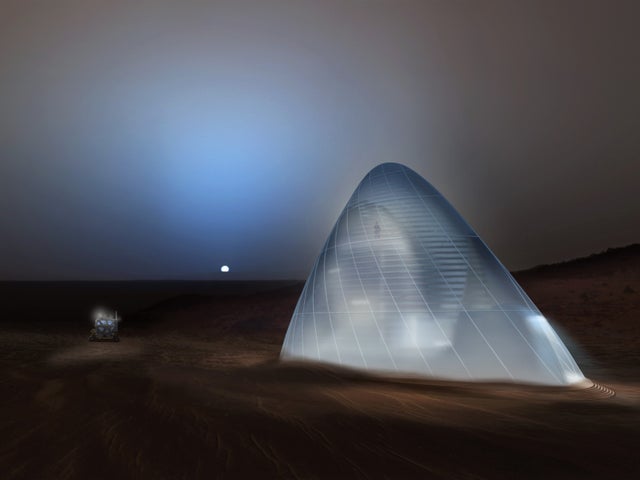
According to Musk, settlers on Mars will live in glass-enclosed apartments like this.
According to the Terms of Service for SpaceX’s Starlink satellite internet project, any future settlement on the Red Planet will “recognize Mars as a free planet” and adds that “No government on Earth has authority or sovereignty over activities on Mars.”
The SpaceX founder frequently mentions his ambition to reach Mars in his lifetime and has requested employees to accelerate the development of the new generation Starship rocket – which will be the vehicle to take people to Mars.
A flight capability test at 12.5 km for the Starship rocket prototype was conducted earlier this month. Musk’s plan is to produce a fleet of about 1,000 spacecraft, each capable of carrying around 100 people.
Source: Independent