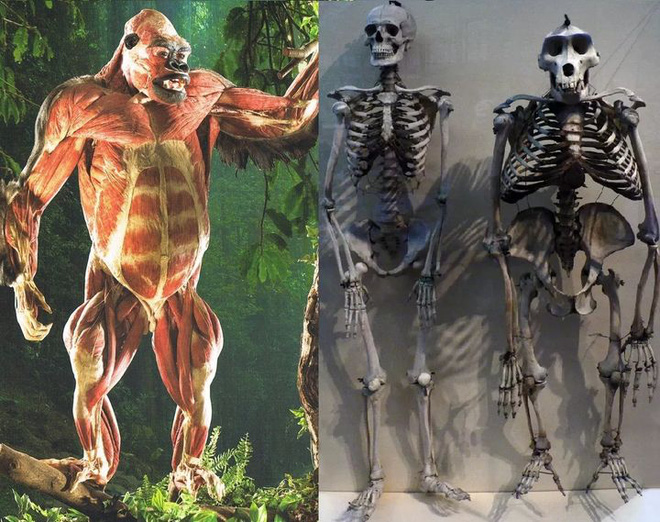

Before we delve into this question, let’s take a look at some images of chimpanzees in the zoo to see if their muscles are indeed well-developed?
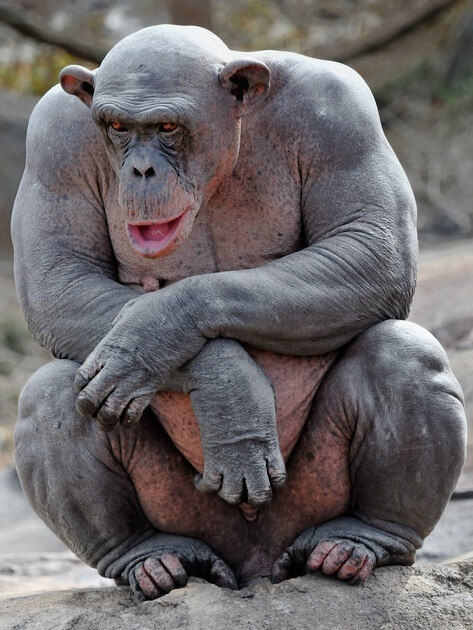
An image of a female chimpanzee in the zoo.
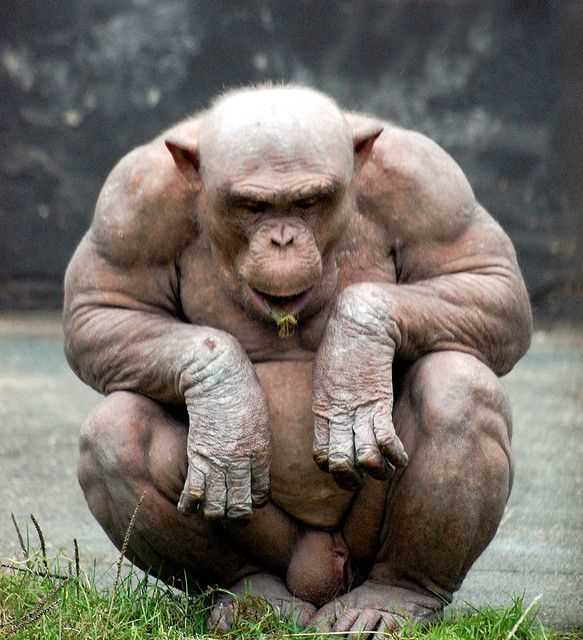
An image of a male chimpanzee in the zoo.
We all know that animals kept in zoos have a much more limited range of motion and activity compared to their counterparts in the wild, but as seen in the two photos above, despite moving less than wild chimpanzees, they still possess muscles as bulging as those who hit the gym regularly.
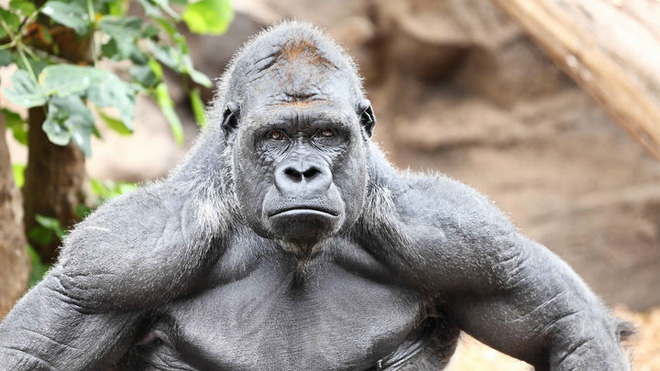
It’s a fact that powerful land animals hardly engage in much activity during the day and don’t seem to exert themselves as we do when working out. Lions sleep nearly 20 hours a day, hippos spend their days submerged in water, only coming ashore to forage slowly in the evening, while elephants, buffaloes, orangutans, and other herbivorous animals spend their days eating without ever exercising like humans do.
If they’re not eating, they spend their time resting, conserving energy as much as possible for hunting, escaping, or fighting off enemies. Yet, even so, their muscles remain well-developed, and they obviously possess great physical strength. We know that humans, despite working hard to achieve beautiful muscle definition, will see their muscles gradually disappear and be replaced by fat if they stop exercising for a while.
If you want to maintain the fullness of your muscles, peak physical condition, and strength, you need to exercise regularly and continuously, particularly true for professional bodybuilders and strength and endurance athletes.
However, there are sometimes exceptions in humans. Around the year 2000, in a hospital in Germany, a newborn boy immediately attracted the attention of doctors.
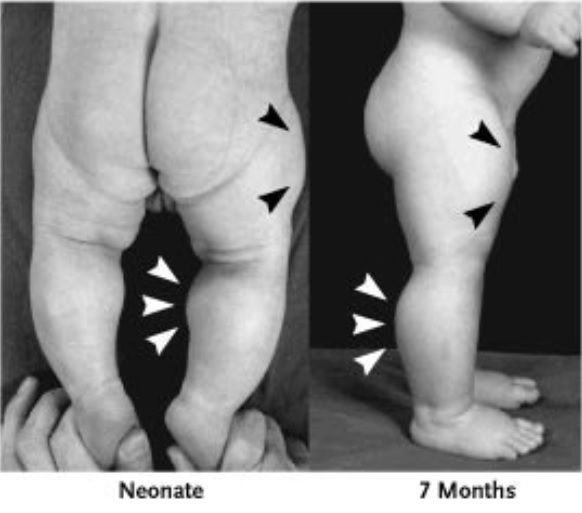
The image on the left shows the boy at birth, while the one on the right shows him at 7 months old; a B-scan ultrasound confirmed that the arrows point to muscle tissue. By the time he was four and a half years old, this boy could lift a 3 kg weight with both hands, having muscle development double that of children his age while his body fat was only half. It’s known that this boy’s mother was a professional sprinter with relatively strong muscles, and his brothers, father, and grandfather were all strong individuals. It is said that his grandfather was a construction worker who could lift stones weighing 150 kg with bare hands.
The boy’s doctor, Schuelke, suspected that the boy’s condition was related to a myostatin syndrome—also known as growth and differentiation factor 8 (GDF-8). This syndrome was first discovered by Dr. Se-Jin Lee, a geneticist at Johns Hopkins University, in a study on mice in 1997.
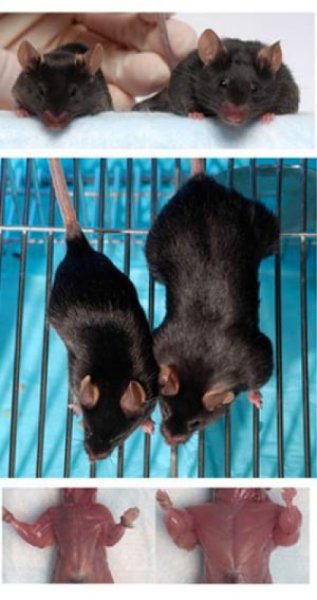
When the gene for synthesizing GDF-8 protein is removed, the muscles of these mice become very well-developed—muscle mass weighing twice that of their normal counterparts. In 2007, Se-Jin Lee found that a second protein, follistatin, related to muscle development—was genetically modified in mice lacking myostatin and caused excessive inhibition of follicle-stimulating hormone, leading to muscle growth efficiency four times that of normal mice.
Schuelke examined the myostatin gene of the boy and his mother to check for mutations. Among the corresponding alleles, only one of the two genes from the mother was abnormal, while the boy had two abnormal gene alleles, meaning he could not synthesize myostatin. This genetic mutation reduces the factors inhibiting the boy’s muscle development, thus allowing him to have a higher muscle development level than normal individuals.
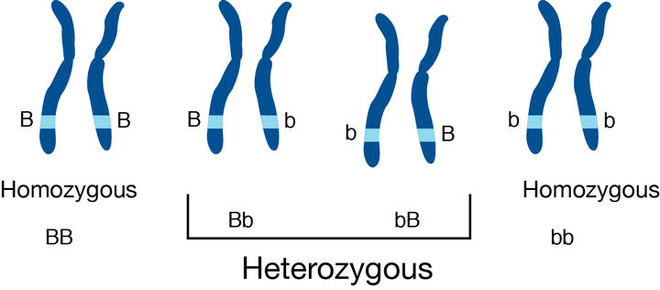
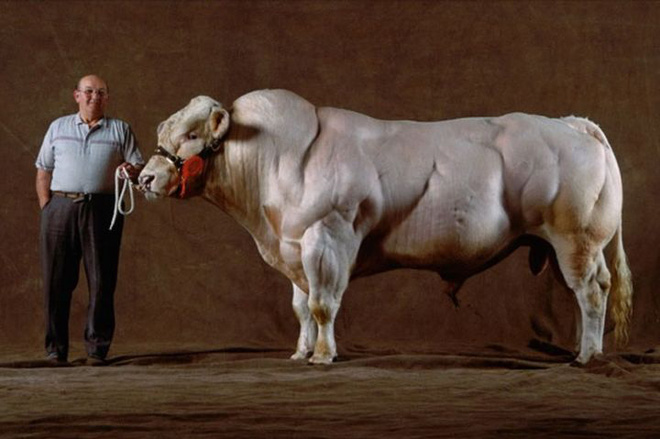
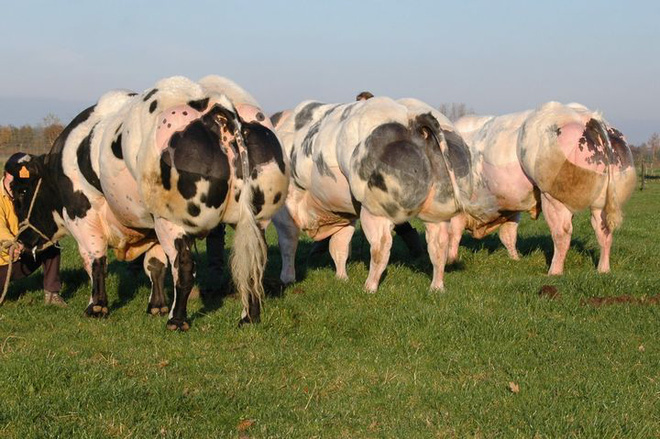
Animals in the wild also have GDF-8 mutations; after humans noticed that domesticated animals had unusual muscle development, they began breeding them to achieve stable homozygous traits, such as the Belgian Blue cattle. The genetic mutation causes a deficiency of myostatin and accelerates muscle development in this breed of cattle.
Now, let’s return to the original question. Why do gorillas, chimpanzees, and kangaroos hardly need to engage in strength training while their muscles are still incredibly developed?
Through numerous studies, we know that muscle development is controlled and regulated by more than a dozen genes and various types of proteins in the body. Different individuals will exhibit different development. For example, with the same intensity of training and nutrition regimen, some people will develop muscles quickly and noticeably, while others will not. Thus, the difference between the bodies of humans and animals is vast; innate genetic codes will determine their existence.
The competition for survival in nature is incredibly fierce, so most animal species evolve to develop their own survival mechanisms and competitive strategies, and muscle development is one of those. More muscles mean higher energy consumption.
However, even though humans have more fragile bodies and less muscle, we still consume a lot of energy to maintain bodily functions, with humans consuming over 400 calories more than black chimpanzees, 635 calories more than gorillas, and 820 calories more than chimpanzees…
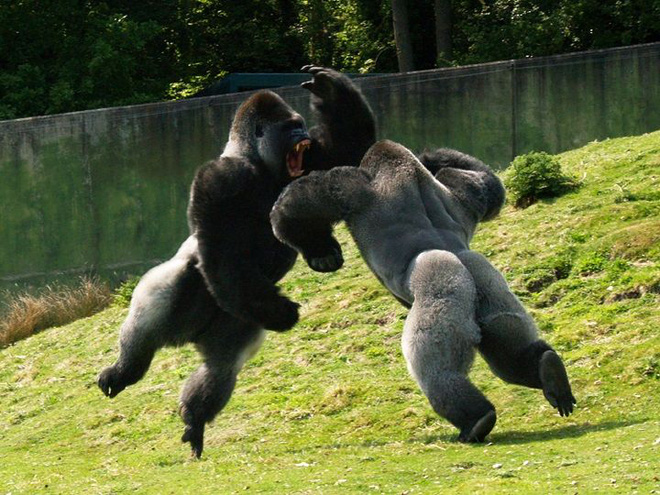
The human brain is a major energy consumer; it accounts for only 2.5% of body weight but uses 20% of energy at rest. If humans had muscles developed like animals, they would need to eat constantly or spend a lot of time resting throughout the day, which would not align with the foraging methods of our ancestors.
The final result of the evolutionary process is that humans have given up on muscle development, opting instead to develop a robust body structure, an advanced cardiovascular system, increased metabolism, smarter brain development, and better endurance and agility. Although we still don’t know how this process formed and what the specific mechanisms are, this balanced and effective survival strategy has helped humanity become the strongest biological population on Earth.