


According to The Guardian on August 18, researchers have discovered the mechanism behind this ability of mosquitoes.
Humans emit a mix of body odors, heat, and CO2. This mixture varies from person to person and is used by mosquitoes to locate their next “meal.”
While most animals have a specific set of neurons to detect each type of odor, mosquitoes can recognize smells through several different pathways.
Dr. Meg Younger, an assistant professor of biology at Boston University and one of the lead authors of the study published in the scientific journal Cell, said: “We found that the way mosquitoes encode smells is actually different from other species.”
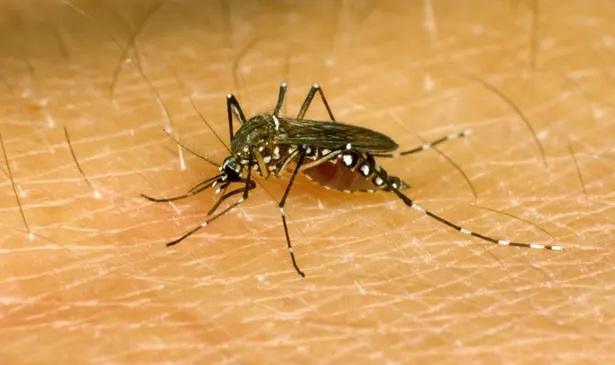
Researchers at Rockefeller University (New York) were puzzled when mosquitoes somehow could still find people to bite after they had removed the entire line of odor-sensing proteins from the mosquito’s genes.
The research team then examined the olfactory receptors in the mosquitoes’ antennae. These receptors link to chemicals floating in the environment and transmit signals to the brain through nerve cells.
Dr. Younger stated: “We thought mosquitoes would adhere to the central principle of olfactory response, which is that there is only one type of receptor in each nerve cell. Instead, what we saw was that different receptors can respond to different smells within the same nerve cell.”
This means that losing one or more receptors does not affect the mosquito’s ability to smell. Researchers say this backup system may have evolved into a survival mechanism.
Dr. Younger explained: “Aedes aegypti mosquitoes are human specialists, and it is believed they evolved to feed on humans because people are always near freshwater, and mosquitoes lay eggs in freshwater. Essentially, we are the perfect meal for mosquitoes, so they have a very strong motivation to seek out humans.”
Finally, researchers noted that understanding how mosquito brains process human odors could help intervene in biting behavior and reduce the transmission of mosquito-borne diseases, such as malaria, dengue fever, and yellow fever.
Dr. Younger stated: “The main strategy for mosquito control is to attract them into traps to remove them from the biting mosquito population. If we can use this knowledge to understand how human odors are represented in the antennae and brain of mosquitoes, we can develop mixtures that mosquitoes find more attractive than humans. We can also develop repellents targeting the receptors and nerve cells that mosquitoes specifically use to detect human odors.”
Dr. Marta Andres Miguel at University College London remarked: “This is a remarkable discovery not only from a basic biology perspective but also from a disease control perspective. This discovery opens new pathways for developing new tools to control mosquitoes, either to attract them into traps or repel them and prevent them from biting humans.”