


“You look stunning! The dress you’re wearing is even more beautiful than the picture you sent me. Others are on their way too,” I chatted with the bride as I entered the wedding waiting room. The room was adorned with white flowers.
She smiled brightly, thanking me for coming and hugged me in a surprisingly natural way. This was our first meeting.
For 15,000 won (12.60 USD) for an hour and a half, she hired me to pretend to be a friend on her wedding day.
My first job as a hired friend began with a brief recruitment notice on the KakaoTalk group chat.
“Hong Min-jung. 30 years old. Works at… in the province… Wedding on… at… in… Looking for up to 10 friends. If interested, please contact us.”
I applied with a short CV including a photo, age, and other personal information and sent it to her three days before the wedding.
There are some basic rules I must follow while doing this job. First, I need to take pictures with her in the bride’s waiting room before the ceremony. Second, I must participate in a group photo session after the wedding. Third, I am not allowed to speak to the bride’s family members. And finally, I must not forget or confuse the bride’s name.
After reading the guidelines, I headed to the wedding banquet hall and joined the “temporary” group of friends. They were also actors playing the roles of friends of the bride or groom at the wedding.
Role Assignment
About 30 minutes before the ceremony, at a café near the wedding venue, I met the other actors participating that day. The manager from the service company that hired me and 9 other “fake” guests for Min-jung was also there.
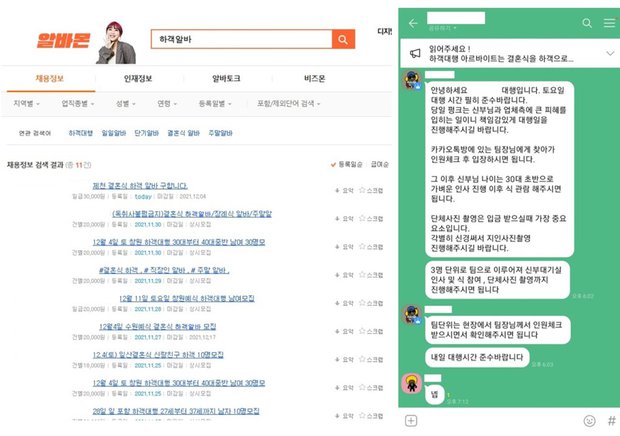
“Let’s divide into 3 groups with different roles, including colleagues, college friends, and high school friends,” the woman said.
Since I am the same age as the bride, I was placed in the high school friends group along with 2 others in their 20s.
Then the “performance” began. I walked into the waiting room and saw the bride for the first time. She was with her real friends and family, or at least that’s what I perceived.
The next moment, Min-jung and I conversed as if we had known each other for years. We linked arms, exchanged warm smiles, and shared intimate conversations.
A Real Job
Hiring guests to fill seats at a wedding has become popular in South Korea since the early 2000s. Since then, it has expanded to various family gatherings, from birthday parties to funerals.
Just typing “wedding guest hire” on Naver – South Korea’s largest portal site – will yield a long list of service providers nationwide.
The cost of hiring someone through a service company is 20,000-30,000 won per person.
“You only need to pay 29,000 won per person. We have a team of experienced part-time staff and ensure confidentiality for our clients,” an employee at the company said.
This person added that if clients want, they can hand cash to the actor no later than 2 days before the wedding. The actor will use this money as a wedding gift for the bride and groom to keep relatives from suspecting anything.
Businesses in this field, like all wedding services, have suffered the consequences of the prolonged Covid-19 pandemic. Gatherings have been restricted. However, things are gradually stabilizing as the government relaxes health regulations.
For the actors, this is quite an attractive job. Although the pay is not as high as full-time work, it can be considered weekend work, and the hired guest gets to enjoy delicious meals. The current minimum wage is 8,720 won per hour.
I spent about an hour and a half at this wedding, enjoying a meal at a buffet restaurant and was paid 15,000 won.
Song, 29, was part of the “high school friends” group with me. She said she was a recent graduate and had earned 60,000 won in just one month after attending 4 weddings.
“Some couples will directly hire people from online communities related to wedding planning. They will post recruitment notices there,” she added. Hiring directly without going through a coordinating company usually pays better.
She also shared another tip with me: If you are chosen to catch the bride’s bouquet, you will earn an extra 3,000 won.
Faking It to Save Face
After the ceremony, the guests moved to a very large banquet hall downstairs. Soon after, the newlyweds started going to each table to greet guests.
“Thank you for coming, my friends. Let’s gather together after I finish my honeymoon,” Min-jung said. She introduced her relatives and other friends sitting at the same table that we were high school friends.
Perhaps this moment was even more important than our brief appearance in the bride’s waiting room, where only a few witnessed her having many “friends”. The guests filled nearly all the seats, and the sounds of conversation filled the banquet hall. The wedding was deemed a great success.
I spoke with a sociology professor. I asked what allows this service business to continue to thrive?
“In Confucian cultures like South Korea and Japan, chemyeon (face) is important. People value reputation, honor, or dignity in interpersonal relationships,” said Yoon In-jin, a sociology professor at Korea University.
Additionally, the sense of community is deeply ingrained in Korean traditional culture. Thus, the older generation often focuses on a large wedding with many guests. This creates a burden for the bride and groom, the professor said.
Shortly after leaving the wedding hall, I received a message from the service company: “Payment has been sent. The next wedding is scheduled for XX. Message us back if you’re interested.”
Source: The Korea Herald