


For a long time, the image of a snake charmer playing a flute to make cobras sway to the music has become a familiar symbol of India and the Arab world. The art of flute playing that “mesmerizes” snakes dates back to ancient Egypt. However, this form of performance has developed particularly strongly in India.
Cobras are the most commonly used species in these performances. To ensure their safety, snake charmers often remove the fangs and venom glands of the snakes. They also maintain a safe distance during the performance and avoid agitating the animals.
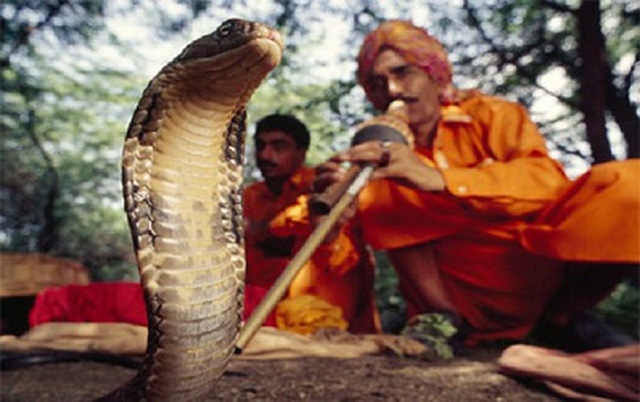
The charmer places the snakes in woven baskets and strings all the baskets onto a long bamboo pole to carry on their shoulder. They often choose performance locations that are crowded. After placing the baskets on the ground, the performers sit cross-legged and begin to play lively tunes. When the basket lids are opened, the snakes raise their heads and move in time with the music.
After witnessing many performances combining snakes and the pungi, many people have been misled about the sound perception of these reptiles as they sway their bodies to the music. However, the truth about this magic trick is entirely contrary to our thoughts.

Snakes actually have no ears
Snakes do not have ears like many other animals. The ear structure of snakes has degenerated, with the outer ear completely absent, while the inner ear consists only of a small bone lacking essential components such as the auditory ossicles and eardrum. Therefore, it can be said that snakes do not have ears.
Instead, their inner ear is connected to the jawbone. The snake’s jaw picks up vibrations from the outside and sends signals to the brain for analysis. Thus, even without ears, snakes can hear, but they rely on their sensitivity to vibrations, especially those transmitted through the ground.

Simple Tricks in the Magic Performance
In the snake charming performance with a pungi, the audience is often captivated by the dance of the snake and the mysterious gestures of the charmer. Upon closer observation, the magicians often sit cross-legged, their feet tapping on the ground as if keeping rhythm with the music. This foot-tapping motion is very common among musicians, so the audience usually does not realize that this is the actual trick used to control the snakes.
Because they are particularly sensitive to vibrations transmitted through the ground, snakes receive signals from the magician’s foot tapping to perform their dances, which is essentially a normal reaction of snakes to external movements. Due to not understanding this principle, many people have tried using music to make snakes dance but have failed.
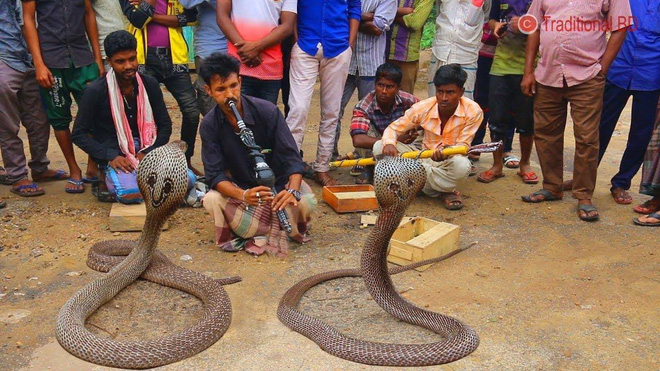
Controlling snakes with a pungi can sometimes cause misunderstandings. Many families in Asian countries have hired magicians for snake removal. When they discover a snake in the house, they invite sorcerers using a pungi to lure the snake out. Similar to the snake dancing magic trick, the pungi is actually just a tool to conceal the real techniques of snake control.
Later, as these tricks were revealed, the magic of snake charming gradually lost its appeal. To this day, only a few still consider snake dancing as their primary livelihood. Typically, they perform on the streets coupled with selling snake-related items such as snake venom, amulets, snake skins, or antidotes for snake bites.
Summary