


For fans of the action-horror genre, The Walking Dead is likely no longer a strange name. Adapted from the comic book by Robert Kirkman (writer) and Tony Moore (artist), The Walking Dead quickly became a global phenomenon when it premiered its first season in 2010, being regarded as one of the best post-apocalyptic/zombie series of the past decade.
However, in the past three years, many viewers have turned their backs on The Walking Dead because they believe the quality of the series has declined, the content has become meandering, and the thrilling suspense of fearing walker (the term for zombies in the show) attacks has faded away.
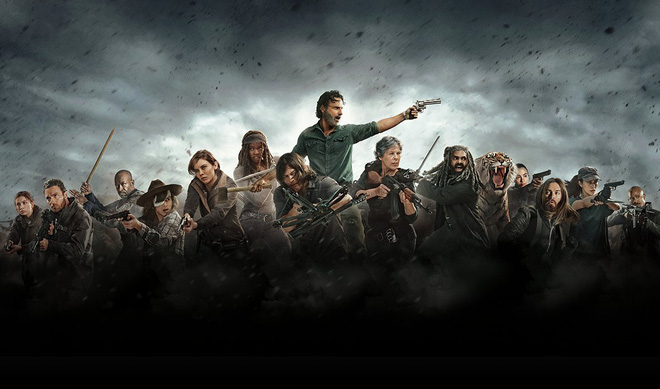
Season 7 (2016) and Season 8 (2017) witnessed this film’s disastrous decline, with very negative reviews from many review sites, along with fierce reactions from fans on the world’s largest social networks. The label “dead series” originated from here, even though the show still maintained a vast audience.
It wasn’t until midway through Season 9 (2018) that The Walking Dead awakened, and it truly returned to its peak in Season 10 – which has already aired 8 episodes on AMC. This season is also rated the highest on the prestigious Rotten Tomatoes (91%), surpassing even Season 1 (88%). And it has been a journey that was far from easy.
An Impressive Promising Start…
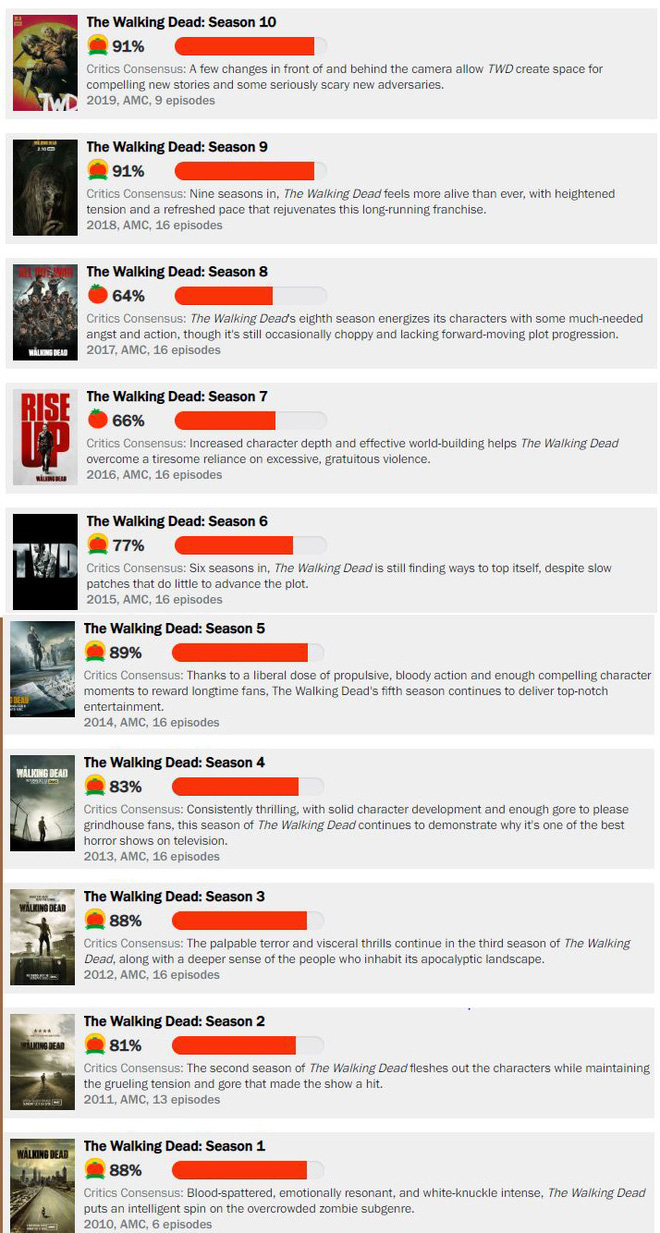
Nearly 10 years ago, when The Walking Dead first aired, following police officer Rick Grimes as he explored the post-apocalyptic world. The concept of walker/zombie was still very unfamiliar, all we knew was: If bitten by them, a human would develop a fever and gradually turn into one of them.
Horror elements, surprises, and somewhat “heavy” imagery made The Walking Dead an impressive and haunting experience. Along with a diverse cast of characters, each with their own personality and backstory. And when the apocalypse struck, all of that no longer mattered; only unity could help humanity survive through the dark days.
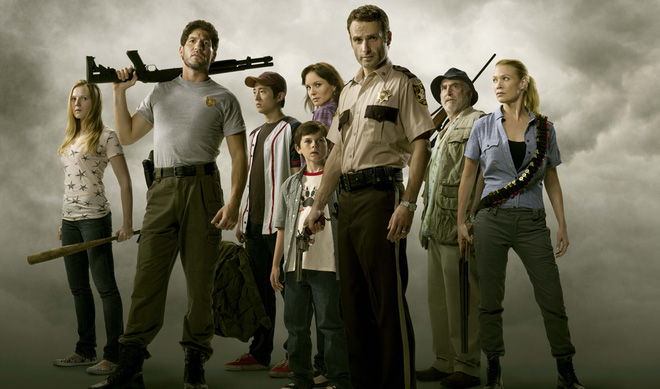
The first two seasons of the show witnessed numerous awkward situations, where the “human” and “animal” sides fought fiercely in life-and-death circumstances. This included pizza delivery guy Glenn risking his life to save Rick – a person he had never known before; or when Shane ruthlessly sacrifices Otis to the walkers to escape alone. Survival – that’s all everyone thinks about, but the problem is how each person chooses their own way.
The end of Season 2 even revealed a horrifying detail: All humans are infected with the virus, and as long as they die (not necessarily by being bitten), they will return as walkers and hunt the living. This was a turning point that made the series more tense and exciting than ever, as the journey of survival became far more complicated and difficult.
… to the Peak of Post-Apocalyptic Survival…
The next four seasons of The Walking Dead showed a transition from the battle between humans and walkers to a conflict between humans themselves. Survivor communities formed and were forced into conflict over resources and medicine. Walkers remained a threat, but not as significant as before, as humans were far more dangerous.
Opinions suggesting that The Walking Dead began to lose its quality stem from here, as humans could now easily take down walkers, especially with scenes where one person could take on three or four without difficulty. But when the antagonists finally appeared, they were immediately drawn back in by the bizarre character-building methods of AMC: A Governor who always presents himself as polite but is actually a cruel and ruthless thief that plunders other communities to enrich his own; A friendly Gareth, who is ready to welcome others into his community, but turns out to be a cannibal.
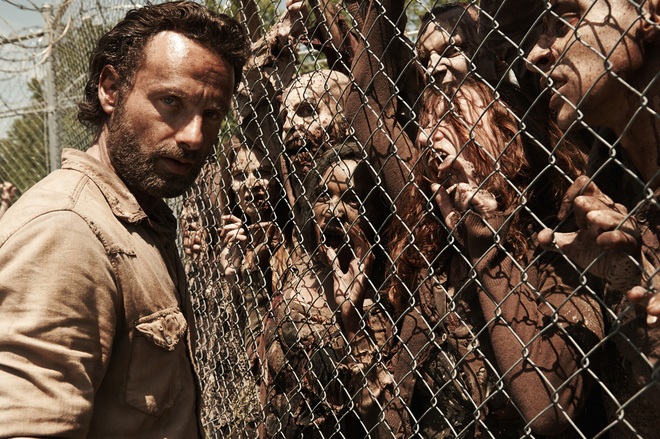
All of this led to one conclusion: In the post-apocalyptic era, it’s best not to trust anyone easily. After all, it’s still the old members of Rick’s group sticking together, going through numerous life-and-death situations, with many losing their lives regrettably.
The ending of Season 6 can be considered one of the most memorable moments of the entire series when the most beloved antagonist from the comic book – Negan, officially appeared on screen. Not only that, he forced Rick’s group to kneel before him and choose a random victim to… smash their skull with a baseball bat wrapped in barbed wire.
However, the audience was not informed of the identity of this unfortunate victim until Season 7, about 6 months later. This ruthlessly crafted cliffhanger kept the fan community buzzing for half a year, with countless theories being proposed, and the name The Walking Dead became hotter than ever. After 6 years on air, many characters had become familiar and attached to them. And now, one of them would have to leave forever, in the most brutal way!
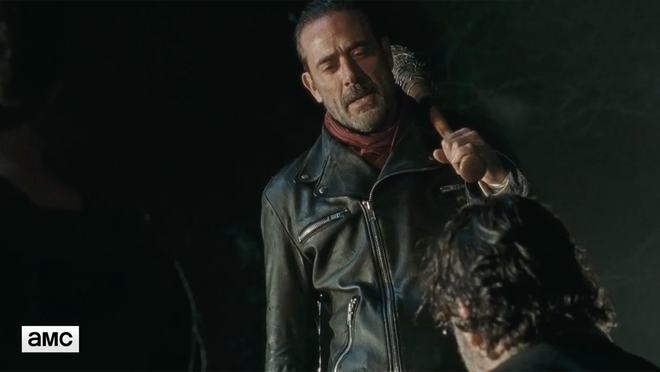
… and ultimately for a High-Quality Episode that Ruined the Whole Season.
As expected, the first episode of Season 7 truly exploded for fans, with a dramatic twist from the writing team. After about 20 minutes, the identity of Negan’s victim was revealed: He brutally killed Abraham, a character with impressive combat skills and a fearsome physique. At this moment, although heartbreaking, many viewers could breathe a sigh of relief that pizza delivery guy Glenn – one of the characters attached since season 1 and beloved, was still alive (Glenn is the one who takes the hit from Negan in the comic version).
However, no, just because of a rash action from teammate Daryl, this Asian guy had to pay the price with his life. Everything happened so quickly and unexpectedly it was shocking. When all the viewers thought Negan had punished Rick’s group, just a few minutes later, they saw Glenn lying in a pool of blood, with his head beaten to a pulp.
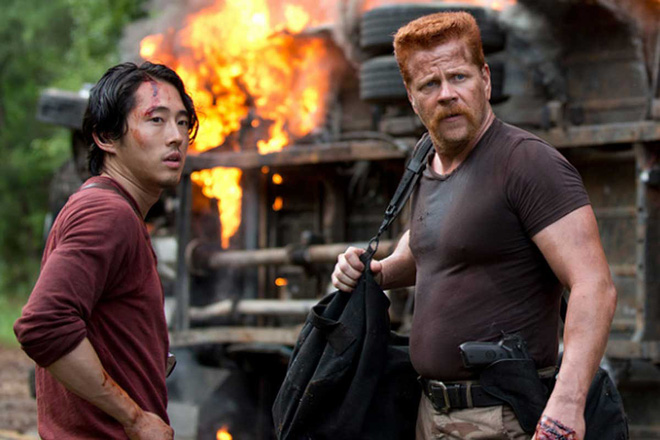
The departure of 2 beloved characters affected The Walking Dead significantly. However, what happened afterward was truly disappointing: The pace of the show suddenly slowed down inexplicably, the plot became excessively drawn out, meandering, and lacked highlights. If it weren’t for the humor brought by the antagonist Negan, and the bromance between Rick and Daryl, this series might have truly become a “dead series” without Season 9 and 10 for viewers to watch.
Even by the middle of Season 8, the writing team decided to “kill off” the character Carl – Rick’s son, a detail unprecedented in the comic version. Another character, attached since Season 1, was gone, and fans were even more outraged, with many deciding to ignore The Walking Dead altogether.
Revival Thanks to Showrunner Angela Kang
The Walking Dead entered Season 9 with plenty of skepticism when, as early as Episode 5, they had the long-standing character Rick Grimes “disappear.” Previously, actor Andrew Lincoln had also shared that Season 9 would be his last season with the series for personal reasons. But seeing Rick leaving the screen was probably the hardest moment for any The Walking Dead fan. However, it turned out they didn’t kill Rick but rather had a secret army save him, setting the stage for three separate movie installments dedicated to him in the near future.
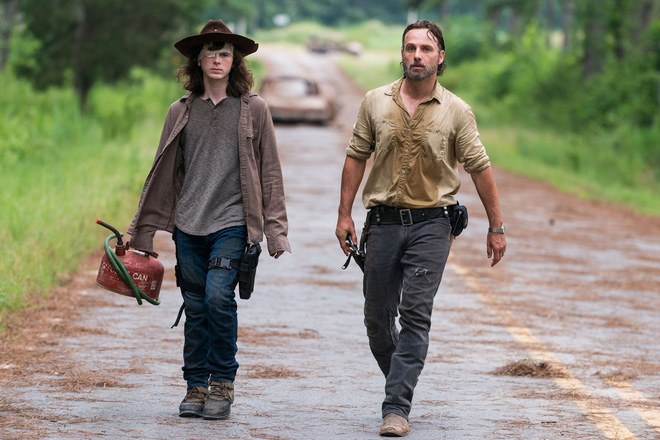
Strangely enough, after Rick’s departure, The Walking Dead suddenly revived strongly with new antagonists: The Whisperers – those who wear walker masks, always mingling among the hordes of zombies and communicating with each other through whispers. This strange type of antagonist brought back the suspense and anxiety of the early seasons.
But that wasn’t all. The Walking Dead completely transformed after two forgettable seasons thanks to the talent of new showrunner Angela Kang: The pacing became faster and more urgent, with unexpected action sequences that took the breath away. The psychological development of characters was still emphasized and explored reasonably and concisely, no longer dragging on to the point of exhaustion as before.
The conflict with The Whisperers has taken on a mysterious, incredibly tense color. It is not as intense as when Rick’s group faced The Governor or Negan, but it hauntingly blends the enemy (walker) and the enemy (the Whisperers), sometimes even blurring the lines of who the enemy is.
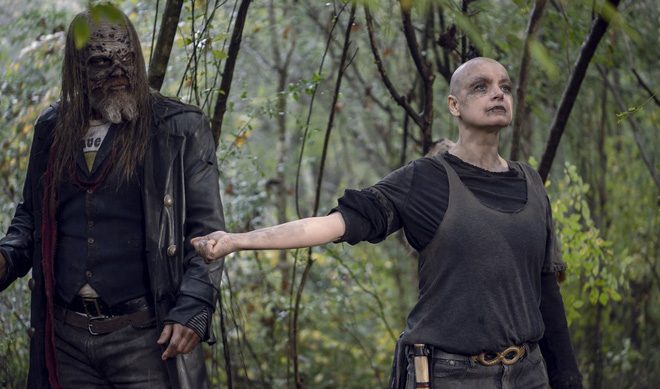
Before Season 10 aired last October, another name confirmed to leave The Walking Dead soon: Danai Gurira as Michonne – a character who has been with the show since Season 3, and currently plays a pivotal role in replacing Rick.
However, with Angela Kang’s talent, along with many other veteran faces like Norman Reedus (Daryl), Melissa McBride (Carol), Ross Marquand (Aaron), Cailey Fleming (Judith), and Jeffrey Dean Morgan (Negan), one can trust that The Walking Dead will continue to return strongly in the future, bringing an authentic and unique post-apocalyptic world.
The second half of Season 10 of The Walking Dead will officially return on February 23, 2020.