


Millions of years from now, a more evolved species of humans, or perhaps aliens, will visit Earth. They will dig deep into the layers of soil and rock to search for remnants of our current civilization.
What will these beings find left behind? And how will they reconstruct our relationship with the surrounding life forms?
To answer this question, two paleontologists, Karen Koy from Missouri Western State University and Roy Plotnick from the University of Illinois, Chicago, researched nearly 200 articles on fossils, burial practices, livestock processing, and more. Their new synthesis study published in the journal Anthropocene provides us with a scenario for this day a million years later.
To give you a glimpse into that fascinating future, Science magazine conducted an interview with Karen Koy and Roy Plotnick. Let’s find out:
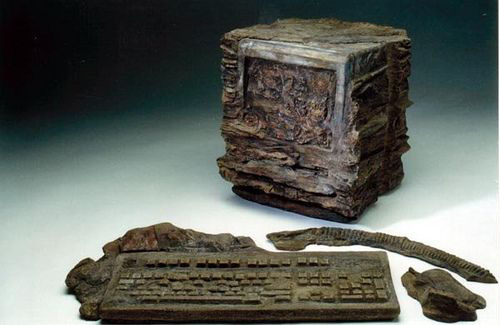
Q: Who exactly will discover our fossils millions of years from now? Will it be a more evolved species of humans or aliens?
Roy Plotnick: Well, of course, this question leads to another: Can humans last that long? As a science fiction fan, I optimistically want to say: “Yes, perhaps our descendants will look back at [the history of their ancestors]“. I think that is more likely than there being aliens.
Q: At this point, modern humans are recording every moment of their lives [with books, audio files, videos], so is there still a need for fossils?
R.P.: If you’ve read many post-apocalyptic science fiction novels, you can imagine that what disappears in most scenarios of human extinction are paperwork, computer data, and similar things. So what remains? It’s anything buried in the ground.
Karen Koy: And even if you have that data, it often cannot be decoded. Some scientists have recently attempted to decode records from a South American civilization thousands of years ago. They encoded data into beads or some other decorative string.
And think about it, even computer code records saved from a few decades ago, modern computers cannot decode, because the data systems they use are so different and lack connection. So, is it feasible in 2 million years?
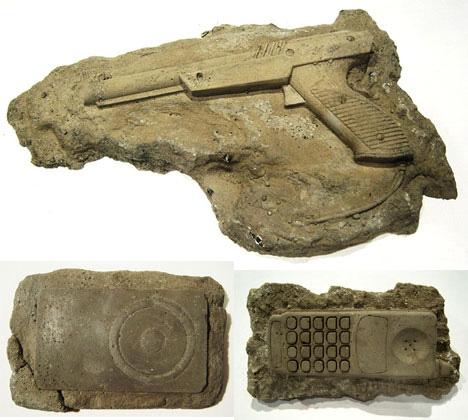
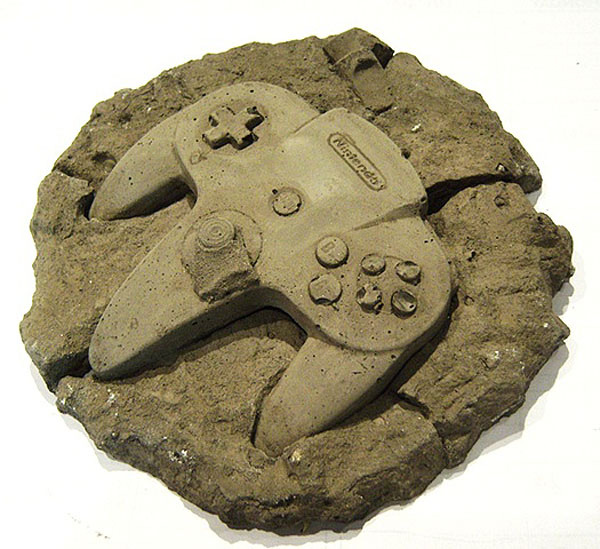
Q: In the article, you mentioned that the locations where fossils formed in the past have completely changed. Why is that and how does that process occur?
R.P.: If you look at the natural locations where fossils formed, in caves, any swamp, canal, river, or lake, all of those locations have now been heavily altered by human activity.
Humans dam rivers to build dams, we drain swamps. Humans have altered the natural environment and land surface so much that researchers say we have changed nature at least as much, if not more, than the natural processes of transformation.
Q: You wrote that when humans and animals die today, they will leave a “unique dead signal of the Anthropocene epoch“. What is that?
K.K.: Human population surged in the mid-20th century due to modern medicine and antibiotics. That means many people were buried orderly in cemeteries. These are not the piles of bones we see with dinosaurs.
These straight-lined graves essentially exist everywhere around the world, so you will find human bones in identical patterns everywhere.
I don’t know if using the term “the essence of the snail’s liver” here is entirely appropriate, but imagine you are an alien species coming to this world and seeing it covered only by such corpses, arranged in such an order across the land, try to think about how that would feel?
Q: Which species is likely to appear most in the future fossil records?
R.P.: Definitely chickens, because today we have a lot of chickens. Cows and pigs as well because we breed them extensively. The number of humans, pigs, and cows will dominate. No wild population can come close to that.
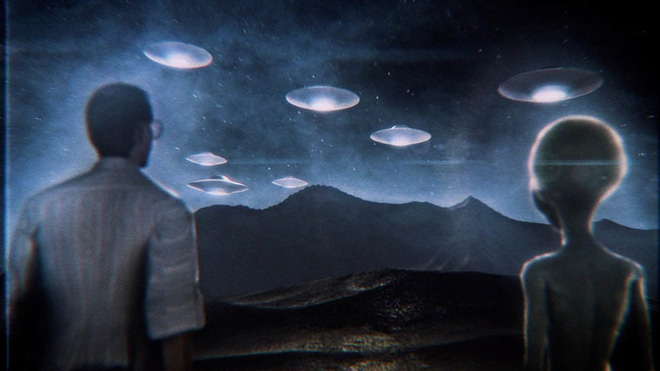
Will it be our descendants or aliens who find us?
Q: How will future paleontologists distinguish domestic animals from their wild ancestors?
K.K.: When we breed other creatures for meat, we tend to develop their muscles. So, you would want to see their bones larger to support their larger body weight. For domesticated animals like dogs and cats, we breed them to be cute, like dogs with shorter snouts and larger eyes.
So, depending on how they were bred, there are different characteristics that paleontologists can rely on to say: “This could be a domesticated species or may have been bred for meat or labor.”
Q: How do you think future archaeologists will reconstruct our relationship with cats and dogs based solely on the fossils they find?
K.K.: Among all animals, dogs and cats are most likely to be buried similarly to humans. There are successful pet cemeteries built as memorial parks like those for humans.
So, if anything can be accidentally found, it will be these dog and cat cemeteries which look different from the pits dug for throwing pigs down indiscriminately.
I think that indicates we treat dogs and cats differently than pigs, cows, and chickens.
R.P.: They will think we worship dogs and cats, right? I have no opinion on that. Explaining our religion today is like giving a half-hearted answer, but I hope future researchers will be more nuanced than that.
Source: Science