



We all know that evolution is a very long process, at least it is divided into units of ten thousand years. However, this situation has completely changed after the “rise” of humanity.
The changes that humans bring to animals are a subtle evolution through selection and breeding; sometimes we help many animal species accelerate the evolutionary process to acquire superior traits, and sometimes it results in reverse evolution. Today, we will explore the reverse evolution of animals under human influence.
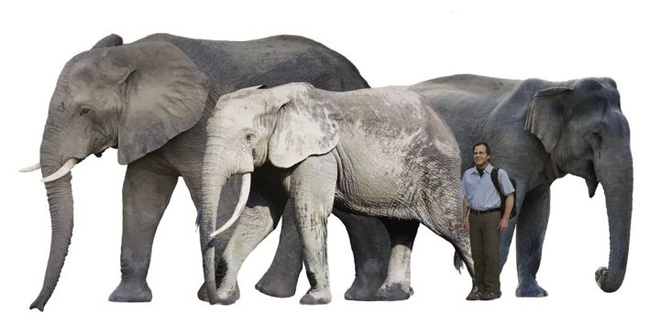
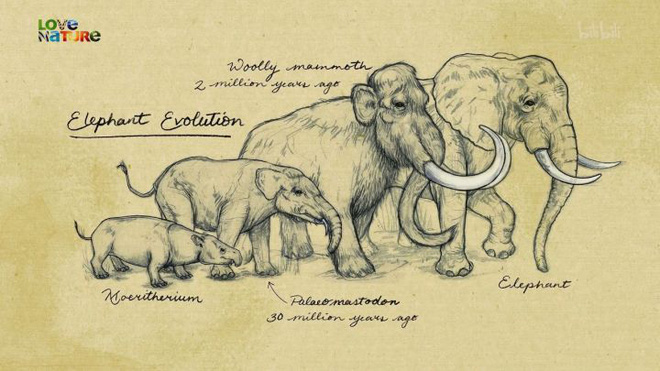
First, let’s talk about elephants. Currently, there are only three species of elephants that we can see on Earth. They are the African savanna elephant, the African forest elephant, and the Asian elephant. They all share a common ancestor and once had many sibling species in their large family.
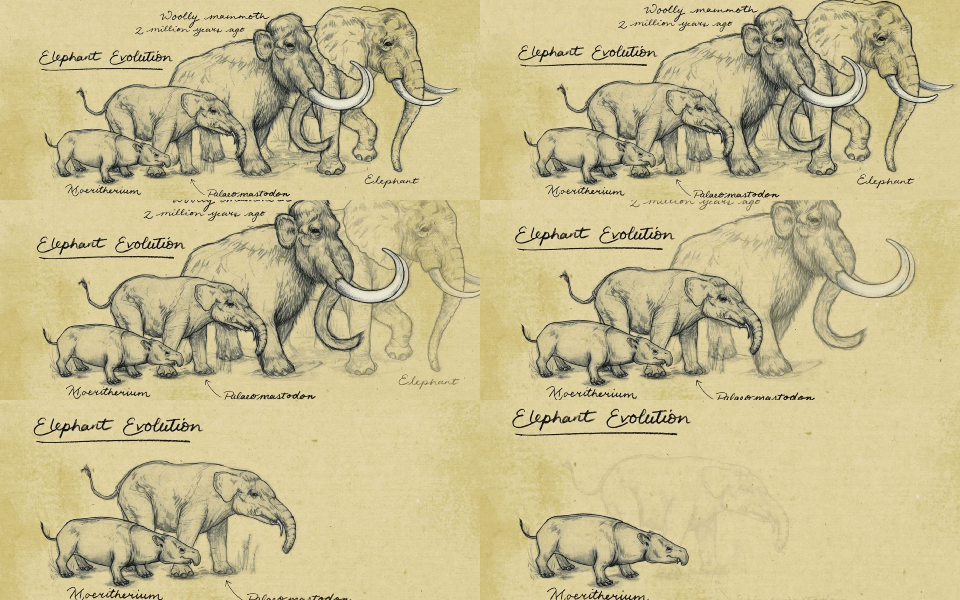
The ancestors of today’s elephants had an average appearance and were relatively short in stature. They closely resembled modern Asian elephants. Their snouts were relatively long and could adapt to a semi-aquatic lifestyle, but they did not have long trunks like the modern elephants we see today.
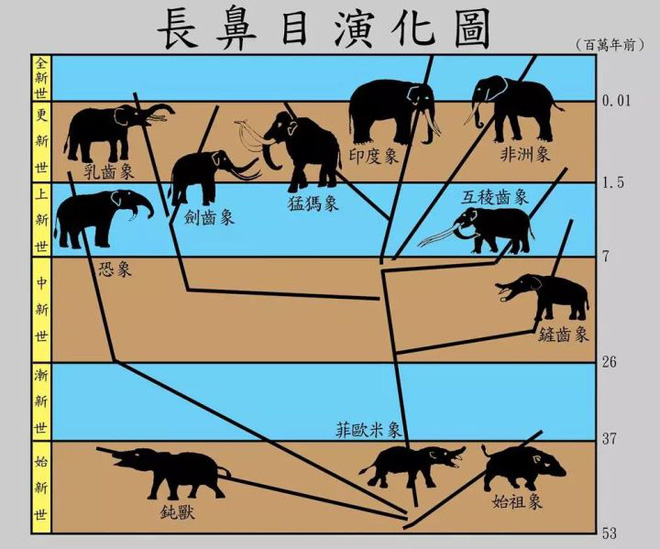
Today we know that elephants have evolved to have long noses and trunks, which we consider the representative features of elephants. However, apart from the long trunk, elephants also have another characteristic: the transformation of their teeth to develop long tusks.
Beginning with the first ancestors of elephants, they had relatively short snouts and teeth that were often linked together, but gradually their evolution began to break this pattern. Tens of millions of years ago, many species within the elephant family began to emerge, characterized by elongated teeth that turned into tusks.
For example, there are the genus Deinotherium (“terrible elephant”) which had downward-curving tusks, Platybelodon which evolved to have elongated teeth used as shovels to eat aquatic plants, Anancus which had tusks that evolved and grew longer than its body, and Tetralophodon which evolved to possess two pairs of tusks on both upper and lower jaws.
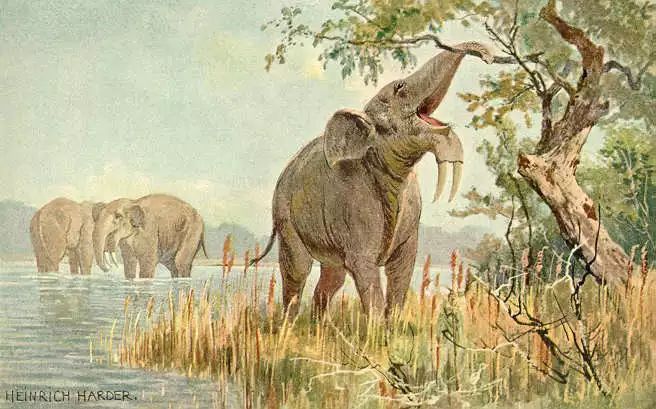
Deinotherium is a large prehistoric relative of modern elephants that appeared in the Middle Miocene and survived until the early Pleistocene. During that time, it changed very little. In life, it likely resembled modern elephants, except that its body was shorter and it had curved tusks attached to the lower jaw.
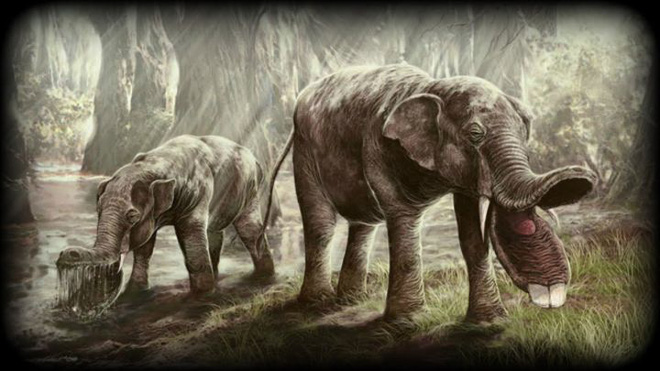
Platybelodon is a genus of elephant in the Gomphotheriidae family of the order Proboscidea. It lived during the Miocene, about 15-4 million years ago, and was distributed in Africa, Europe, Asia, and North America. Although it thrived, it did not survive beyond the Miocene.
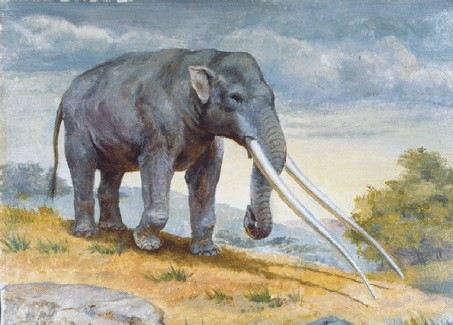
Anancus is an extinct genus of the native Anancid species in Africa, Europe, and Asia, living in the Turamar period of the late Miocene until the extinction of the genus in the early Pleistocene, approximately 7.1.5 million years ago.
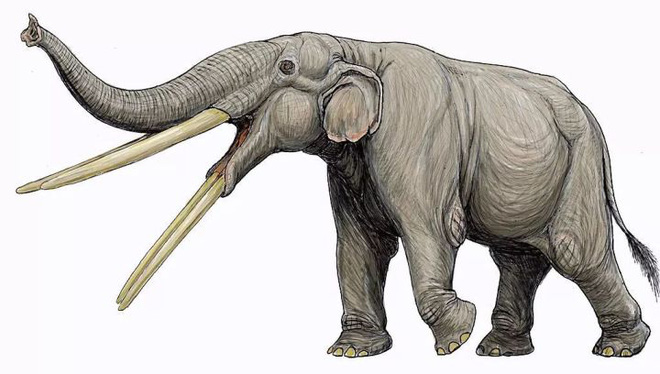
The peak prosperity of the elephant species can actually be seen through the development of tusks, but throughout the evolutionary process, their long trunk compared to primitive relatives seems to have undergone little change, as elephants increasingly rely on their trunks for survival, so there is no reason for them to evolve further once they have achieved ideal length.
In fact, tusks, besides their function of protection or searching for certain types of food, also serve as a tool for courting during mating season. The longer the tusks of male elephants, the more attention they attract from females.
Over time, this trend of mate selection among elephants has become a sexual selection, and the “long tusk” gene is more likely to be passed down. After millions of years of evolution, elephants have developed quite “magnificent” tusks as we know them today.
However, the emergence of humans has changed everything. Humans can be seen as the only natural enemy of adult elephants; they not only hunt elephants but also selectively hunt individuals with longer tusks.
In just a few hundred years, human hunting has altered this species. Today, in Addo Elephant National Park in South Africa, 98% of the female elephants here are tuskless.
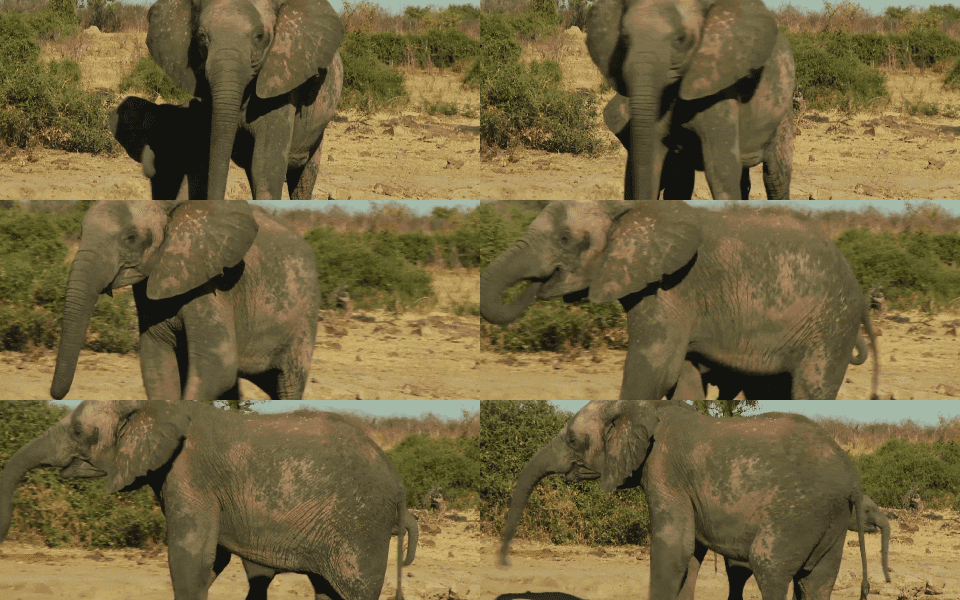
Initially, long tusks had many advantages in natural selection as they were considered a positive choice for survival. However, under human hunting interference, possessing long tusks has resulted in a higher mortality rate.
To survive, elephants have also adapted to this type of human filtering, evolving towards tusklessness. It took millions of years to develop tusks bit by bit, but they quickly disappeared after just a few hundred years. This reverse evolution for elephants is indeed quite “shameful.”
After the story of elephants, perhaps it is still not enough to convince about the impact of humans leading to reverse evolution. So, let’s continue with the story of horses.
The story of horses is much simpler than that of elephants. Like elephants, the ancestors of horses were also very small, about the size of today’s foxes.
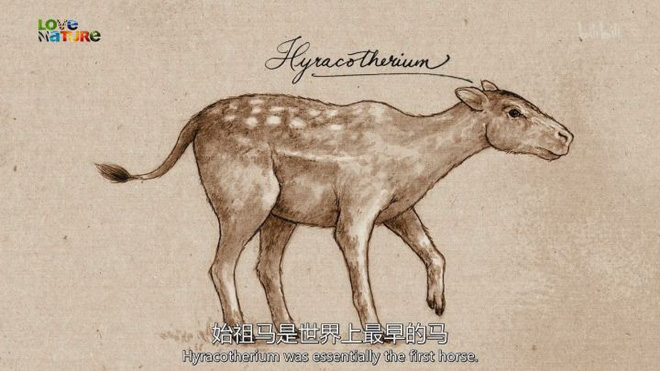
In fact, most mammals have evolved and developed to become larger. This is because the original mammal species were very small, and they gradually evolved after the mass extinction of dinosaurs.
Specifically for horses, after some forests became grasslands due to climate change, the evolutionary strategy of avoiding predators by being small in the forest became less useful. To safely live on grasslands, running fast would be more advantageous than hiding.
On the other hand, a larger body size means greater strength, better vision, less likely to be hunted, and the ability to escape quickly when predators are nearby.
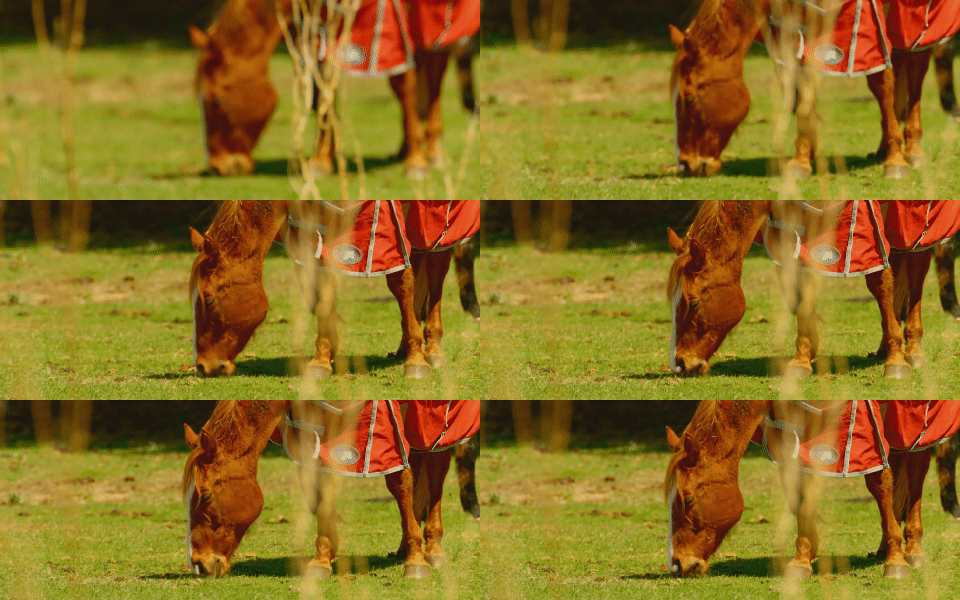
Therefore, the evolutionary direction of the ancestors of horses is very clear, that is to run faster and grow larger.
In fact, beyond the evolution of size, another essential feature is their legs, as it affects their running speed.
We know that most four-legged animals on our planet have five toes. Frogs, lizards, and turtles have five toes on each foot, and mammals like cats, dogs, and bears also have five toes on each foot. The flipper bones of whales also have five fingers.
But you will never see a horse with toes; instead, they have hooves. In fact, the ancestors of horses also had toes, with four toes on the front feet and three toes on the back feet.
In modern times, horses only have one toe on each foot to stand on the ground. In fact, these are all developmental features optimized for running speed. Today, scientists categorize animals into three types based on different foot styles: those that walk on their entire foot, those that walk on their toes with their heels permanently raised, and those that walk on their hooves (digits) with their heels permanently raised.
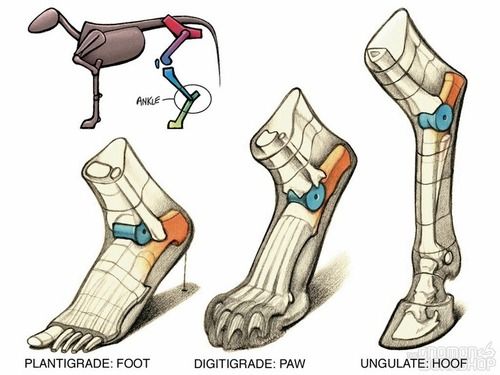
Generally, the long-distance running ability of these three types of animals increases from left to right in the illustration. Representatives of animals that walk on their entire foot are bears and primates, whose legs are not suited for running for long periods.
Representatives of toe-walking animals are cats and dogs. They only have half of their foot on the ground, and obviously, they will have better running capabilities. Humans can lift half of their foot before running, but usually, they will land with their entire foot, but compared to their primate relatives, we still have better running capabilities.
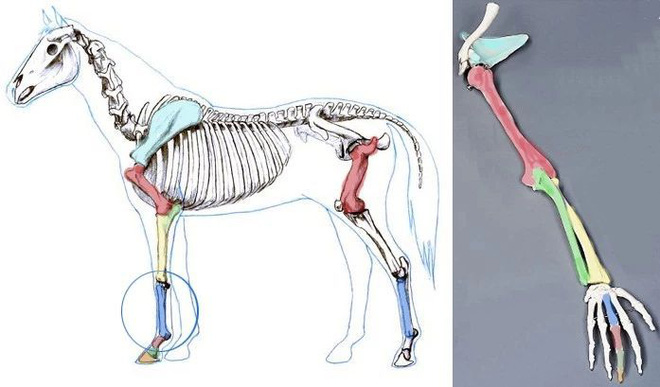
As for hoofed animals like horses, they have evolved their legs to be suitable for running and have the best long-distance running ability. They only walk on a part equivalent to the tips of human toes, and their foot structure has also been elongated, occupying one-third of the total length of the leg.
This structure can withstand greater impact forces and also ensure that stride length increases without losing flexibility. All these changes contribute to stronger running ability.

With such an evolutionary plan, after tens of millions of years of evolution, they finally became the horses we know today, and because this direction has been so successful, the evolutionary tree of horses has not branched into many small branches like that of elephants.

Horses have evolved to have larger bodies and much faster speeds compared to their tiny ancestors that lived in damp forests.
Initially, humans did not see horses as a source of power; instead, they were often seen as prey. In North America, many wild horses existed but were quickly wiped out by human hunting before being domesticated.
Archaeological evidence now shows that horse domestication occurred on the Eurasian continent, and European colonists brought horses back to the North American continent after discovering this new land. Today, apart from some wild horse species and African zebras, most horses on our planet have been domesticated.

Humans have domesticated horses for over 5,000 years, and obviously, humans have also brought changes to them. For various purposes, humans have intentionally bred and crossed different horse breeds, some capable of withstanding cold, some heat, some faster, and some with higher endurance, while others are larger, slower, but have greater pulling power.
Some breeds are used for racing, while others have become pets. To reduce the dangers posed by horses and make them friendlier to humans, we have developed and bred miniature horses. An adult of this breed is about the same size as a medium-sized dog, and the smallest is only slightly larger than a fox.
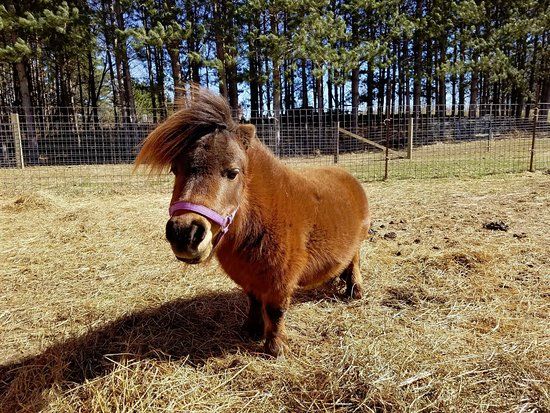
You see, horses evolved towards being faster and larger tens of millions of years ago, but humans have changed them back to their former body shape. Clearly, this can also be seen as a reverse evolution.