


A team of scientists at Caltech has recently developed a camera that can record 70 trillion frames per second, completely surpassing the previous world record of 10 trillion frames per second, which was also set by Caltech.
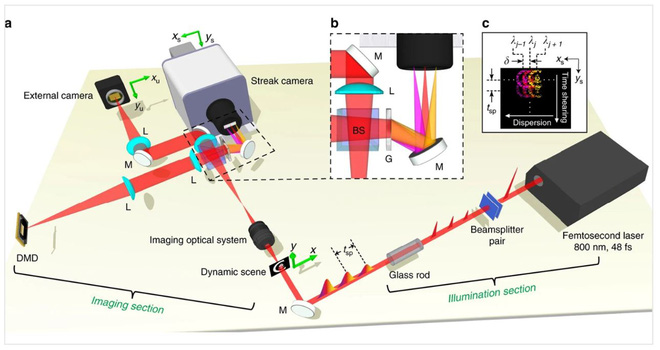
The new camera uses “High-Speed Compressed Sensing Imaging” technology, a new version of the “High-Speed Compressed Sensing” technology used in previous products. This technology was developed by scientist Lihong Wang and his team, which is capable of emitting high-speed laser pulses towards objects, which are then ‘captured’ by the camera’s sensor.
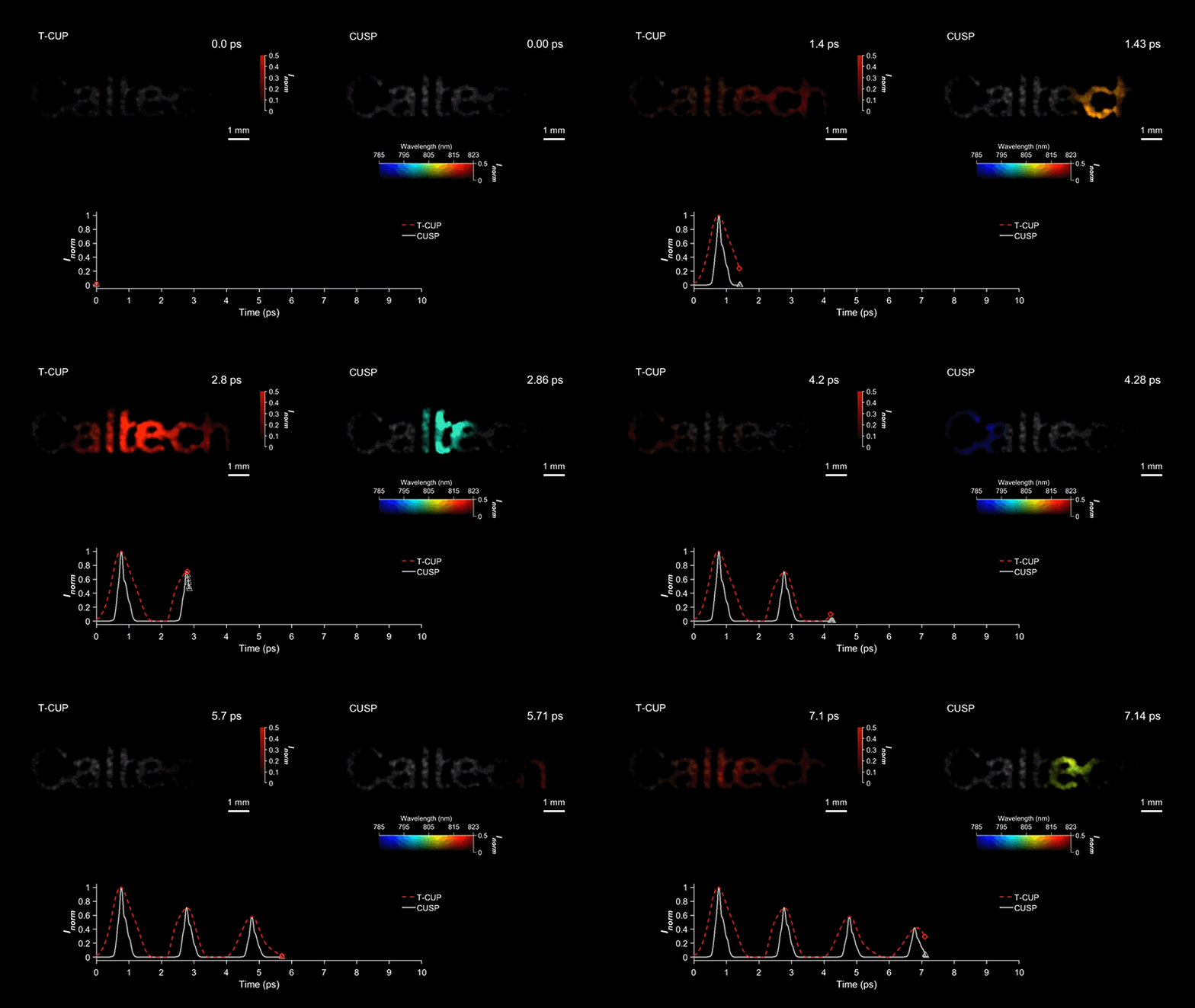
In the GIF below, we can see the capabilities of this unique filming technology, with the old camera capturing the image on the right and the new camera capturing the image on the left. Each laser pulse directed at the words ‘Caltech’ lasts only 0.0000000000015 seconds.
Doing a quick calculation, the speed of light is 300 billion millimeters per second, and with a recording speed of 70 trillion frames per second, this camera can capture 233.3 frames for every millimeter the light travels, truly impressive!
Perhaps everyone can guess that high-speed filming technology will not be applied in practice since few people need to film things moving that fast. Instead, it will be applied in science: capturing nuclear reaction processes that occur in an instant, the decay of atoms, or the path of light as in the above experiment.