


Many people enjoy traveling to pristine areas to breathe in fresh air. But now, an invisible threat is actually blowing through the air and falling with raindrops. These are micro-particles, tiny pieces less than 5 mm long… from plastic bottles or micro-particles worn off from clothing. All these pollutants are swept into the Earth’s atmosphere and are being “deposited” in wild places.
A recent report in Science revealed an astonishing discovery. After collecting rainwater and air samples for 14 months in national parks in the western U.S., such as Joshua Tree, Grand Canyon, and Bryce Canyon, scientists calculated that over 1,000 tons of micro-particles fall in these 11 areas each year. This is equivalent to more than 120 million plastic water bottles. These protected areas only account for 6% of the total area of the U.S. and have long been considered places with clean air.
“The sheer quantity is shocking,” said Janice Brahney, an environmental scientist at Utah State University and author of the report.
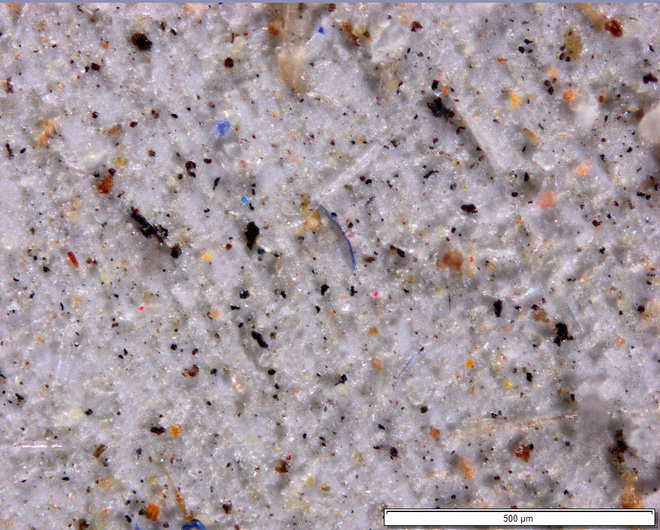
This report seems to confirm an increasingly horrific scenario. Microplastics are being blown all over the world, landing in habitats thought to be the purest, such as the Arctic and remote regions. They flow into the oceans through wastewater systems and affect even the deep-sea ecosystems. They can even be blown out of the water and onto land through sea breezes. And now, not only in the western U.S. but perhaps globally, the atmosphere is filled with microplastics, which will fall to the ground as rain. Scientists are calling this a new form of acid rain.
However, plastic rain may be more “sneaky” than acid rain. Because it cannot be controlled or stopped at the source like acid rain by limiting emissions from power plants or vehicles. Humans have no way to filter water, soil, or air to remove microplastic particles.
Plastic is everywhere, and anything around us can become a source of alarming pollution. And plastic will never truly disappear; instead, it breaks down into smaller particles, infiltrating every little corner of the planet. Worse still, plastic waste is expected to soar from 260 million tons a year to 460 million tons by 2030, according to a report from McKinsey. More people joining the middle class in developing economies means more consumption and more plastic packaging.
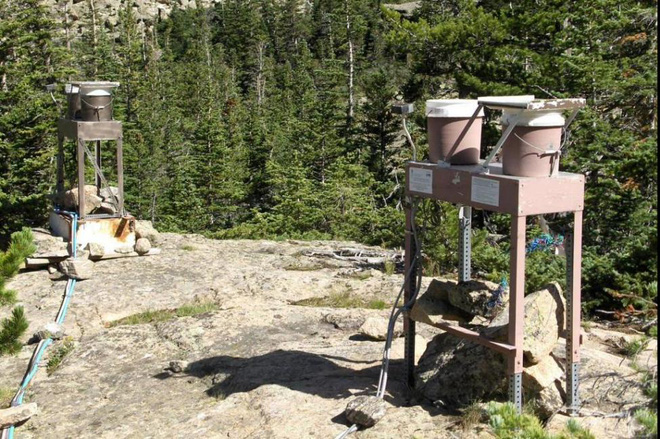
Returning to the report, in order to quantify microplastic particles, researchers took samples of both rainwater and air. They used a wet bucket to collect rainwater and a dry bucket to collect air. A sensor would detect rain and open the wet bucket while closing the dry one. Conversely, when it was sunny, the dry bucket would collect microplastics blowing in the wind while the wet bucket was sealed. The researchers then examined the size of the microplastics they collected in the buckets.
The results are truly alarming. 98% of the samples collected over a year contained microplastic particles. On average, 4% of the particles in the air were types of synthetic polymers. The particles in rainwater were larger. Microfibers, originating from materials such as polyester clothing, accounted for 66% of the synthetic material in wet samples and 70% in dry samples.
Scientists also easily traced the path of microplastic particles. Winds lift them off the ground in urban areas, carrying them far before bringing them down to the ground through rain. And microplastic particles can even act as condensation nuclei, as fragments attract moisture to form a cloud.
On the other hand, dry dust tends to travel longer distances. Due to their smaller size, they are easily blown far by the wind. For example, dust from the Sahara Desert can easily blow across the Atlantic and fall into the Amazon rainforest.
The flight paths of jet streams also affect air currents. For example, in the U.S., jet streams typically flow from west to east and vice versa. In Europe, microplastics are being pushed towards the Arctic.
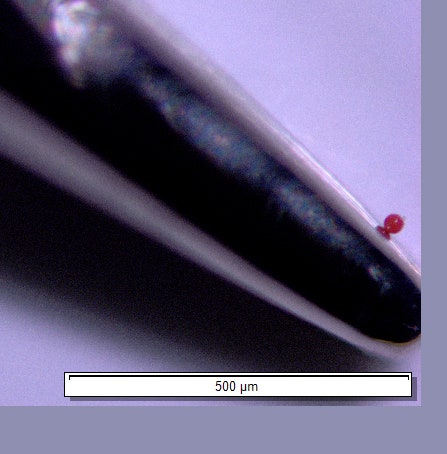
And one more difficult thing is that microplastics will eventually break down into nanoplastics, so small that researchers will not be able to detect them without the right equipment. But just because we can’t see them in front of us doesn’t mean we aren’t inhaling them into our lungs.
Plastic fragments tend to leach chemicals from their composition over time, and they are also known to transport various bacteria or viruses. This is gradually affecting living organisms. A study published earlier this year showed that crabs exposed to microplastic particles struggle to create new shells as they grow.
Brahney also noted that microplastics may be altering the thermal properties of soil, for example, changing how it absorbs and retains heat. They can lead to fluctuations in the types of bacteria living in the soil, altering how nutrients are cycled, and even how water permeates through the soil.
Although there is still much for science to understand about the cycle and life span of microplastic particles, one thing has been clearly and irrevocably confirmed. You will not be able to put plastic back into the bottle.
Source: Wired