


As one of the fascinating astronomical phenomena that humans can observe directly, a solar eclipse occurs when the Moon obscures part or all of the Sun. This happens when the Sun, Moon, and Earth align or are nearly aligned, with the Moon passing between the Sun and Earth.
Based on the shadow regions of the Moon on the Earth’s surface, there are a total of four types of solar eclipses classified, including total solar eclipse, partial solar eclipse, annular solar eclipse, and hybrid solar eclipse. In partial solar eclipses, annular solar eclipses, and hybrid solar eclipses, the Sun is only partially obscured. The daytime scenery is essentially not different from when the Sun is not covered by the Moon. However, in the case of a total solar eclipse, it is a truly astonishing and impressive sight for those who have the chance to observe it directly.
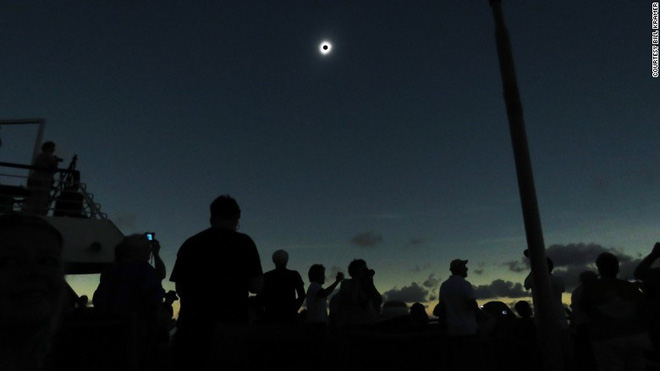
When the dark disk of the Moon completely covers the Sun (100% coverage), the surroundings suddenly shift from day to night in the literal sense. We can even observe the solar corona or the solar prominence with protective eyewear.
According to scientists’ calculations, on average, a total solar eclipse can be seen somewhere on Earth every 18 months. This also means that a person could potentially observe a total solar eclipse up to 2 times within 3 years. However, this is just theoretical. Each time a total solar eclipse occurs, it can only be observed from a very limited area on Earth. This means it may take many years for you to witness a solar eclipse, especially a total solar eclipse.
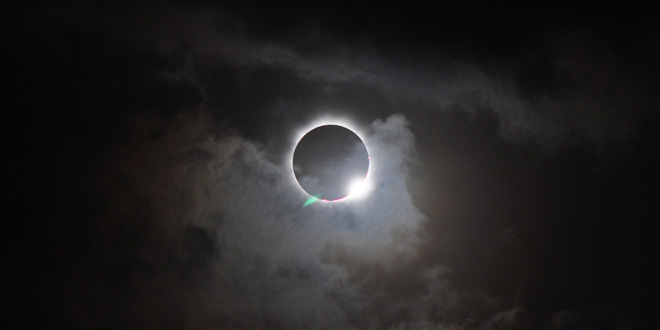
Even if you are less fortunate, the area where you live may never have the opportunity to see a total solar eclipse. In fact, there are some areas on Earth that have not witnessed a total solar eclipse for 36 centuries.
However, have you ever wondered: What would happen if total solar eclipses occurred regularly every day? To answer this intriguing ‘what if’ question, the popular YouTube channel What If recently released a new video explaining the potential impacts on Earth if total solar eclipses occurred daily.