


When we think of swans, we immediately think of unwavering love. In their short lifespan, swans often pair up only once, remaining faithful and devoted to their partner. If one dies, the other will live in solitude for a long time to care for their offspring. When the cygnets are born, they usually travel in a close-knit group with their parents. However, the incident of a mother swan dying after her unhatched eggs were shattered by a group of teenagers with bricks, while her partner left, has left netizens feeling sorrowful and sympathetic.
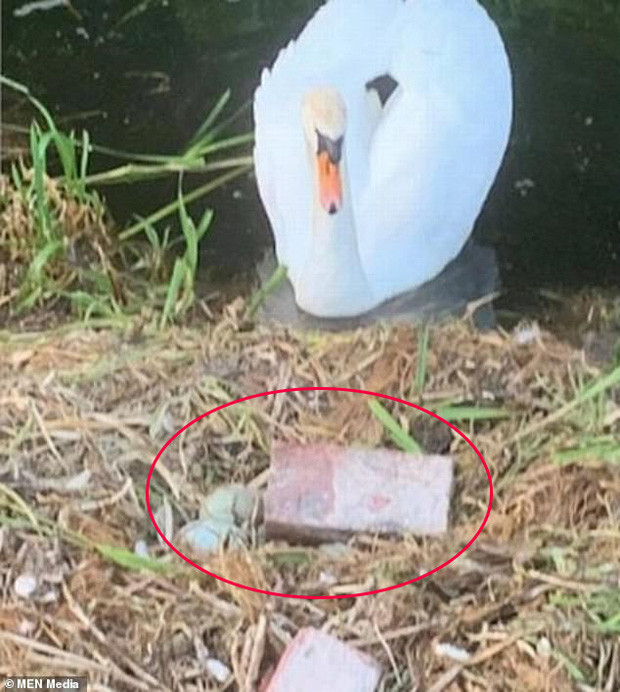
It is known that the incident occurred on May 20 in Bolton, Greater Manchester (England) when the nest of the pair of swans was vandalized by a group of teenagers. Shortly after, the male swan also left, and the body of the mother swan was found right next to the nest with many broken eggs.
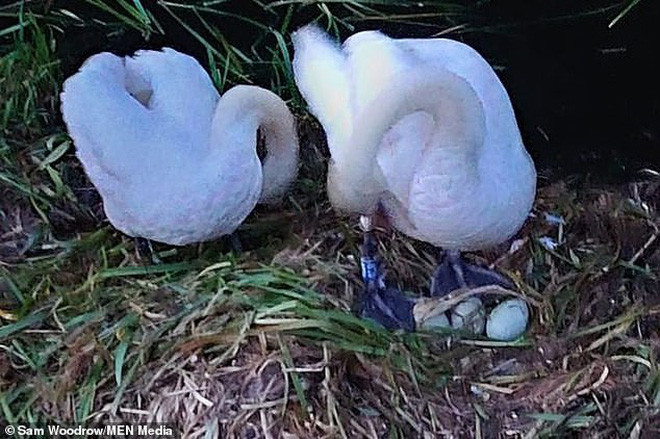
Witnesses reported that the group of vandals targeted the island in the Manchester canal, where the swans were nesting and incubating their eggs. Animal protection advocates discovered that 3 out of 6 eggs were smashed, and 2 other eggs had been broken by other animals, leaving only one intact. According to activists, if a swan’s partner is killed or leaves, the remaining one will feel the same pain as humans do. At that point, they may choose to seek another location or join a new flock.
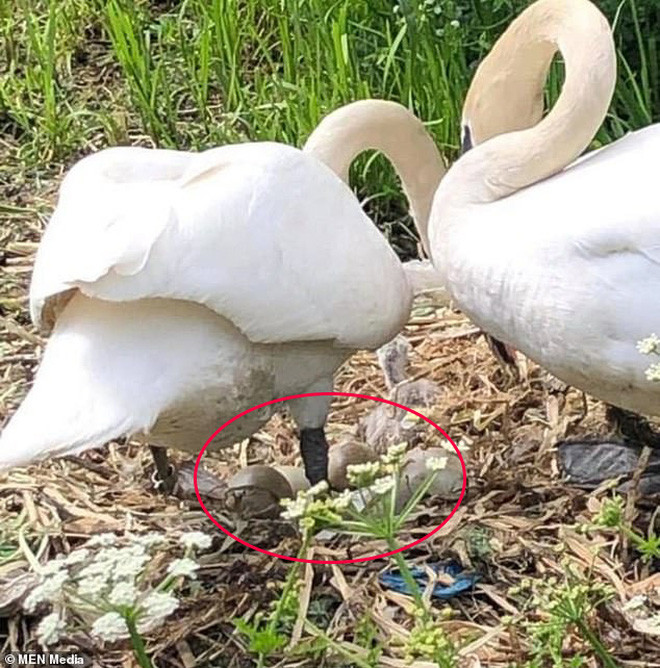
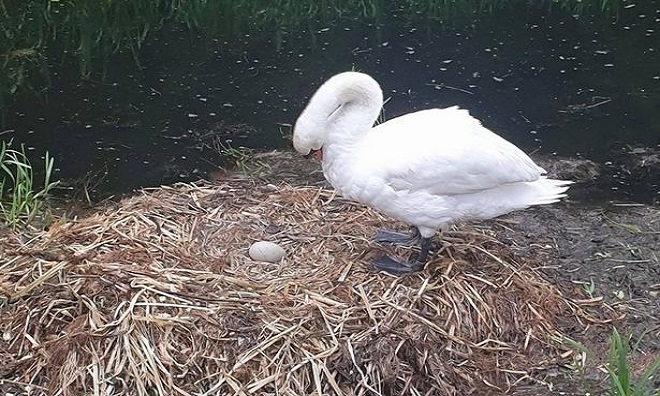
However, the image of this mother swan collapsing next to her nest has truly moved many people. “Perhaps the mother swan died from overwhelming grief, her nest destroyed and her partner gone,” a netizen shared.
According to the Royal Society for the Protection of Birds, swans, their nests, and eggs are protected under the Wildlife and Countryside Act of 1981. Therefore, relevant authorities will investigate the incident involving the mother swan.
(Swans are a group of large waterfowl belonging to the family Anatidae, along with geese and ducks. Swans and geese are closely related, both classified in the subfamily Anserinae with swans forming the tribe Cygnini. Sometimes, they are classified into a separate subfamily called Cygninae. Swans typically mate for life, but “divorce” does occasionally happen, especially after failed nesting attempts. The average number of eggs in a clutch is 3-8.) (According to Wikipedia).