


Astronomy enthusiasts are preparing to witness an extremely rare astronomical event happening at the end of December this year. Accordingly, Saturn and Jupiter will align at their closest distance in the sky as observed from Earth. This event is called the “Great Conjunction,” occurring for the first time in 800 years.
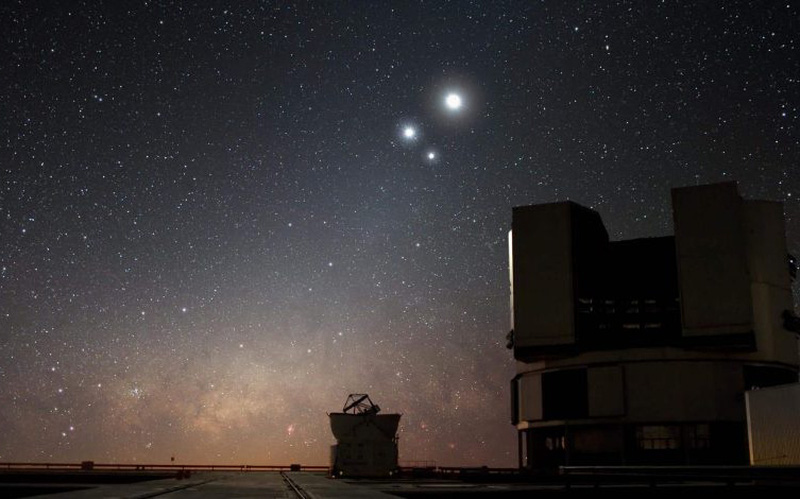
Since this summer, the two celestial bodies have been relatively close to each other in the sky. However, from December 16 to December 25, Jupiter and Saturn will appear at an extremely close distance, just 1/5 the diameter of a full moon. They will come closest to each other on December 21. Although Jupiter and Saturn remain hundreds of millions of kilometers apart in space, when we look up at the night sky, both planets will appear as a single bright dot.
“The alignment event between Jupiter and Saturn is quite rare, occurring only once every 20 years, but this conjunction is particularly rare due to the distance between the two planets,” explained astronomer Patrick Hartigan from Rice University. “The last time they were this close in the sky was on March 4, 1226.”
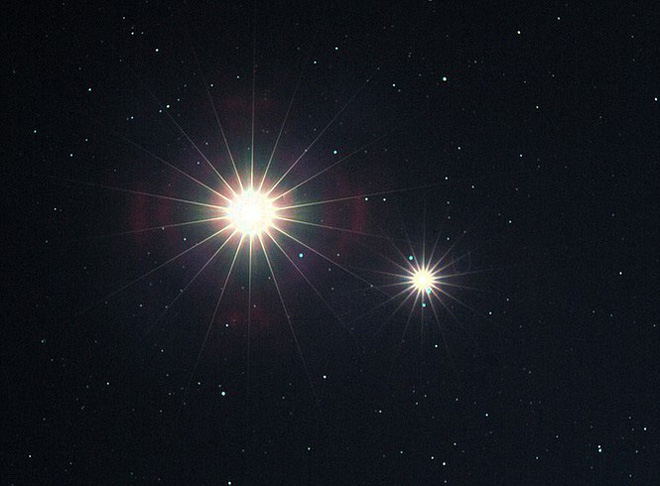
According to astronomers, to get the best viewing experience for this spectacular display, you will need to be somewhere near the equator, such as in Vietnam. However, if the sky is clear, we can still observe this astronomical event from anywhere on Earth. Astronomers say this pair of planets will appear in the night sky about an hour after sunset each evening.
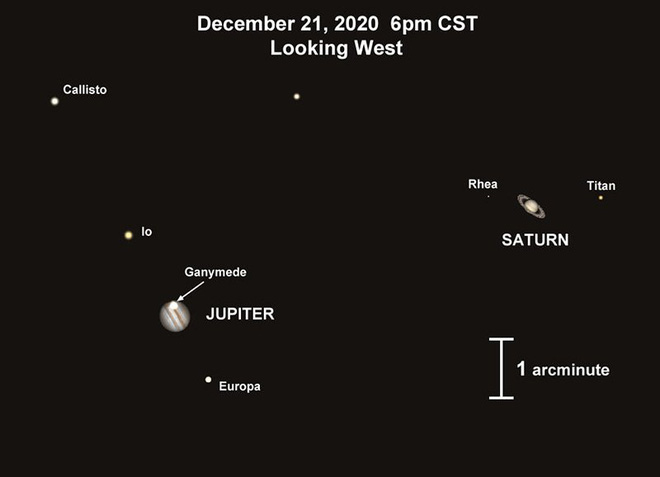
If you wish to observe, you need to direct your gaze towards the western sky. Websites like Stellarium will help you find where to look from your advantageous position. Notably, if viewed through a telescope, you can simultaneously observe both Saturn and Jupiter along with some of their largest moons in the same field of view that evening.
If you miss this opportunity for observation, we will have to wait until March 15, 2080 to see these two planets come close together like this again. After that, Jupiter and Saturn will not come this close in our night sky until 2400.
Source: Science Alert