


When introducing various dinosaur species, paleontologists often classify them into two types: carnivorous dinosaurs and herbivorous dinosaurs. Among them, herbivorous dinosaurs is a term that represents those dinosaurs that consumed plants, not literally grass. This is because in the past, scientists always believed that grass did not exist on Earth until the end of the Cretaceous period. Therefore, there couldn’t be any dinosaurs that ate grass.
However, recently, paleontologists have had to change this perspective and push the timeline for herbivorous dinosaurs back to the early Cretaceous period, about 125 million years ago, when grass began to appear. This was discovered during research on the fossils of the dinosaur Equijubus found in China.
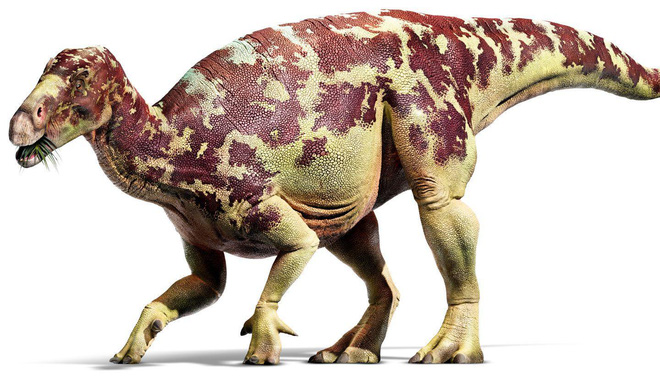
Mazong Mountain is located at the northern end of the Hexi Corridor, in present-day Gansu Province, China. The mountain is named because it resembles a horse’s mane blowing in the wind. Mazong Mountain is a desolate place, but beneath the gravel lies the remains of creatures that died hundreds of millions of years ago.
In 2000, paleontologists from China and the United States formed a joint expedition to excavate paleontological fossils in the Mazong Mountain area. During this excavation, a large number of fossils were discovered.
Chinese paleontologist You Hailu studied the fossils of a new dinosaur species and named this dinosaur Equijubus. The genus name is derived from the Latin “equus” meaning “horse” and “juba” meaning “mane”, which refers to “horse mane” because the fossils were found in Mazong Mountain. This new species is fully named Equijubus normani, with “Normani” honoring the famous British paleontologist David B. Norman.
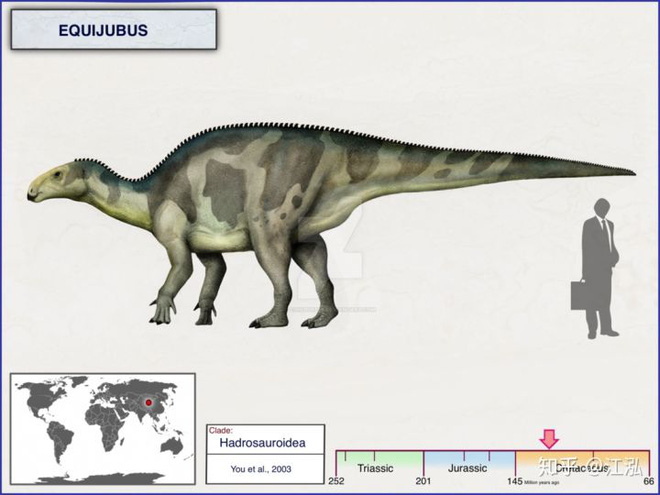
Equijubus can be considered a dinosaur species that is intermediate between Iguanodon and Hadrosauridae. Equijubus has a fairly large body compared to a basic Hadrosauridae, but it could still run on two legs when chased by predators.
The fossil specimen of this dinosaur includes a skull, lower jaw, cervical vertebrae, dorsal vertebrae, and other parts. Through fossil analysis, it can be seen that Equijubus belongs to the primitive Hadrosauridae, having some characteristics of Hadrosauridae, but its skull also shows distinct features of Iguanodon.
Paleontologists speculate that the Equijubus dinosaur could reach lengths of up to 7 meters, stand 2 meters tall, and weigh 2.5 tons, nearly the size of a small truck. Equijubus would have a long head, a beak-like snout at the front of its mouth, and flat teeth inside its jaws, allowing it to chew tough vegetation. Equijubus also had a robust body, often walking on four legs and running on two legs when fleeing from predators.
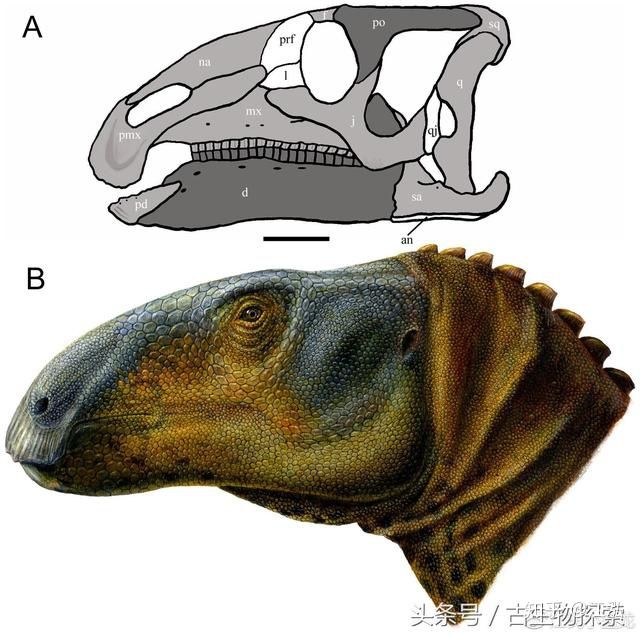
Although there are not many fossils of this species, the discovery of Equijubus is very significant for paleontology. As a very primitive Hadrosauridae, Equijubus indicates that Hadrosauridae may have originated in Asia and evolved directly from Iguanodon.
Fourteen years after Equijubus was named, paleontologists once again studied its fossils using the latest technology. They found evidence that herbivorous dinosaurs had indeed consumed grass in their fossils!
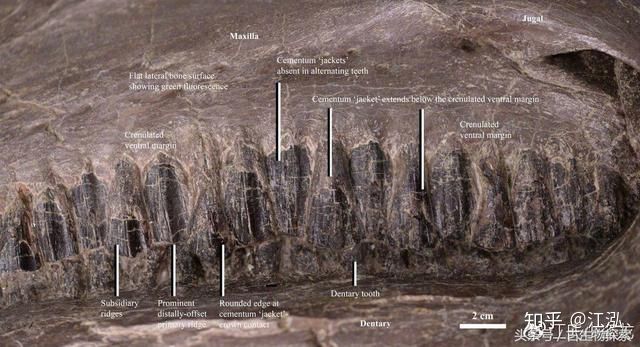
On December 21, 2017, You Hailu and other paleontologists published a research paper titled “Cuticles and Crystals Related to Dinosaurs from the Gramineae Family in China During the Cretaceous” in the National Science Review of China. The study mentions that the microstructure of the primitive grass family (grasses, rice family) was silicified between the teeth of the Equijubus dinosaur. This indicates that primitive grasses were indeed food for this dinosaur.
In fact, to answer the question of whether herbivorous dinosaurs ate grass, we need to know that grasses are a large plant family with over 650 genera. Rice, wheat, corn, millet, sorghum, etc., are plants that we cannot live without, and many other plants that we can eat also belong to the grass family.
There has always been skepticism about the existence of the grass family, and its appearance timeframe is also quite vague. Previously, scientists believed that they appeared after the dinosaurs. However, through the exploration of secrets from the fossils of the Equijubus dinosaur, we have learned that grass appeared on Earth 125 million years ago. This means that on Earth, dinosaurs at that time also had herbivorous behaviors (eating grass in the literal sense).
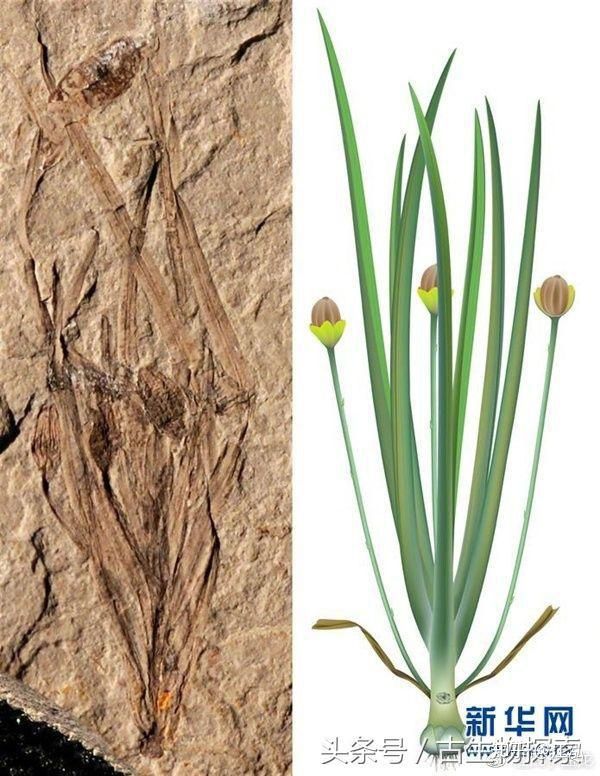
The earliest known seed plants may have originated from the Middle Jurassic or earlier, around 164 million years ago. It was discovered in the Boda Jurassic in Inner Mongolia. Although this plant was only a few centimeters tall, it already had roots, stems, leaves, and fruit.