


According to Apple’s statement, the decision to remove the charger included with the iPhone 12 and older iPhone models is aimed at protecting the environment by reducing electronic waste. This is because Apple believes that most new iPhone buyers already have old chargers they can reuse, making the inclusion of a charger unnecessary.
Following Apple, Xiaomi is the second-largest smartphone manufacturer to officially announce the removal of the charger from its new flagship, the Mi 11, also citing “environmental protection” as the reason. However, Xiaomi is more accommodating to users than Apple by allowing them to choose between a version without a charger and a version that includes a free GaN 55W fast charger (for a limited time).
Does removing the charger protect the environment?
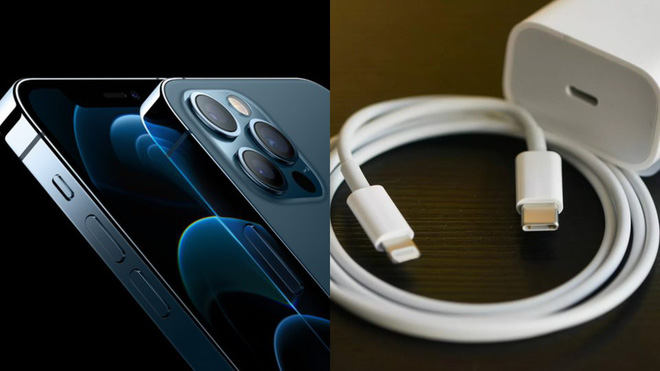
First is Apple. The company argues that since most people already have chargers, including them in the new iPhone’s packaging is unnecessary and may lead to electronic waste. However, the new iPhone 12 comes with a USB-C to Lightning cable, which is not compatible with older chargers. This means users will have to purchase an additional compatible charger to fast charge their new iPhone.
This decision may only benefit the environment if users upgrade to older iPhone versions, as they are compatible with most chargers on the market. However, issues arise when users give away or sell their old devices to others instead of trading them in at the Apple Store for new ones. The new owner of the old iPhone will still need to purchase a new accessory set to continue using it.
This means that Apple’s removal of the included charger does not imply that users will no longer need to buy chargers for their iPhones. They will still need a charger, and when Apple no longer provides one for free, they will have to find one elsewhere. This means it won’t change much for the environment, with heaps of packaging for new chargers being discarded.
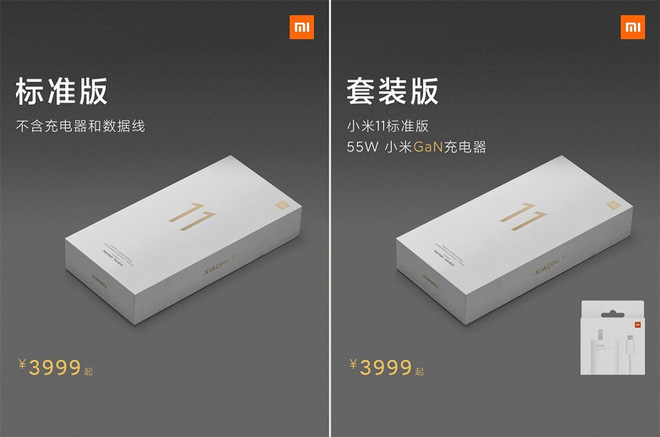
Xiaomi’s approach is not much better. Even though they launched two versions of the Mi 11, one without a charger and one with a charger included, at the same price for users to choose, it’s incredibly challenging for users to opt for environmental protection.
Simply because, during the promotional period, buyers of the Mi 11 version with the charger will receive a free GaN 55W fast charger. After the promotional period ends (Xiaomi has not specified when that will be), the version sold with the charger will be priced $15 higher than the one without a charger.
Not to mention the price difference, even the fast 55W charging capability of this charger is a reason why users might find it hard to resist. Perhaps Xiaomi would be more “environmentally friendly” if they offered users a discount voucher or a power bank instead.
Sales results further illustrate this point. Among the 350,000 initial buyers of the Mi 11, less than 6% of them — about 20,000 buyers — chose the Mi 11 version without a charger to protect the environment.
Perhaps, not only Apple or Xiaomi, but any smartphone or electronic device needs its own charger. Therefore, the removal of the charger will not benefit the environment when users have to look for new chargers every time they upgrade their devices. And the emissions related to the activity of purchasing separate chargers — such as transportation, packaging, etc. — will impact the environment in various ways.
Not protecting the environment, but why do companies proclaim to remove chargers to protect the environment?
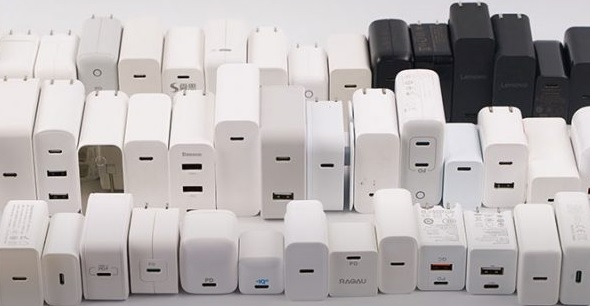
It turns out the reason is quite simple. Smartphone manufacturers always want to cut costs to increase profits for their products. And when they can no longer reduce the costs of internal components, they choose to cut down on the accessories sold to customers. But how can they remove an accessory from expensive smartphones without making users angry?
There must be a justifiable reason for it.
What could be more humanitarian and justifiable for this decision than when companies claim it will help protect the environment by reducing electronic waste? These statements help customers happily accept the loss of a crucial accessory from their phone’s packaging without complaining.
The cost of each charger included in the box, though small (around $15 for Xiaomi and $19 for Apple), adds up to a huge amount when multiplied by the hundreds of millions of units these companies sell annually. Cutting out the charger will save the company a significant amount in operational costs. Moreover, the fact that users still have to find chargers for their phones will also provide the company with additional revenue from selling these accessories.
Furthermore, with such “humane” reasons, the price of the phones doesn’t even decrease after the charger removal; in fact, it may even increase. The Mi 11 version without a charger is priced the same as the version with a charger included. The same goes for most iPhone models that Apple has removed the included charger from, while the new iPhone 12 is even priced higher than the previous generation (of course, you get a better display and CPU chip).
It should be noted that Apple is not the first company to remove the charger. The first company to do so was Motorola in 2013 with the release of the first-generation Moto G. And frankly, the company stated that it did this to save costs. Indeed, the Moto G is one of the best and cheapest smartphones on the market and started the era of affordable smartphones afterwards.