


At this point in the COVID-19 pandemic, humanity has developed nearly 10 vaccines that are effective in preventing the disease. But just like the flu virus, we still do not have any specific drugs for SARS-CoV-2.
“Everyone understands that not everyone can be vaccinated or respond to the vaccine. Vaccines can also lose their effectiveness when immunity wanes, or when new variants emerge. Therefore, continuing to develop antiviral drugs is a crucial task,” Mark Denison, a virologist at Vanderbilt University explains.
So, how far has the development of COVID-19 treatments progressed? What strategies do scientists have to eliminate the SARS-CoV-2 virus once it has entered a patient’s body to save their lives?
Let’s explore this in the article below, through the interesting lens of Age of Empires:
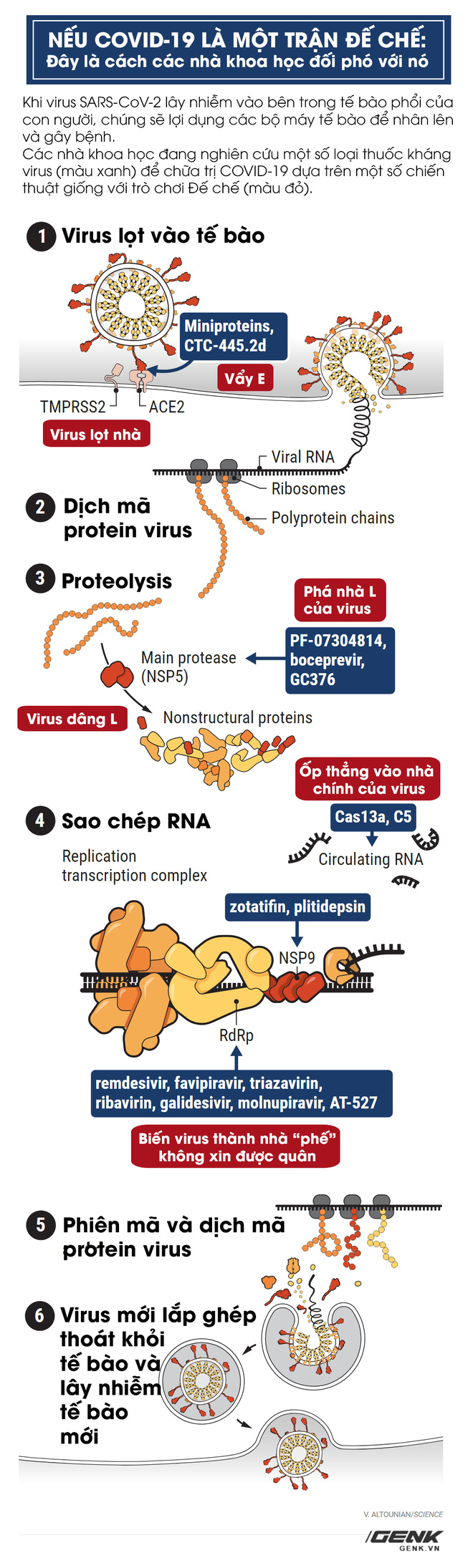
1. Mini Proteins and CTC-445.2d: “Spray E” to prevent the virus from entering cells
We know that the SARS-CoV-2 virus causes symptoms of coughing, shortness of breath, and respiratory failure because it can infiltrate human lung cells. This is similar to how a scout horse or a siege weapon must get inside the opponent’s base to cause chaos.
So, the strategy here is quite simple: Just “spray E” and defend your lung cells tightly.
To achieve this, scientists need to understand how SARS-CoV-2 invades; it turns out it works like a key and a lock:
On human respiratory cells, there are receptors called ACE2 that act like locks. The SARS-CoV-2 virus has developed spike proteins that work like a key fitting into ACE2, unlocking the door for the virus to enter.
Hoping to block the infection route of SARS-CoV-2, David Baker, a biologist at the University of Washington, designed mini proteins that can wrap around the spike protein of the virus. Imagine it like a piece of chewing gum. You can use it to cover the virus’s key, and then it will no longer fit into the lock on human cells.
Mini proteins have been shown to prevent SARS-CoV-2 from infecting human cells in vitro. Baker noted that they have the potential to become an ideal drug because mini proteins are much more stable than conventional COVID-19 treatments like antibodies, which need to be stored cold.
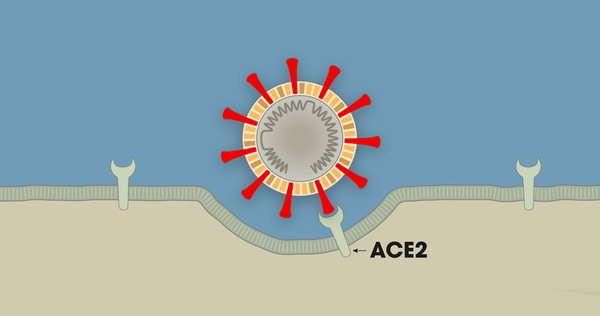
Following a similar path, Neoleukin Therapeutics, an American pharmaceutical company, is also creating mini proteins called CTC-445.2d. Researchers at Neoleukin Therapeutics describe these as bait for the spike protein of SARS-CoV-2.
In the context of Age of Empires, CTC-445.2d works just like the action of “spray E“. It serves as molecules that block the spike protein’s entry. Once the virus is blocked by CTC-445.2d, it cannot attack the host cell.
The more CTC-445.2d around the cell, the more effective it is, just like you “spray E” to make your base more secure. CTC-445.2d has been tested on mice as a nasal spray and has shown very promising results. Mice treated with the drug had a reduced risk of severe COVID-19 and increased survival rates after infection.
2. PF-07304814, Boceprevir, and GC376: Stopping the virus’s intention to “build L“
After the SARS-CoV-2 virus has infiltrated your cells, the next thing it does is build a replication machinery. A virus can only severely damage your cells if it becomes a horde of tens of thousands of viruses. To do this, it needs to create a replication machinery within the host cell.
In Age of Empires, imagine that replication machinery as an enemy’s L building appearing right in your business area.
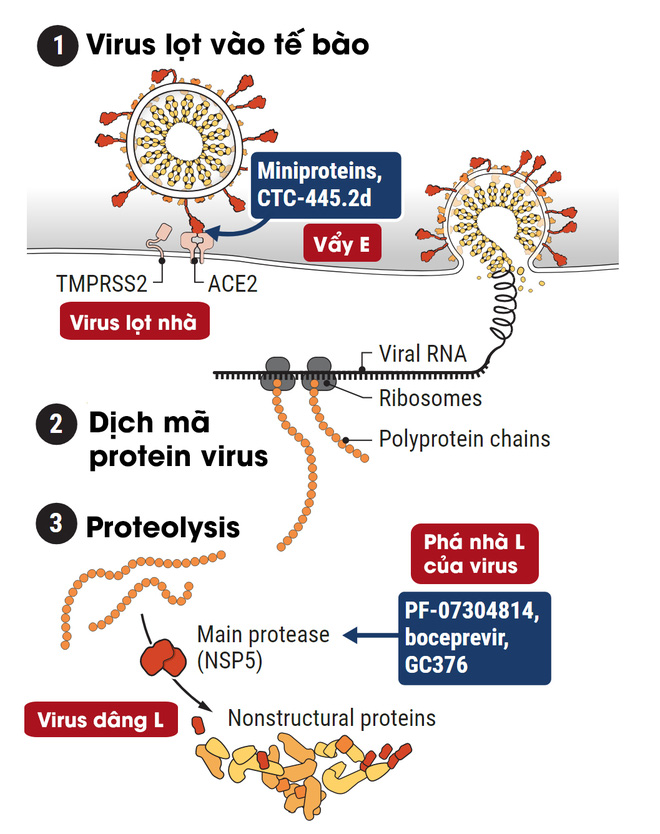
To create the replication machinery, the SARS-CoV-2 virus injects its RNA into the cell’s DNA and takes control of the ribosome, the protein production machinery for the cell. The ribosome then switches to producing polyprotein chains for the virus, but these are just long protein chains like a bunch of Legos freshly printed from a factory.
The virus’s task now is to scatter this Lego pile on the floor and find a way to rearrange them into new viruses. They use an enzyme called “main protease” to do this. The main protease cuts the polyprotein chains produced by the host cell into RNA synthesis components for the virus, the proteins of the virus itself, so they can be assembled.
Understanding this weakness, a group of researchers at the pharmaceutical giant Pfizer used a compound designated PF-07304814 to block the main protease NSP5 of the SARS-CoV-2 virus. This compound was originally developed during the SARS pandemic in 2003, but that outbreak quickly disappeared, halting this research.
Testing PF-07304814 in mice showed that it could significantly reduce the amount of SARS-CoV-2 produced in their bodies. Therefore, last September, Pfizer began clinical trials of this drug in COVID-19 patients via intravenous injection.
However, Annaliesa Anderson, the head of Pfizer’s antiviral drug research program, stated that recruiting volunteers has been very challenging, so it won’t be until the end of 2021 that this trial yields results.
In China, a research group is also using a similar strategy, with two drugs named boceprevir and GC376 aimed at slowing the replication process of SARS-CoV-2 in patients.
Boceprevir is a hepatitis C drug, while GC376 was designed to target a strain of coronavirus that infects cats. Trials showed that mice injected with GC376 could survive after receiving a lethal dose of SARS-CoV-2.
Furthermore, in August 2020, researchers in the U.S. described a compound similar to GC376 that significantly increased survival rates in mice infected with Middle East Respiratory Syndrome (MERS) and showed strong antiviral effects against SARS-CoV-2 in cells.
3. Remdesivir: Turning the virus into a “scrap“, unable to recruit more troops
Now, suppose the SARS-CoV-2 virus has built its L inside your base. This means that its protease enzyme has cut the polyprotein chains produced by the ribosome. 15 of those Lego pieces will combine to form the replication transcription complex (RTC). This is what we refer to as the “building L” that allows the RNA of SARS-CoV-2 to replicate and create new viruses.
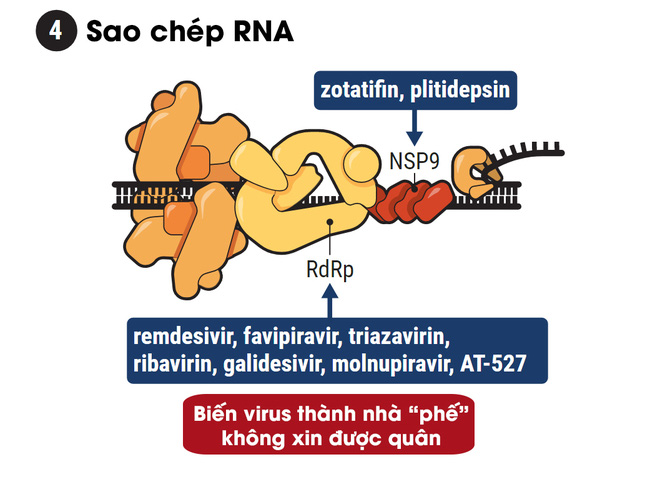
At the center of the virus’s replication machinery is NSP9, an enzyme that attaches to the virus’s RNA and also to RNA-dependent RNA polymerase (RdRp) to directly engage in the task of RNA replication. The activities of NSP9 and RdRp are very complex, but you can imagine this whole machinery running like a photocopy machine.
If you can disrupt this photocopy machine by attacking NSP9 or RdRp, then even if the virus has built its L in your cells, it cannot replicate and recruit more troops. The virus becomes a “scrap“.
To target NSP9, some scientists have used two compounds, zotatifin and plitidepsin. Among them, plitidepsin has entered phase two clinical trials, conducted by the Spanish pharmaceutical company PharmaMar.
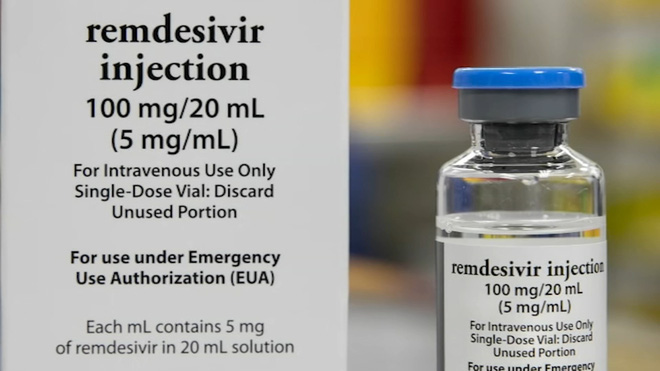
However, RdRp remains a more popular target, with dozens of drugs aiming to target it, including remdesivir, favipiravir, triazavirin, ribavirin, galidesivir, molnupiravir, and AT-527.
For instance, remdesivir carries out its function by mimicking the nucleotide adenosine (A) to interfere with RdRp. Thus, every time the virus’s RNA is created, instead of inserting an A, RdRp inserts remdesivir and destroys its structure.
In addition to remdesivir, some nucleotide-mimicking drugs can trick the virus’s RdRp, including favipiravir and triazavirin, which were initially designed to combat the flu virus. Ribavirin and AT-527 are used to treat hepatitis C. Galidesivir can inhibit the replication of Ebola, Zika, and yellow fever viruses.
Notably, researchers are currently very optimistic about molnupiravir, another nucleoside mimic that can be taken in pill form. Molnupiravir can mimic the nucleoside cytidine (C), causing errors in the replication process and accumulating mutations that kill the SARS-CoV-2 virus.
Molnupiravir is currently moving towards phase 2/3 clinical trials run by Merck and Ridgeback Biotherapeutics. In March, scientists reported at a meeting that molnupiravir could reduce the viral load in COVID-19 patients’ bodies. The drug also appears to be well-tolerated and does not cause serious side effects.
4. RNA-targeting drugs: Directly “hit” the virus’s stronghold
While all the drugs mentioned above target the proteins or enzymes of SARS-CoV-2, some scientists wonder why not target their command center, the genome or RNA of the virus.
This can be likened to directly attacking the opponent’s main base in Age of Empires. When the RNA is destroyed, the SARS-CoV-2 virus will be defeated.
In the journal Nature Biotechnology in February, Emmeline Blanchard, a biomedical engineer at the Georgia Institute of Technology, and colleagues reported the discovery of Cas13a, a molecule wrapped in a polymer of a gene-editing enzyme. It can seek out, hunt, and cut the RNA of SARS-CoV-2.
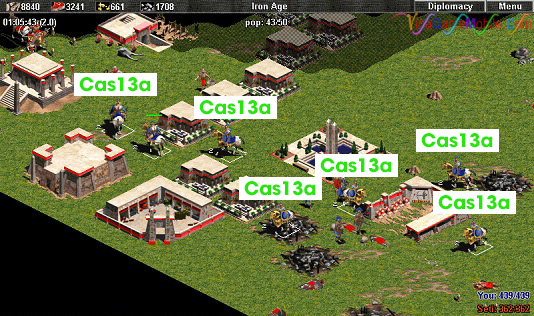

Cas13a can be likened to elite “scouts“, as it can target the most highly protected regions in the virus’s RNA, where the RdRp enzyme and nucleocapsid protein are encoded. Tests on mice infected with SARS-CoV-2 showed that when they inhaled Cas13a formulated as a vapor, their COVID-19 symptoms were reduced.
Additionally, in September 2020, in the journal ACS Central Science, Matthew Disney, a chemist at the Scripps Research Institute, and colleagues reported discovering a compound named C5. It also has the ability to target and destroy a short segment on the RNA of SARS-CoV-2.
5. Host-targeting drugs: “Leave the base unguarded“, controlling gold on the map
Now, consider the case when the SARS-CoV-2 virus has infiltrated your cells, built its L, and successfully made a “turn” to attack. Scientists can still apply a strategy in Age of Empires to defeat them: Leave the house unguarded.
Since SARS-CoV-2 relies on the host cell’s proteins to reproduce, breaking down those proteins could be another pathway for COVID-19 treatments. The only catch is that this targets your own cells.
On one hand, the advantage is that the drugs will not be resisted by the virus since the target is not the virus. But on the other hand, you may have to grit your teeth and sacrifice some proteins in your cells.
1910 Genetics, a biotech startup in Massachusetts, USA, has used artificial intelligence (AI) to screen over 14 billion compounds to find a drug targeting the TMPRSS2 and furin proteins present in host cells.
Last month, the National Institutes of Health announced they are launching phase 2/3 clinical trials for camostat mesilate, an inhibitor of TMPRSS2.
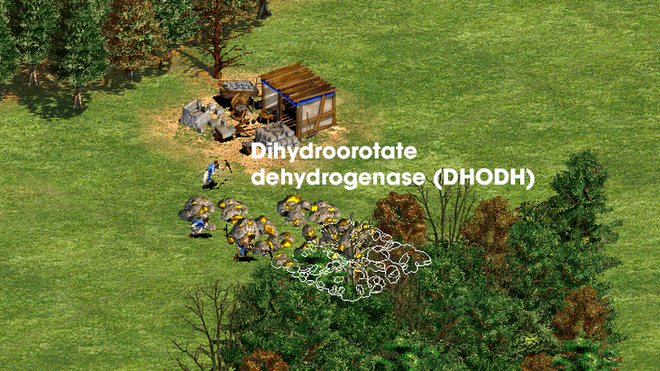
Furthermore, one of the advantages of leaving unguarded in Age of Empires is that you can control all remaining resources on the map. During their research, scientists discovered a protein named dihydroorotate dehydrogenase (DHODH) in host cells that could serve as the “gold mines” on the Age of Empires map.
The virus often hijacks DHODH for resources to synthesize RNA and replicate vigorously, while blocking DHODH not only helps scientists halt the virus’s growth but also provides a pathway to combat cancer.
Two biotech companies, PTC Therapeutics and Immunic Therapeutics, are currently testing drugs that inhibit DHODH. In clinical trials on hundreds of patients, these drugs have demonstrated safety.
A study conducted last August by PTC Therapeutics showed that their developing drug designated PTC299, initially designed as an oral medication to prevent cell proliferation in acute myeloid leukemia, also has the potential to strongly inhibit the replication of SARS-CoV-2 in cells.
Meanwhile, Immunic Therapeutics has also achieved promising results in human trials of IMU-838, an oral compound developed to treat inflammatory and autoimmune diseases. Last month, the company reported preliminary results showing that hospitalized COVID-19 patients with severe symptoms had a reduced risk of needing ventilators after using IMU-838.
Seamlessly Combining Strategies
Ultimately, winning against COVID-19 may resemble winning a game of Age of Empires. Scientists are not sure that a single strategy can deliver an immediate knockout blow to the virus.
“We truly need an entire arsenal,” Lillian Chiang, CEO of Evrys Bio, a company researching antiviral drugs targeting host cell proteins, said. This means that all strategies should be skillfully utilized and combined together.
Francis Collins, director of the National Institutes of Health (NIH), agrees that another potential drug development direction is to mix and match multiple drugs, causing the virus to “lose its grip” when it has to deal with multiple issues at once.
However, of course, saying it is easier than doing it. Michael Sofia, chief scientific officer of Arbutus Biopharma, a Canadian antiviral company, stated: “This will take time. And money. According to recent estimates, bringing a new drug to market costs between $985 million and $2.8 billion.”
Before the COVID-19 pandemic, antiviral drug development typically progressed very slowly and took at least a decade. Many steps in this process, such as animal testing, molecular refinement to avoid side effects, and clinical trials in humans, cannot be skipped.
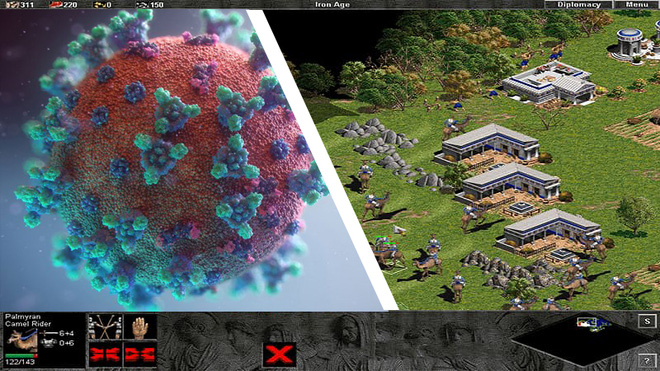
Nonetheless, unlike previous pandemics, which often ended quickly and left many companies to abandon drug development midway, COVID-19 may become a persistent disease like the flu.
Developing a drug against it could help companies recoup profits and offset research investment costs. Some companies, like Pfizer, have even stated that they are committed to a non-profit approach in dealing with the COVID-19 pandemic.
Therefore, we can fully believe that there will be a SARS-CoV-2 antiviral drug developed. Even as the pandemic subsides due to vaccination efforts, this drug could still be beneficial in the future.
“Eventually, we will have to face another coronavirus,” Andrew Mesecar, a structural biologist at Purdue University said. And we don’t know what it will look like. But these SARS-CoV-2 antiviral drugs may prove useful.
Reference Science